Get Full Government Meeting Transcripts, Videos, & Alerts Forever!
Get email alerts on the Land Use topic
No spam. Unsubscribe anytime.
Planning & Zoning: commission says it is business‑friendly but must protect public health, safety and welfare
Summary
Planning & Zoning commissioners told selectmen they are committed to a business‑friendly process but must follow statutory duties to protect public health, safety and welfare when reviewing development.
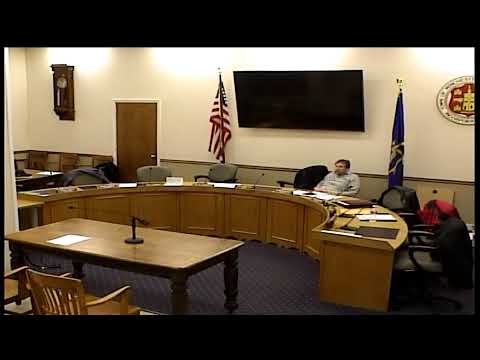
WINCHESTER, Conn. — Members of the Planning & Zoning Commission appeared before the Board of Selectmen on Jan. 21 to describe their annual plan and to explain how land‑use reviews relate to economic development.
Commission members told the board they approve most complete applications and place conditions to protect neighboring properties and town interests. One commission member summarized the legal frame: "The planning zoning is very statutorily driven by federal government and by local government. It's considered a police power," the member said, describing the commission’s responsibility to protect public health, safety and welfare while avoiding regulations that would expose the town to legal challenge.
The commission discussed the 2024 Nova Farms proposal for cannabis cultivation regulation changes and why the commission denied the applicant’s proposed regulation. Commissioners said the applicant submitted regulation language that would have allowed cultivation only in a very limited zone, which would have effectively permitted only one production facility and constrained future options. Commissioners said they had asked the applicant to propose an overlay zone or other changes to give the commission discretion to approve site‑specific development and to address odor, visibility and other concerns; the applicant did not revise the submission in that way.
Planning officials also outlined priorities where commission and selectmen interests align: updating regulations to speed complete applications, revising driveway and parking‑lot rules, considering subdivision regulation updates, and pursuing brownfield redevelopment. The Northwest Hills Council of Governments has a $200,000 environmental‑assessment grant to study redevelopment at the former Sun Chief Electric site and the commission urged town investment to leverage state and federal programs. Commissioners urged hiring or empowering planning staff who “think like a planner” — able to coordinate interdepartmental review and reduce back‑and‑forth with applicants.
Ending: Commissioners asked to continue coordination with selectmen on economic development objectives and offered to help shape zoning updates and overlay options that could encourage redevelopment while safeguarding neighborhoods.