Get Full Government Meeting Transcripts, Videos, & Alerts Forever!
Get email alerts on the K 12 Budget topic
No spam. Unsubscribe anytime.
Winchester school board fails to approve revised 2026 budget after hours-long debate
Summary
The Winchester Board of Education debated proposed cuts, including two cafeteria monitors, a school resource officer and technology replacements, but a final motion to send a reduced 2026 budget to the town manager failed 5–4 on Feb. 24.
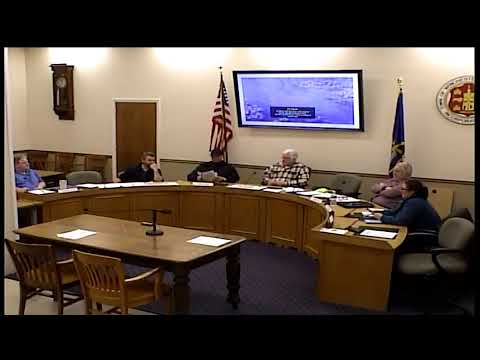
The Winchester Board of Education on Feb. 24 debated and ultimately rejected a revised spending plan for fiscal 2026 after more than two hours of discussion about staffing, technology and contingency funding.
Superintendent Julie opened the deliberation by asking the board to approve a budget request reduced by $100,000 from her original proposal and explained the rationale: “I will bring you my recommendation tonight that you reduce my proposed budget by $100,000,” she said, adding that anticipated state action on excess-cost grants made a modest reduction a reasonable step. The superintendent told the board her fallback if that state money did not materialize would likely be to eliminate the proposed cafeteria monitors.
Why it matters: the board’s submission to the town manager is the primary input for the town’s overall budget process; the board said it needed to provide a number promptly so the town manager could build a townwide spending plan. Board members said they were balancing the district’s educational needs against community tax pressure and the risk that the selectmen would ask for larger cuts later.
Key motion and votes - A motion to send a Winchester Public Schools budget reduced by $100,000 to the town manager (the superintendent’s recommendation) was put on the table for discussion and subsequently amended on the floor. The amendment package that passed the board during debate would have cut an additional $91,027 (including removal of two cafeteria monitor positions and a reduction in planned technology replacements and supplies). - The amendment to reduce the draft budget by $91,027 passed on a roll-call vote called by the chair (all present members voting “yes” for the amendment). - After further debate and a final roll-call vote on the amended budget motion, the board did not approve the budget. The chair announced the final tally as five votes “no,” four votes “yes,” and declared the motion failed.
Cuts, contingency plans and debate highlights - Personnel and staffing: The superintendent and staff reviewed proposed new positions and grant-funded roles: a kindergarten teacher contingent on enrollment, a BCBA consultant (partially grant-funded), three part-time cafeteria monitors, and two school safety/security positions. The superintendent said the cafeteria monitors were the likeliest cuts if grant revenue or state reimbursements did not arrive. - Grants and one-time funds: Board members discussed Title I and ARP/ESSER grant funding that are expected to offset parts of the operating budget and a small non-lapsing capital fund (the “2% non-lapsing fund”) that has been used for capital projects in the past. Staff said the district’s ARP ESSER mental-health grant was covering part of the BCBA cost this year, but that funding will end and the position’s cost will need to move into the operating budget in future years. - Technology and instructional materials: Trustees debated whether to defer planned Chromebook and smart-board replacements (a line described in the technology hardware section) to save roughly $20,000 immediately. Administrators warned that state tests and curriculum tools require reliable devices for students in grades 3–6, and principals described how Chromebooks support both classroom instruction and state test familiarity. Some trustees proposed deeper cuts in device replacement to avoid personnel reductions. - Instructional programs and trade-offs: Board members emphasized that most line items are operationally necessary; cuts to supplies or “nonpayroll” lines would shift costs to families. The superintendent said her budget is “needs-based,” not “wish-based,” and that further reductions would likely remove personnel who provide direct services to students.
Next steps and schedule pressure Board members and staff repeatedly noted the compressed schedule: the town manager had asked for the board’s number so he could draft the town budget, and the board had no later public meetings scheduled. Trustees left the session without an approved budget and said they would reconvene to continue deliberations, coordinate further with Gilbert (the neighboring school partner mentioned in the discussion) and provide a revised number to the town manager.
What the board recorded in the meeting - Superintendent Julie presented a draft budget reduction of $100,000 from her proposal and explained that a pending state vote on excess-cost grants could materially change the district’s revenue outlook. - An amendment reducing the draft by $91,027 (which included eliminating two cafeteria monitors and trimming technology/supplies lines) passed during debate. - The final motion to forward the amended budget to the town manager failed on a 5–4 roll-call vote; the board did not adopt a budget that night.
Context and background Board members repeatedly referenced recent years’ budget cycle history, including prior referendums and the town’s overall revenue constraints. They also discussed coordination with the Gilbert School (a neighboring district) and noted some potential, small efficiency opportunities (for example, shared contracts), but officials said no single efficiency would produce the large sums needed to avoid personnel impacts.
Ending note Because the board left without a final vote in favor of a budget to send to the town manager, district and town staff said they will reconvene and continue deliberations in the days ahead. The town manager had asked for a number as soon as practicable to proceed with townwide budgeting.