Get Full Government Meeting Transcripts, Videos, & Alerts Forever!
Get email alerts on the Zoning Variance topic
No spam. Unsubscribe anytime.
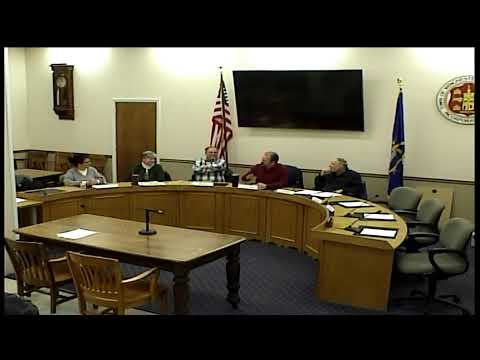
Winchester ZBA approves variance for 308 East Wakefield with testing and maintenance conditions
Summary
The Winchester Town Zoning Board of Appeals granted a variance allowing 73.1% impervious coverage at 308 East Wakefield Boulevard — above the 20% allowed with LID — conditioned on owner-funded infiltration testing and other stormwater measures.
The Winchester Town Zoning Board of Appeals on Feb. 25 approved a variance for a property at 308 East Wakefield Boulevard that raises allowable impervious coverage to 73.1% from the 20% allowed with low-impact development measures, setting conditions intended to limit runoff into the adjacent lake.
The variance, filed as application ZBA-25-4, was approved after the board read into the record a motion citing section 3(d)(5)(c) of the town zoning regulations. The motion includes a condition requiring infiltration ("perk") testing at the owner’s expense every five years in spring or summer, timing to be determined by the consulting engineer. The board noted wetlands staff had required a maintenance schedule and a bond for work referenced in its review.
The board’s approval followed questions from members about how to classify existing crushed stone and paver areas, whether the surface behaves as impervious coverage, and whether additional measures recommended by engineers — including two dry wells, removal of some pavers near the water, native-plant buffers or a rain-garden style planting and saw cuts to break runoff continuity — would be implemented. Ellie Gunn, member, said she appreciated the owner’s remediation efforts and told the board, "I do share John's concern" about setting a precedent if the board changed how impervious coverage is calculated.
Applicant testimony and multiple engineering reports were discussed. The board and town staff said the applicant agreed to install two dry wells and to consider removing pavers and adding plantings where engineers suggested to reduce direct runoff to the lake. Jeff (town staff, role not specified in the transcript) confirmed wetlands staff had recommended a maintenance schedule and a bond and said as-builts and engineer sign-off would be required before final acceptance.
Board members debated whether to require long-term monitoring and who would pay for it. Mary Anne Marino, the alternate member seated as a full voting member for the meeting, proposed requiring ongoing inspections and reports; the board settled on a condition that the owner pay for perk/infiltration tests every five years and deliver results to the building and planning office. The motion was made and seconded, and the chair called for a voice vote; the board approved the motion.
The board emphasized that the variance approval applies to this specific lot and that future applicants would be reviewed on their own merits. The record notes that the town’s regulations on pervious versus impervious surfaces may be updated in the future but that the board must decide under the rules in effect at the time of the application.
The variance includes the following requirements as read into the record: the applicant is granted variances under section 3(d)(5)(c) for application ZBA-25-4, 308 East Wakefield Boulevard; the proposal reflects a 53.1% increase in impervious coverage resulting in 73.1% coverage where 20% is allowable with LID; condition — owner-funded perk (infiltration) testing every five years during spring or summer, timing to be determined by the engineer. Wetlands-imposed requirements, including a bond and engineered sign-off and submittal of as-builts, remain in effect.
The board did not specify a schedule for follow-up hearings tied to the testing schedule; reports are to be delivered to the building and planning office for review. The applicant was notified verbally at the meeting that their project had been approved under the stated conditions.
Background: The application reached the ZBA after wetlands staff discovered work had progressed without a prior variance or permit. The applicant presented engineering assessments and soil-test results to support the claim that certain gravel areas had sufficiently infiltrative characteristics, but board members cautioned that treating crushed gravel as nonimpervious could change how other future applications are judged.
The board’s action makes the current configuration legal for this lot under the stated conditions; future owners who change the configuration would need to return to the appropriate land-use boards.