Get Full Government Meeting Transcripts, Videos, & Alerts Forever!
Get email alerts on the Municipal Budget topic
No spam. Unsubscribe anytime.
Town manager outlines budget gap and options after state motor‑vehicle assessment bill
Summary
Town Manager Paul Harrington briefed the Winchester Board of Selectmen on the FY25–26 budget outlook, explaining how an emergency state house bill that changes motor‑vehicle assessment methodology could recover about $116,000 in revenue if the town opts to shift assessments.
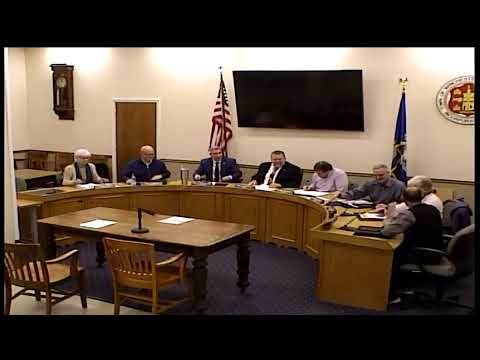
Town Manager Paul Harrington told the Board of Selectmen on March 3 that the town’s FY25–26 budget preparations are underway and that a recently signed emergency House bill affecting motor‑vehicle assessments gives Winchester an option to modify its assessment methodology.
Harrington said the new law permits municipalities that completed their grand list in October 2024 to elect a different methodology — for example, valuing vehicles at 90 percent of MSRP in the first year rather than the 85 percent figure the new law adopted — and that doing so could recapture roughly $116,000 of the approximately $390,000 in revenue the town feared losing from grand‑list declines. He said the change would add about $4 million in assessed value to the grand list, producing an estimated $116,000 in additional revenue.
Why it matters
Motor‑vehicle tax revenue is a substantial component of the town’s property tax base; shifts in vehicle valuation change the distribution of tax burden and the town’s available operating revenue. Harrington said the change would require a formal board action and referral to the Office of Policy and Management (OPM) and that staff will provide additional clarifications before any vote.
Board discussion and guidance
Selectmen raised concerns about the underlying valuation method: some members questioned whether MSRP‑based valuations, even at 90 percent, track market realities better than guides such as Kelley Blue Book (KBB) or NADA, which use transaction data. Board members noted that arbitrary annual depreciation schedules (an automatic 5 percent drop per year, as described in the new law) do not reflect differing depreciation patterns across vehicle types and market cycles — for example, the 2021–22 used‑car market spike during the chip shortage.
Several board members asked for data comparing KBB/NADA‑based valuations to the MSRP‑based approach and asked staff to model how a change would affect the town’s mill rate, capital needs and potential service reductions if revenue shortfalls remain. Harrington asked board members for guidance on the town manager’s proposed budget due to the board by March 14 and the formal submission by March 15.
Context and budget constraints
Harrington and board members described prior reductions in the grand list and prior use of fund balance and one‑time revenue to cover capital needs. Selectmen referenced last year’s final budget, which required roughly $1.3 million of new money (about a 3 percent tax increase) and that capital had been funded in part from fund balance. Board members said any mill increase in the coming budget should be defensible and visible to residents (for example, capital projects such as roads). Harrington said he will deliver the manager’s proposed budget to the board on March 14.
Ending
Staff will return with clarifying materials: comparative vehicle valuation data (MSRP vs. KBB/NADA), modeling of mill‑rate impacts, and any formal requirements for referring a methodological change to OPM. No binding action on assessment methodology was taken on March 3.