Get Full Government Meeting Transcripts, Videos, & Alerts Forever!
Get email alerts on the Land Use Regulations topic
No spam. Unsubscribe anytime.
Planning & Zoning approves decodification and removes 200-foot cannabis buffer; hearings set for other applications
Summary
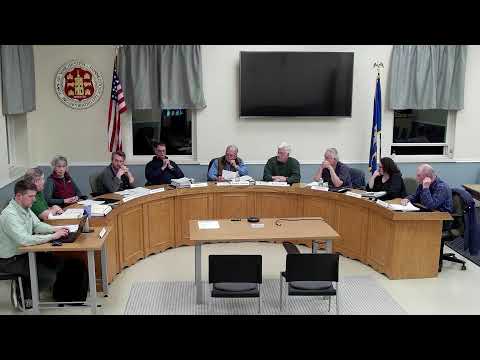
The Winchester Planning and Zoning Commission voted April 14 to adopt zoning text changes that remove a strict 200-foot ban on cannabis establishments (replacing it with a special-permit approach) and to codify subdivision and zoning regulations into the town code. The commission set public hearings for several development applications.
The Winchester Planning and Zoning Commission on April 14 adopted several regulatory updates and approved codification of existing rules into the town code.
The commission voted to adopt the proposed amendment to section 4(d) of the zoning regulations to remove a strict 200-foot prohibition that previously barred cannabis retail and micro-cultivation uses within 200 feet of certain "sensitive uses" (schools, day cares, places of worship and playgrounds). That prohibition was replaced with a special-permit process that requires a location map showing sensitive uses within 200 feet and a traffic-management plan, including parking, for proposals. The proposed text explicitly references Public Act 21-1 and state regulations (CGS 21a-408-70 and related Connecticut agency rules) as the governing framework for adult-use cannabis activity in the town.
During the public hearing Thomas McCree, representing Still River Wellness, a hybrid cannabis dispensary in Torrington, urged the commission to retain the 200-foot buffer. McCree said removing the buffer would "contradict the intent of Public Act 21-1" and argued that market demand and community need had not been demonstrated.
Commissioners said the change preserves local discretion by converting the outright prohibition into a special-permit standard the commission can review case by case. After discussion the commission approved the amendment; the chair announced the vote was unanimous.
The commission also closed public hearings and voted to approve two codification items: PCC 25-2 (decodification/codification of the town’s subdivision regulations into the town code) and PCC 25-3 (decodification/codification of the town’s zoning regulations). Commissioners described those changes as clerical or formatting updates to bring the regulations into a codified online format; staff explained the codified system allows quicker corrections and periodic cycles for updates.
The meeting record shows motions to close the public hearings for PCC 25-1, PCC 25-2 and PCC 25-3 and subsequent approval motions; the chair said the votes were unanimous on the adopted items.
Other procedural items set by the commission at the meeting included scheduling an earth-excavation permit renewal public hearing for April 28 and setting the public hearing for a modular-home special-permit application at 150 Ashley Road for April 28. A separate special-permit application to convert 39 Wetmore Avenue from a single-family to a two-family use was discussed; the applicant needs a survey and the commission tentatively scheduled a public hearing for June 9 if application materials are complete.