Get Full Government Meeting Transcripts, Videos, & Alerts Forever!
Get email alerts on the School Finance Grant Cut topic
No spam. Unsubscribe anytime.
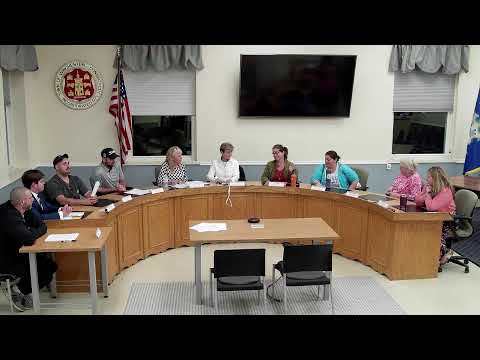
Winchester superintendent warns of budget strain after federal grant cut; counselors at risk
Summary
Superintendent Julie Luby told the board that a federal mental‑health grant administered through EdAdvance was cut short, which would remove half‑time counselors at Pearson and Hinsdale next year; the board's finance report also shows special‑education costs drawing down the district's maintenance‑of‑effort reserves.
Winchester Public Schools Superintendent Julie Luby told the Board of Education on May 13 that a federal mental‑health grant delivered through EdAdvance has been curtailed and may end halfway through next school year, threatening two half‑time counselors who had been funded by the grant.
"That federal grant has been cut short," Luby told the board, adding that unless EdAdvance successfully appeals or finds new funding the district expects to lose the counselors "halfway through next year," a loss the superintendent described as "really unfortunate" during budget season.
Finance discussion at the same meeting underscored the strain: district financial documents presented to the board projected a small year‑end balance but showed the district has been relying on nonlapsing grant funds and a maintenance‑of‑effort (MOE) account to cover overruns. The finance report projected that the MOE-like account will shrink substantially and that the district has been effectively using grant timing to smooth the operating budget.
Business manager remarks to the board said the appropriated town budget projection was modest — and that the district had about $746 projected in appropriated-year balance in the presentation frame — but the grant and MOE balances were acting as a safety net. Board members and the superintendent discussed that if special‑education excess cost reimbursements or other state allocations do not arrive as hoped, the district could face deeper shortfalls next year.
The superintendent also reported operational items that intersect with budget considerations: preschool registration matched available slots this year through a lottery process; two safety officers are in place and noted as immediately beneficial to arrival and dismissal operations; and district staff are pursuing roof and solar options in discussion with town officials, a project that could require capital planning should the board and town decide to move forward.
Board members pressed the superintendent and business manager for numbers: how many students the counselors served, the expected financial impact if the grant is not restored, and whether federal or state excess‑cost aid could offset special‑education costs. The superintendent said she would provide a detailed count of students affected and noted the district was still awaiting clarity on possible additional excess‑cost reimbursements from the state.
The finance discussion also covered legal and professional costs, where board members noted legal spending had increased in the current year because of contract‑related work. The board asked the negotiating committee to present prior contracts and negotiation goals before further legal spending.