Get Full Government Meeting Transcripts, Videos, & Alerts Forever!
Get email alerts on the School Safety topic
No spam. Unsubscribe anytime.
Parents and students urge felony penalties, engineering fixes after student’s death; committee hears ‘Aspen’s Law’ testimony
Summary
Multiple families and Western Hills students urged the House Judiciary Committee to strengthen penalties and improve engineering and signage in school zones after the death of 15-year-old Aspen; sponsors and members discussed targeted infrastructure, signage, rumble strips, and the balance between sentencing and preventive measures.
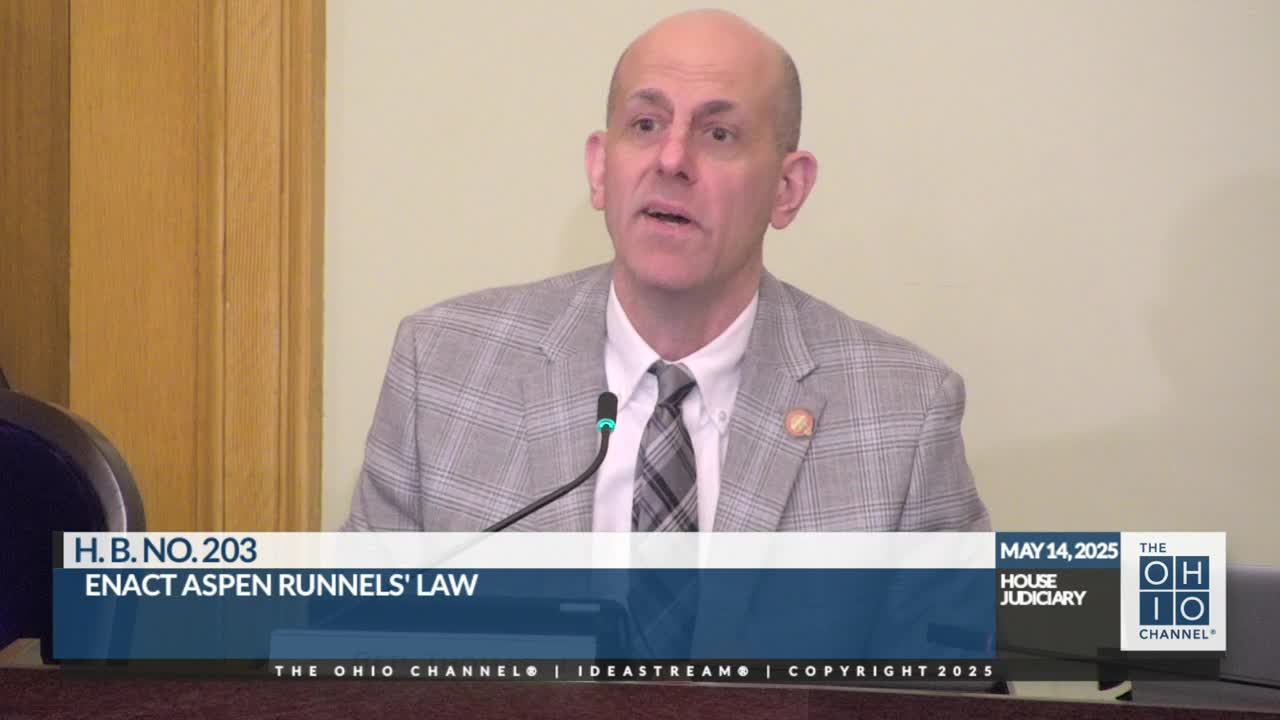
The House Judiciary Committee heard emotional sponsor and proponent testimony on House Bill 203, which would increase penalties for reckless or distracted driving in school zones following the death of 15-year-old Aspen Runnels.
Christina Alcorn, who identified herself as the mother of Aspen Runnels, described the May 2024 crash that killed her son while he used a marked crosswalk in an active school zone. She said the driver “was speeding in a school zone” and “made no attempt to slow down or stop,” and that prosecutors told her the case was likely to be charged only as a misdemeanor. Alcorn said she and co-sponsor Tricia Parnell drafted the bill after determining current law treats some school-zone incidents less severely than comparable construction-zone crimes.
Tricia Parnell and Maddie Bair, whose daughter Madison Bair was struck in a different school-zone crosswalk in 2018, also testified. Parnell said her daughter’s injuries required months of recovery and that the driver’s criminal charges did not reflect the harm inflicted. “Maddie is resilient and strong,” Parnell told the committee, but she and other witnesses said they sought a legal standard that treats reckless acts in school zones with penalties comparable to those that protect construction workers.
Sponsor testimony described the bill’s purpose: to create stronger criminal consequences when reckless driving in a school zone causes serious injury or death and to encourage localities to adopt engineering and signage solutions. Representative Williams and other lawmakers praised the parents’ advocacy and pressed for practical steps. Williams suggested audible alerts, rumble strips, and other engineering controls; witnesses and several members said they had pursued local engineering solutions but encountered resistance from county engineers or cost and noise objections.
Witnesses described specific local efforts: Alcorn said her community had pursued speed-limit changes, curb bump-outs, and additional signage; Parnell said Lakota School District added some lights after her daughter’s crash but other requests (rumble strips, additional speed reduction) were denied after speed studies or for noise concerns. Students from Western Hills High School testified about near-misses and urged action; one student described being struck “an inch in front of my body” in a near-miss and said repeated incidents make walking to school “scary.”
Committee members sought detail on consequences and unintended effects. Representative Stewart asked whether the bill’s penalties could produce harsh outcomes in accidental cases involving elderly drivers and whether judicial discretion or alternatives should be available; witnesses said the law should deter reckless behavior but acknowledged edge cases and urged careful drafting. Representative Timmons and others stressed the importance of clarifying when the higher tiers apply and noted the first offense would remain a $300 fine under sponsors’ framing.
No roll-call votes were taken; the hearing closed with committee members offering continued support for combining strengthened penalties with targeted engineering, signage, and education measures. Sponsors and advocates requested the committee’s help in overcoming local implementation obstacles and indicated a willingness to refine statutory language to allow judicial discretion and avoid overly punitive outcomes for clearly accidental, non-reckless conduct.