Get Full Government Meeting Transcripts, Videos, & Alerts Forever!
Get email alerts on the Traffic Safety topic
No spam. Unsubscribe anytime.
Sponsors propose tiered penalties for ‘move over’ violations after firefighter’s death; committee asks about interaction with prior laws
Summary
Sponsors of House Bill 132, inspired by a fire lieutenant killed while stopped on I-71, proposed a tiered penalty structure that would raise fines and add possible license suspension and criminal charges for repeat or injurious violations of Ohio’s move-over rule; lawmakers questioned enforcement, signage, and overlap with earlier statutes.
Sponsors introduced House Bill 132, dubbed Philip Weigel’s Law, and described a tiered penalty framework that would increase fines and add license-suspension and criminal penalties for repeat violations or for incidents causing injury or death.
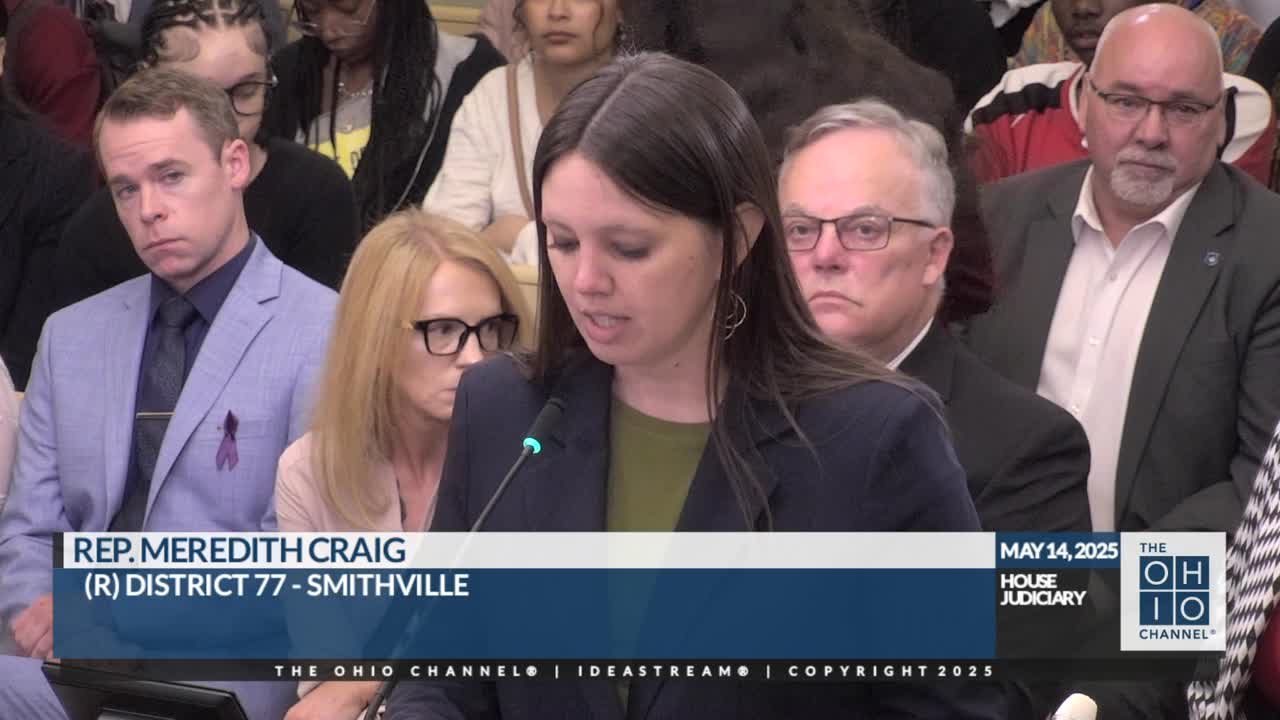
Representative Craig opened sponsor testimony describing the 2022 death of Lieutenant Philip Weigel, who was struck while responding to a crash on I-71, and said the current penalty for violating Ohio’s move-over law is limited to a $300 fine. Representative Melanie Miller, the bill’s co-sponsor, said HB 132 would keep the first-offense fine at up to $300 but create escalating penalties: “The second or subsequent violation within one year would be a fine up to $1,000. The third tier, a violation resulting in injury, would be a fine up to $5,000 and the potential driver's license suspension. And then the last tier would be violation resulting in death, which could be a fine up to $10,000, license suspension and a charge of vehicular homicide.”
Members pressed sponsors on how HB 132 would interact with prior legislation increasing penalties for vehicular crimes against first responders. Ranking Member Isaacson asked for clarification about overlap with a recently passed bill referenced by other members; Representative Craig requested time to research the exact interaction and said he would report back. Miller said Oklahoma provided a precedent for a tiered system and sponsors framed HB 132 as intended to improve deterrence of dangerous driving near emergency responders.
Lawmakers also raised enforcement and education questions. Representative Williams noted enforcement is difficult because a trooper or deputy typically must observe a violation; sponsors said increased penalties could deter dangerous behavior and discussed potential signage and public education. Representative Sinenberg asked whether the committee should require notification to drivers about law changes; sponsors said they had begun discussions with the Department of Public Safety and suggested an education campaign and roadside signage similar to existing state signs could be used to publicize the law.
The sponsor testimony did not propose a specific implementation timeline or funding source for education or signage. Committee members asked sponsors to consider the license-suspension impact on people who rely on driving for work and the need for judicial discretion in some cases. No committee vote was taken; the bill progressed through an initial sponsor hearing and committee members requested follow-up on statutory interactions and enforcement logistics.