Get Full Government Meeting Transcripts, Videos, & Alerts Forever!
Get email alerts on the Probate Fees topic
No spam. Unsubscribe anytime.
Probate lawyers and a whistleblower testify on proposed change to prioritize fees in Ohio land-sale proceedings
Summary
At a second hearing on House Bill 55, probate practitioners described the proposal as a tool to ensure attorneys working on insolvent estates can be paid to finish administration; a public commenter raised broad allegations about probate court practices unrelated to the bill and was redirected to relevant legislation.
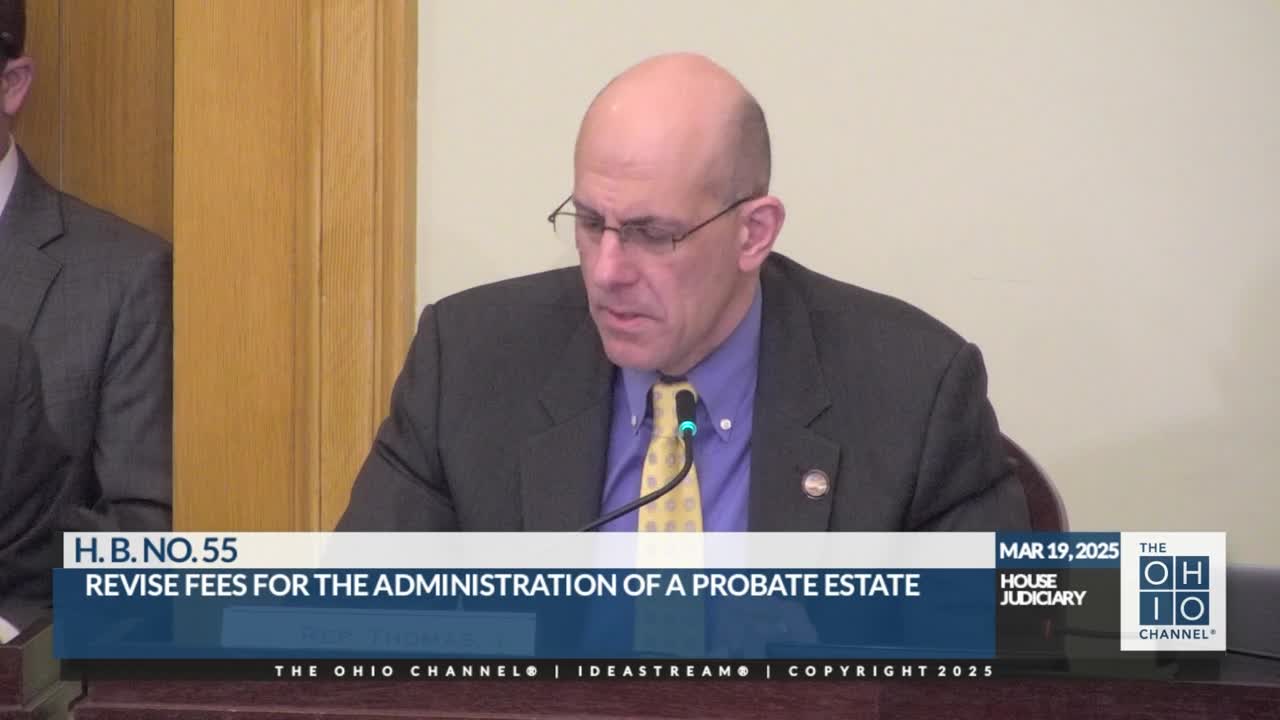
Jay Michael, a probate attorney and member of the Ohio State Bar Association Board of Governors, testified in favor of House Bill 55 at a House Judiciary Committee hearing, saying the bill would allow attorneys who handle insolvent estate land-sale proceedings to petition the court to have certain fees prioritized so they can complete administration of the estate.
Michael told the committee that when an estate’s sole asset is real property and the estate is insolvent, attorneys sometimes receive payment for the land sale “off the top” and then have no funds to finish estate administration, which can leave surviving relatives without closure or services. “If this bill passes, the attorney will get paid the second part of a fee that will allow us to finish the estate and help the client,” Michael said, describing the change as a measure to help low-income or rural families obtain complete probate services.
A person who identified himself as Brian Michael provided a long public-comment statement alleging fraud and misuse in probate courts, including claims of improper guardianships. Committee members repeatedly redirected him to testimony specifically related to House Bill 55; the chair and committee members noted his concerns were broader than the bill’s narrow statutory issue.
The hearing record shows support from a practicing probate attorney and a public commenter who raised systemic concerns; the committee did not vote on the bill at the hearing.