Get Full Government Meeting Transcripts, Videos, & Alerts Forever!
Get email alerts on the Firearms Restoration topic
No spam. Unsubscribe anytime.
Witnesses, lawmakers debate procedural fixes and record-sealing in proposed Ohio gun-rights restoration bill
Summary
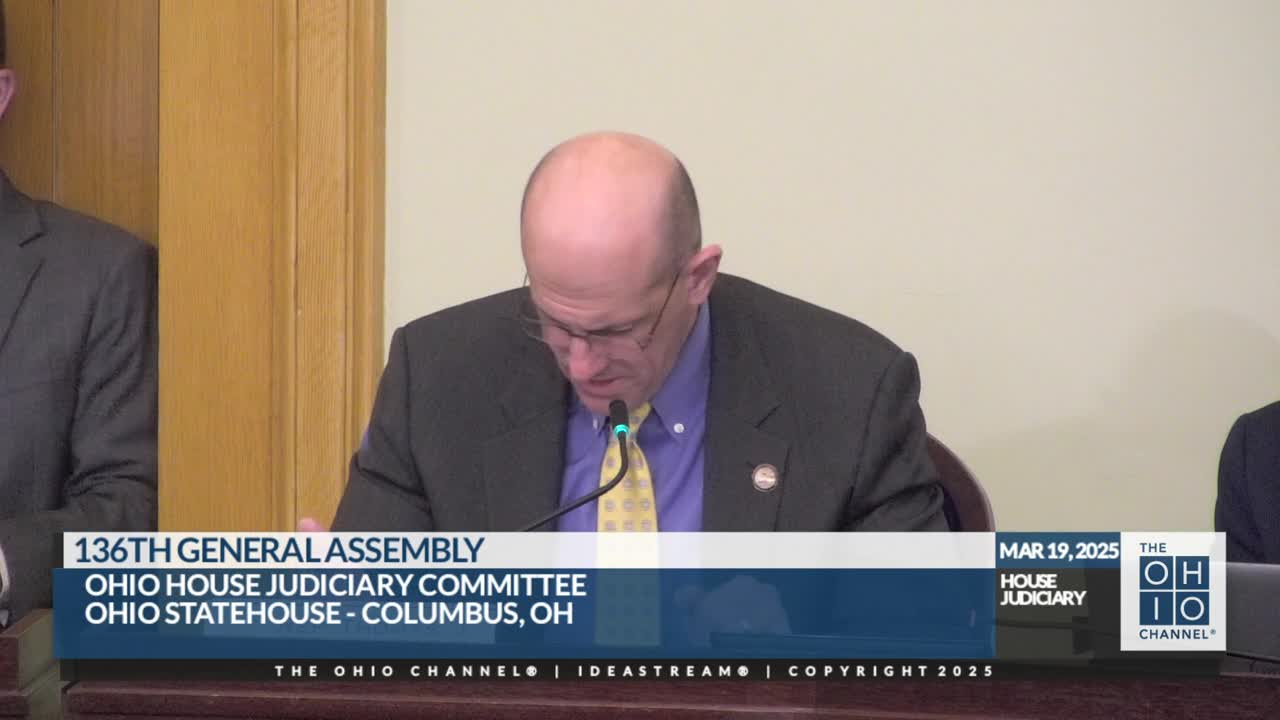
At a House Judiciary Committee second hearing on House Bill 5, proponents described the measure as a narrow, technical fix to restore firearms rights for some people with low-level felony convictions; legislators pressed witnesses on public-safety evidence, record-sealing and how the bill would interact with concealed-carry and federal law.
Rob Sexton, a Buckeye Firearms Association spokesman, and attorney Derek DeBross testified at a second hearing of the Ohio House Judiciary Committee on House Bill 5, which backers said would streamline restoration of firearms rights for people with low-level felony convictions who have been law-abiding for five years.
Sexton said the bill “provides a clear pathway for those who have paid their debt and live clean for 5 years or more to see their rights restored,” telling the committee the measure strikes “an appropriate balance” between punishing repeat violent offenders and restoring rights to rehabilitated people. He added the bill offers a procedural fix for applicants who no longer reside in Ohio, allowing petitions in either the county of conviction or the county of current residence when the petitioner lives out of state.
The bill’s legal details drew questions from lawmakers. Ranking Member Isaacson asked whether witnesses could point to empirical evidence that changing penalties or restoration timeframes actually reduces crime. Sexton replied that experts on penal policy and local prosecutors had made the public-safety case and that firearm-rights groups were not offering empirical research on general deterrence. Representative Plummer pressed witnesses about record-sealing provisions, expressing worry that reducing long-term consequences for some offenders could let serious trafficers regain firearms rights “because of a failed criminal justice system.” Sexton and DeBross said they were open to dialogue on safeguards and stressed the bill’s focus on low-level convictions and procedural clarification rather than creating a new restoration vehicle.
Attorney DeBross said the proposal addresses several legal inconsistencies he has seen in practice: unclear residency rules that force out-of-state applicants to navigate undefined “residency” standards; conflicting court decisions about whether nonviolent felons fall under disability provisions for possession; and an oversight in concealed-carry law that can leave someone who received a restoration unable to obtain a concealed-carry license. “All we gotta do is strike like three words and that'll bring it in line with everything that happens at the federal level,” DeBross told the committee, and warned that substantial edits by the committee could change federal consequences.
Committee members flagged politics and policy trade-offs. Representative Plummer and others emphasized concerns about prosecutorial discretion and past cases where low-level dispositions sheltered more serious conduct. Sexton and DeBross said the bill seeks to correct procedural problems courts have wrestled with and urged lawmakers to weigh restoring rights for rehabilitated people against public-safety protections.
The committee concluded sponsor and proponent testimony without taking a vote. The chair asked the witnesses to submit written testimony for the record.
Why it matters: The bill would change how some Ohioans—particularly those with longstanding, low-level convictions who have moved out of state—can petition to restore firearm rights. Lawmakers are weighing technical fixes that advocates say will reduce inconsistent court outcomes against concerns from some members about potential public-safety trade-offs and how record-sealing might be applied.