Get Full Government Meeting Transcripts, Videos, & Alerts Forever!
Get email alerts on the Pharmacy Benefit Managers topic
No spam. Unsubscribe anytime.
Sponsors introduce bill to curb PBM practices, require drug-claims transparency
Summary
At a House Insurance Committee hearing, sponsors of House Bill 192 said the Community Pharmacy Protection Act would ban retaliatory PBM practices, limit PBM-imposed accreditation and auditing requirements, and require monthly, machine-readable drug-claims reporting to plan sponsors to reveal acquisition costs.
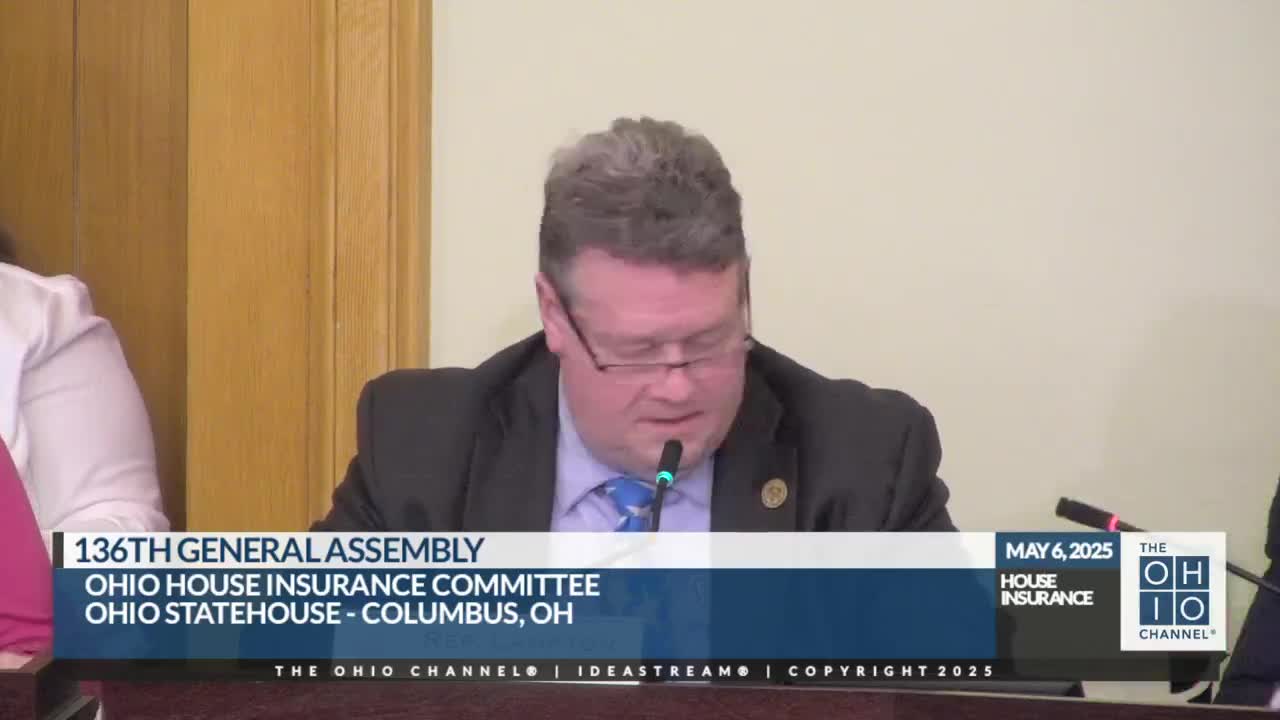
Representative Tim Barhorst and Representative Tex Fisher testified before the Ohio House Insurance Committee on House Bill 192, the Community Pharmacy Protection Act, saying the measure would limit pharmacy benefit managers’ (PBMs) ability to terminate contracts, impose surprise audits and require PBM-imposed accreditation as a condition of network participation.
Sponsors said the bill focuses on three PBM tactics they say are driving independent and non‑PBM pharmacies out of business: low reimbursement rates, patient steering, and retroactive fees similar to clawbacks. “This legislation's primary purpose is to address a market failure created by this problem,” Representative Tim Barhorst said in sponsor testimony. Barhorst warned that Ohio is seeing “pharmacy deserts” as independents close, and described actions the bill would prohibit, including surprise audits and unilateral contract terminations.
Under the bill as described by sponsors, PBMs would be required to provide plan sponsors a monthly, machine‑readable report of drug claims that would denote the actual acquisition cost of each prescription. Representative Barhorst said those receipts would “denote the actual acquisition cost of each prescription drug for every claim,” enabling employers and other plan sponsors to audit drug costs.
Representative Tex Fisher, also a sponsor, cited national and state developments he said back the need for reform and described bipartisan attention to PBM practices. Fisher referenced a 2024 Federal Trade Commission finding on market concentration and a multi‑state attorney general effort urging congressional reform.
Committee members asked how the bill differs from PBM provisions already enacted in the state operating budget. Barhorst said the budget provisions primarily address reimbursement and described HB 192 as focused on transparency and limiting certain PBM business practices. “This bill does not address anything to do with the cost of drugs. It's just how we're going to develop a transparent system, limit over auditing, accreditation and retaliatory contract tactics,” Barhorst said.
Opponents, sponsors said, will argue the bill could raise drug costs; sponsors countered the bill would not add cost at the point of sale but instead expose how money flows through the supply chain. Sponsors also noted the bill would not by itself set reimbursement rates; they described the transparency provisions as a tool for accountability.
The committee heard the sponsor testimony at the first hearing for HB 192 and took questions from members; no committee vote was taken. The committee had earlier approved minutes by unanimous consent at the start of the session.
Background: Sponsors described a local example — two independent pharmacies closing in Springfield and Huber Heights and the reported decline in independent outlets in Clark County — as part of their rationale for statewide action. The bill also references existing state regulatory frameworks, including the State Board of Pharmacy, and proposes reporting to the Ohio Department of Insurance.
The bill will return to committee for further consideration; sponsors said they and supporters remain available to answer follow‑up questions.