Get Full Government Meeting Transcripts, Videos, & Alerts Forever!
Get email alerts on the Fiscal Policy topic
No spam. Unsubscribe anytime.
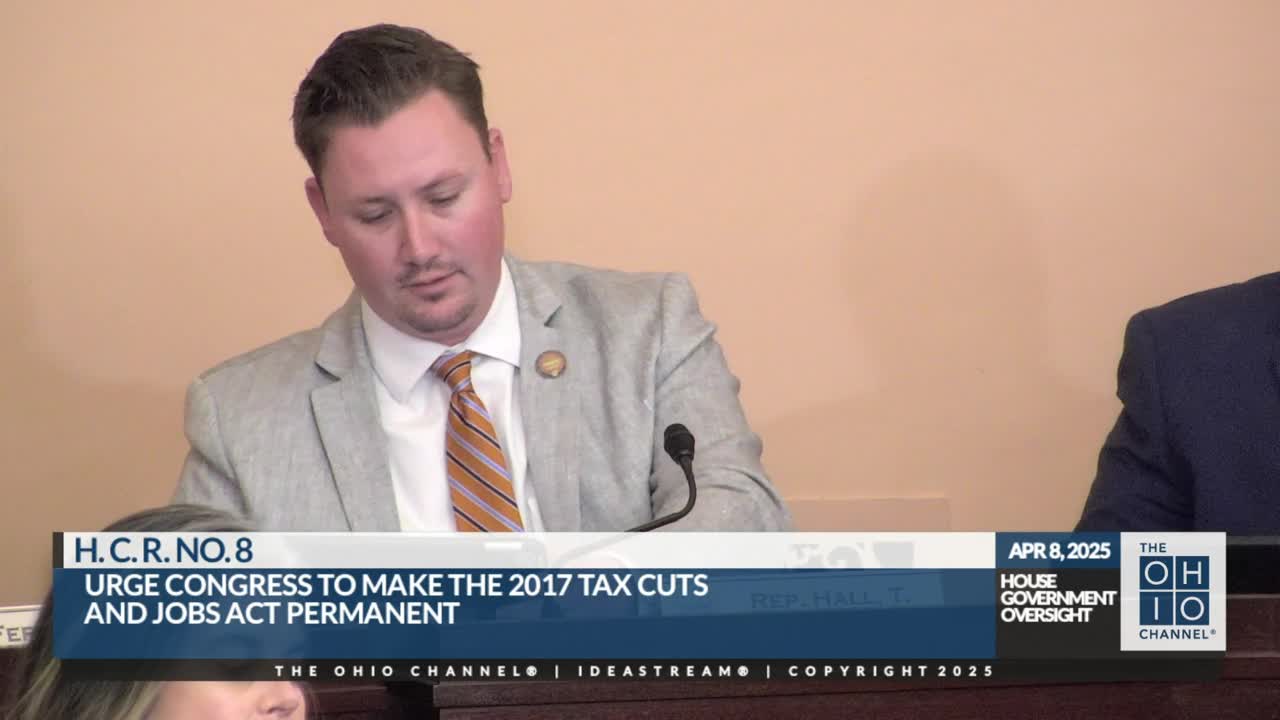
Committee hears sponsor testimony on resolution urging permanence for 2017 tax law
Summary
Representatives presented sponsor testimony on House Concurrent Resolution 8 urging Congress to make the 2017 Tax Cuts and Jobs Act permanent; members debated fiscal effects and distributional impacts but no committee vote was recorded.
Representatives presented sponsor testimony and answered questions at the first hearing on House Concurrent Resolution 8, a nonbinding resolution urging Congress to make the 2017 Tax Cuts and Jobs Act (TCJA) permanent.
Representative Williams, the sponsor, told the committee HCR 8 urges the U.S. Congress to make the TCJA permanent to maintain lower and simpler tax obligations for individuals and businesses. Williams described provisions he said included lower individual brackets, an increased standard deduction, expanded child tax credit and a reduced corporate rate, and credited the law with encouraging repatriation of corporate earnings.
“Those tax cuts need to be made permanent,” Representative Williams said, adding he supported both corporate and individual permanence though he acknowledged some members might favor narrower language.
Committee members probed the resolution’s assumptions. Ranking Member Humphrey and Representative Troy raised concerns about deficits and long‑term effects on entitlement programs. Representative Rader cited studies attributing most benefits to top earners and shareholders and asked how the sponsor reconciled that research with claims that the law helped workers. Sponsor Williams responded that he believed the tax package produced investment and wage benefits and that the COVID downturn complicated impact measurement.
Representative Gross and others asked whether the sponsor would consider amending the resolution to urge permanence for individual tax cuts as well as corporate provisions; Williams said he was open to amendments and committee discussion.
No committee vote was taken on HCR 8 at the hearing. The record includes several back‑and‑forth exchanges and references to public studies and federal fiscal estimates used by members in questioning.
What happened next: Sponsors and members discussed possible amendments and further committee work; the resolution remained at first hearing without recorded committee action.