Get Full Government Meeting Transcripts, Videos, & Alerts Forever!
Get email alerts on the Energy And Natural Resources topic
No spam. Unsubscribe anytime.
Committee adopts technical fixes to House Bill 15, tables rider to extend legacy cost recovery
Summary
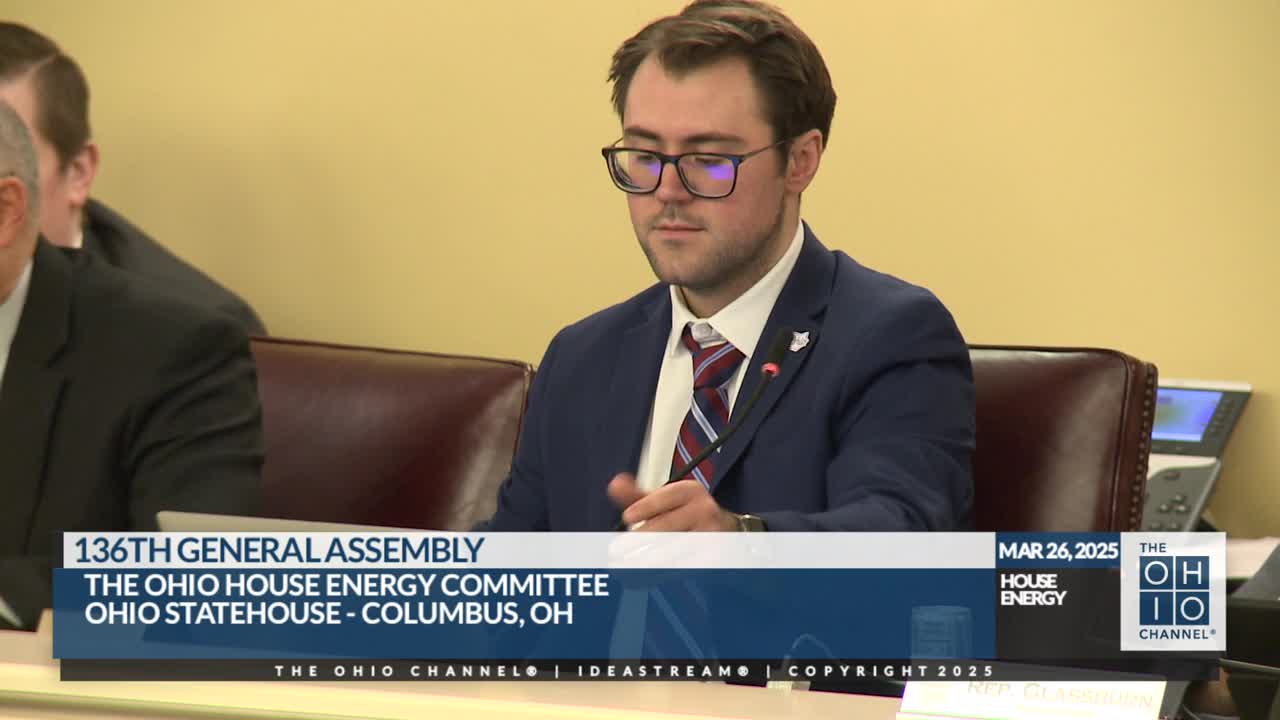
During the seventh hearing on House Bill 15, the House Energy and Natural Resources Committee adopted multiple technical and policy amendments, tabled an amendment that would have extended a legacy generation cost‑recovery rider through Dec. 31, 2026, and favorably reported the substitute bill to the full House by a 23–1 vote.
During its seventh hearing on House Bill 15, the House Energy and Natural Resources Committee adopted a series of technical and policy amendments, voted 17–7 to table an amendment that would have extended a legacy generation cost‑recovery rider through Dec. 31, 2026, and then voted 23–1 to favorably report the substitute bill to the full House.
The committee, chaired by Chair Holmes and with Vice Chair Klopfenstein recognized frequently during the hearing, first approved several technical fixes. Vice Chair Klopfenstein described one early change as, “This is a technical amendment that corrects some of the co op behind the meter provisions that a facility had to be in place into service after the bill's effective date.” Another technical amendment was explained as “a technical fix to the interruptible rate provision” so the programs would not prohibit cost shifting.
Representative Rob Blaisdell introduced a substantive amendment that would have allowed “a rider or cost recovery mechanism for a legacy generation resource in effect prior to the bill's effective date to remain in effect until 12/31/2026.” He said the proposal reflected ongoing committee discussions and framed it as preserving stability for business.
Representative Brennan objected to that rider and urged tabling, saying, “I don't think the rate payers of Ohio should have to take on the burden, of a bad business decision,” and arguing that the subsidies tied to the OVEC plants amounted to an improper continued cost to ratepayers. Representative Brennan asked members to reject extending the subsidy and said the legislature should leave any continued support to a separate bill.
Representative White cautioned against an abrupt repeal of long‑standing agreements without transition, saying, “I'm not in favor of keeping Ovex through the contract, but we need an off ramp.” White argued a sudden repeal could affect utilities’ credit ratings and investor confidence and suggested a time‑limited transition instead of immediate termination.
Representative Humphrey said an immediate end to cost recovery would create financial harm for some utilities and their customers, noting his district’s fiscal vulnerability and that one local utility had incurred more than $50 million in unrecovered expenses that could have to be written off.
After debate, Vice Chair Klopfenstein moved to lay Blaisdell’s amendment on the table. The roll call on that motion recorded 17 votes to table and 7 opposed; the chair declared the motion tabled.
Later in the same session the committee moved to favorably report substitute House Bill 15. The committee voted 23–1 to report the bill to the full House; Representative Humphrey cast the lone recorded no vote. The committee adjourned after the vote.
The provisions discussed and amended in committee included: retention of customer‑sited renewable agreements filed with the Public Utilities Commission prior to the bill’s effective date (an amendment offered by Representative Lear), changes to the accelerated review timeline used by the power siting board (reverting a 45‑day requirement to 90 days), corrections to the electrical service definition in certified territories law to permit certain retail service to mercantile customers from self‑power systems, and technical fixes to interruptible rate language and behind‑the‑meter co‑op provisions. Several of these were adopted without objection earlier in the hearing.
The committee hearing record shows a mix of policy and technical debate: supporters emphasized predictability for investors and utilities, while opponents emphasized ratepayer cost and fiscal fairness. No final enactment occurred in committee; the committee’s action was to report the substitute bill to the full House for further consideration.
Votes at a glance: - Motion to table Representative Rob Blaisdell’s amendment (cost recovery until 12/31/2026): tabled, 17 yes, 7 no (see action record for roll call counts). - Motion to favorably report substitute House Bill 15: passed, 23 yes, 1 no (Representative Humphrey recorded as no).
Next steps: With a committee report filed, substitute House Bill 15 proceeds to the full House for further action. No additional dates or floor scheduling were specified in the hearing record.