Panel backs bill to require itemized utility bills and consumer education links
Loading...
Summary
House Bill 158 would require electric, natural gas and water bills to itemize distribution, generation, transmission, supply costs, riders and taxes; consumer groups and free‑market advocates both testified in support and the Ohio Consumers' Council recommended QR codes linking to plain‑language glossaries and assistance information
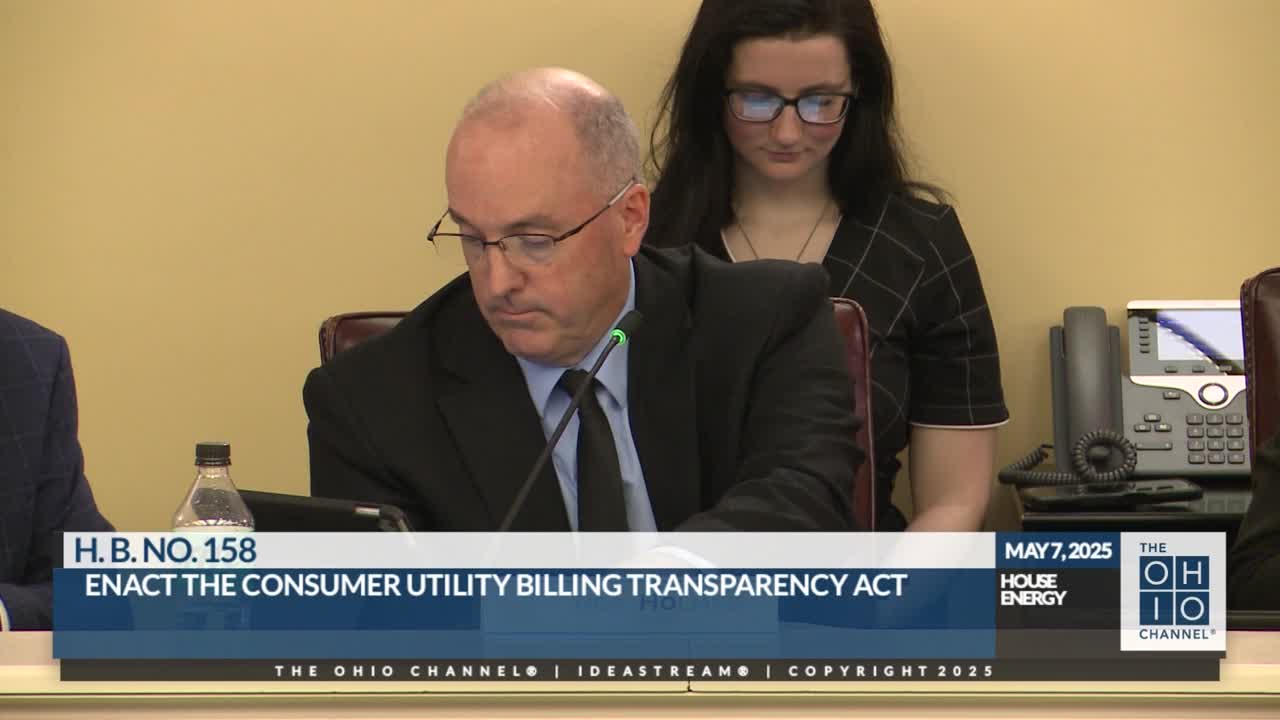
At a second hearing on House Bill 158, proponents from environmental and consumer groups and from Americans for Prosperity told the House Energy Committee the Consumer Utility Billing Transparency Act would give Ohioans clearer, itemized utility bills and tools to understand charges.
"Utility bills are one of the most direct ways that Ohioans engage with our energy and our water systems," Jesse Velasquez, climate justice manager at the Ohio Environmental Council Action Fund, told the committee, describing the bill as "a common sense solution that empowers Ohioans to understand what they are paying for and why." Hannah Cubbins, legislative director for Americans for Prosperity Ohio, also voiced support and said itemized billing "promotes transparency and competition" without imposing new pricing regulations.
Maureen Willis, director of the Ohio Consumers' Council, urged the committee to require QR codes on residential bills linking to a plain‑language glossary and to information about utility assistance programs. Willis said the OCC represents "Ohio's 4,500,000 residential consumers" and that a QR code could be a low‑cost way to connect customers to definitions of unfamiliar charges such as distribution riders or capacity fees.
Speakers emphasized that the bill would not set prices but would require that gas, electric and water bills clearly list major components: distribution, generation, transmission, supply costs, riders and taxes. Willis and others said clearer bills could help consumers spot billing errors, better understand usage, and find assistance programs; Willis cited data showing only about 20% of eligible consumers currently receive assistance benefits and recommended bill links to program information.
Committee members discussed implementation details: whether the information is already available online; whether QR codes would disadvantage digitally underserved customers; and potential costs to utilities of changing bill formats. Witnesses said the underlying data already exists and that QR codes could be paired with a web URL and optional annual paper notices for customers without digital access.
No formal action or vote was taken at the hearing. Sponsors said they would continue to work with stakeholders on bill language and implementation details.