Get Full Government Meeting Transcripts, Videos, & Alerts Forever!
Get email alerts on the Utility Regulation topic
No spam. Unsubscribe anytime.
Ohio bill would shorten gas rate-case timelines, expand tools for large-customer projects
Summary
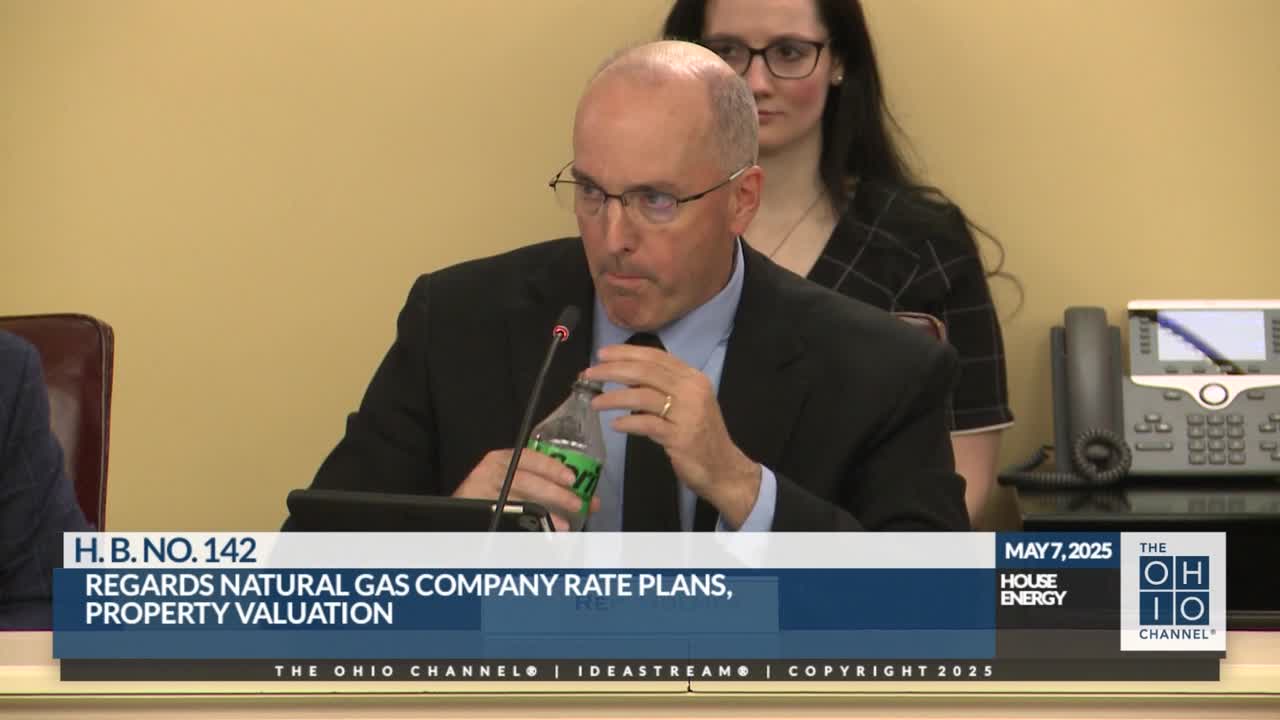
Representatives Davila and Fisher told the Ohio House Energy Committee on first hearing that House Bill 142 would modernize the state’s natural gas utility regulation by adopting forward‑looking test years and shortening the time the Public Utilities Commission of Ohio has to issue rate orders.
Representatives Davila and Fisher told the Ohio House Energy Committee on first hearing that House Bill 142 would modernize the state’s natural gas utility regulation by adopting forward‑looking test years and shortening the time the Public Utilities Commission of Ohio has to issue rate orders.
"This legislation builds on the important work that this General Assembly has done this session through the enactment of House Bill 15," the bill’s sponsor said, arguing the bill "will increase Ohio's regulatory certainty" and allow utilities "to recover the cost of doing work at the time when those costs are being incurred." Representative Fisher said the bill is "a pro growth, pro investment reform that modernizes Ohio's natural gas utility regulatory process to make our state more competitive."
The bill would change the PUCO review window for rate-case orders from the current 545 days to 365 days and would permit utilities to use forecasted (forward‑looking) test periods similar to rate‑making reforms enacted in House Bill 15 earlier this session. Sponsors said the changes, taken together, would reduce what they described as "regulatory lag" and position Ohio to better compete for large‑load customers such as data centers, manufacturers and logistics centers.
Committee members pressed the sponsors on implementation details and whether the proposal would remove essential procedural steps. Representative Hall asked why the current 545‑day period exists and whether shortening it would "cut out what they would say are necessary steps to ensure ... safety and efficiency." Representative Fisher and the sponsor said they had not yet had a full technical briefing from the PUCO but expected to meet with the commission to discuss timeline, staffing and process questions before the committee proceeds.
Members compared timelines in other states. Sponsors cited Indiana’s shorter maximum window (one sponsor referenced a "300 day maximum"), Kentucky’s roughly six‑month process and other states where rate cases complete in less than a year. Sponsors described one year (365 days) as a "sweet spot" to start reducing regulatory lag without claiming it would immediately make Ohio the fastest state.
Sponsors also said the bill includes consumer protections intended to shield other ratepayers from bearing disproportionate financial risk when utilities negotiate customized rates or commercial agreements to serve large customers.
No formal votes were taken during the hearing. Representatives repeatedly invited PUCO staff or commissioners to testify in a later hearing to explain the detailed steps the commission follows and what changes would be required to meet a shorter deadline.
If enacted as described at the hearing, the bill would change statutory timelines that govern PUCO rate‑case orders and authorize forward‑looking test years; the sponsors and committee members agreed that technical input from PUCO would be needed to refine the bill language before a final vote.