Get Full Government Meeting Transcripts, Videos, & Alerts Forever!
Get email alerts on the Urban Chickens topic
No spam. Unsubscribe anytime.
Reynoldsburg hears hours of public comment on backyard chickens; council directs staff to study permitting, enforcement
Summary
Dozens of residents, two law interns and council members debated health, cost and enforcement issues during an extended work session on legalizing residential hens. Council asked staff to return with cost and implementation options at the first May meeting.
Dozens of residents and two legal interns spoke for and against allowing backyard chickens in Reynoldsburg during a work session April 14, and council members asked staff to return with more analysis and cost estimates at the council’s first May meeting.
The session featured two prepared presentations from legal interns in the city attorney’s office — one pro and one con — followed by more than two hours of public comment from residents and organized supporters and opponents. Supporters emphasized food security, education and neighborhood self-sufficiency; opponents cited disease risk, odors, predators and enforcement burdens.
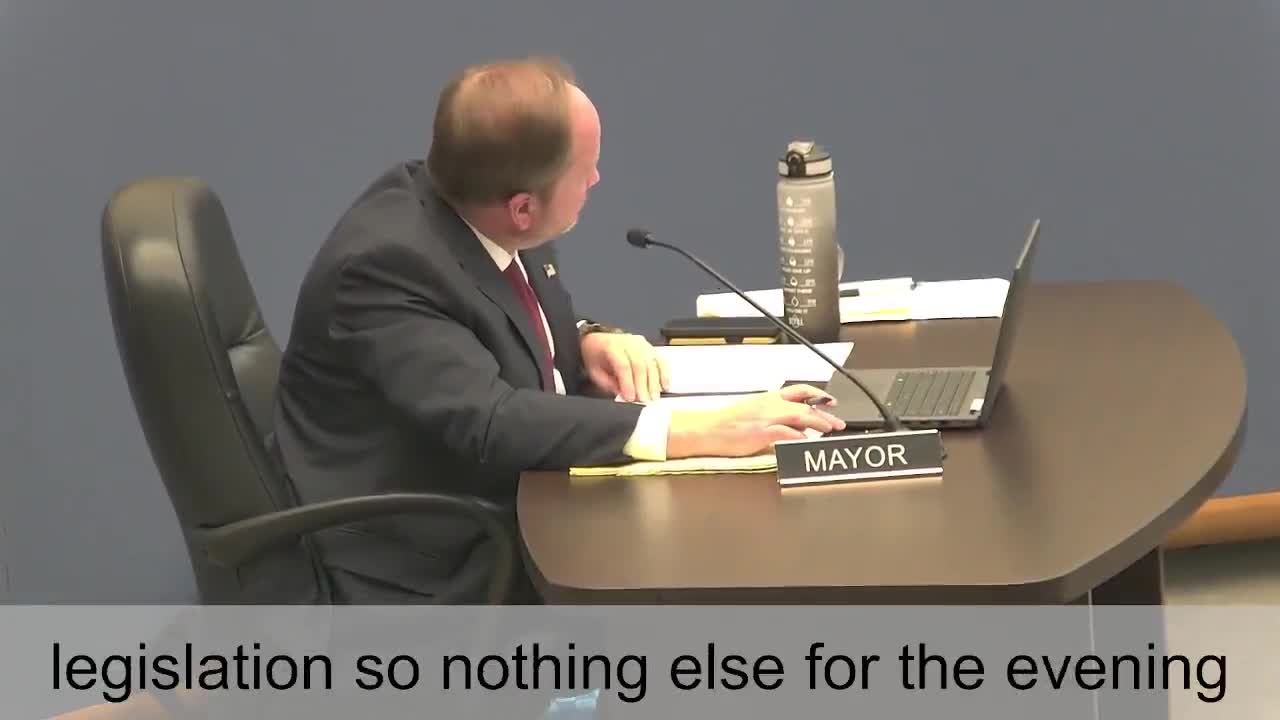
The debate mattered to council because it raised implementation questions that would affect city operations and budgets. Council members repeatedly asked whether the city could rely on Columbus Public Health for permitting and inspection, how enforcement would be handled locally, and whether existing staffing would be sufficient. Mayor Joe Beggin and city staff said the city has two park rangers who could be the front line for complaints but that additional code-enforcement capacity would likely be required — staff positions that are authorized but not currently funded.
Speakers on both sides gave concrete proposals and cautions. A number of residents and presenters recommended limits such as no roosters and modest flock sizes (several speakers suggested four to six hens as a typical cap), rear-yard coops or fenced runs, and setbacks from property lines; others proposed no permit or low-cost permitting. Opponents raised public-health examples and cited studies and outbreak statistics, warning that backyard flocks can be associated with salmonella and other pathogens when proper biosecurity is not followed.
Council members and staff outlined several specific concerns and possible guardrails during their discussion. Council proposals and staff notes raised and/or recorded: - Minimum standards: no roosters; requirements for coops/enclosures; limits on free-ranging in unfenced yards. - Permit model: many speakers urged a permit process (some suggested a modest fee); council suggested a permit could fund enforcement and encourage compliance. - Lot-size or density limits: some speakers suggested different limits based on lot size, including lower counts for smaller lots; council members discussed quarter-acre and half-acre thresholds as possible cutoffs for permitting or different limits. - Health and environmental controls: guidance on manure storage/composting, feed storage to limit rodents, and owner education about biosecurity. - Enforcement resourcing: current code enforcement has four officers; staff said an additional position would likely be needed if the city implements permitting and inspections. The city hired two park rangers about 18 months ago and those rangers would be the initial contact for many complaints but the mayor and staff said any staffing increase would require funding.
Council asked the city attorney and administration to research options and report back. Specifically, council directed staff to investigate whether the Columbus Public Health Department could provide permitting/inspection services and what that cost and contract would look like; to estimate start-up and ongoing enforcement costs and staffing needs if the city manages permitting locally; and to return findings at the council’s first meeting in May. At least one council member asked staff to prepare draft ordinance language only after confirming whether an outside permitting partner is feasible and its cost.
Public commenters included homeowners, longtime poultry owners, a certified backyard-poultry instructor and residents who said they already keep unregulated flocks. Several speakers urged looking at neighboring municipalities’ approaches (Columbus, Bexley, Gahanna, Worthington, Pataskala and others) and adapting successful elements such as setback rules, permit terms and animal limits. Opponents urged stricter limits or continued prohibition, citing neighborhood density, persistent odors, predators and the city’s anticipated cost to police violations.
Where this goes next: council did not adopt any ordinance or regulation at the meeting. Instead they asked the city attorney and staff to return with a short implementation analysis (including whether Columbus could be a permitting partner and the likely costs and staffing needs) for a follow-up discussion at the first meeting in May.
Speakers and officials quoted in this article are included in the article’s speaker list for attribution and verification.