Get Full Government Meeting Transcripts, Videos, & Alerts Forever!
Get email alerts on the Regulatory Reform Reins topic
No spam. Unsubscribe anytime.
Committee hears push for REINS-style review of major regulations
Summary
Policy groups told the Budget and Fiscal Affairs Oversight Committee that Georgia should require legislative approval of major agency rules, use independent economic analysis and adopt rolling sunset reviews; the committee will hear HR 257 at a future meeting and presenters will circulate materials.
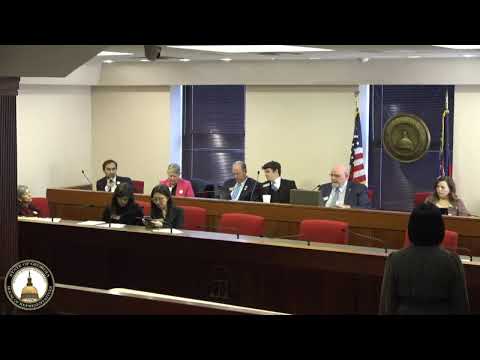
The Budget and Fiscal Affairs Oversight Committee heard presentations urging a REINS-style law that would require the legislature to approve major agency rules, adopt routine sunset reviews of regulations and require economic analyses of proposed rules, presenters said.
Policy analysts from the Georgia Public Policy Foundation and advocates from the Pacific Legal Foundation and Americans for Prosperity Georgia told the committee that stronger legislative oversight and periodic review would reduce outdated or duplicative rules and give elected lawmakers a role in approving regulations with large economic effects.
"Between the federal code and the Georgia code, there are over 1,200,000 combined regulatory restrictions on the people of Georgia," Jay Thomas Perdue, a policy analyst with the Georgia Public Policy Foundation, said during the presentation. He said Georgia's code has grown steadily since the secretary of state's office began tracking regulations in 1965 and that the Georgians First Commission estimated roughly 54% of the code is in need of review because provisions are out of date or redundant.
Jamie Kavanaugh, legal policy counsel at the Pacific Legal Foundation, summarized the central pitch for REINS: "We want a mechanism that gives the legislative branch authority to approve new major regulations." Kavanaugh said the federal REINS proposal defines major rules by a dollar threshold and that many states adopt similar thresholds tied to estimated compliance costs. Kavanaugh and other presenters recommended three features for state legislation: a clear definition of "major" rules, required economic impact analyses and a sunset review that makes regulations expire unless reviewed and retained.
Tony West, state director for Americans for Prosperity Georgia, said the policy's purpose is oversight, not to block ordinary rulemaking: "The point of REINS is not to bog down the rulemaking process or make our executive branch grind to a halt. The point is to help identify significant economy-affecting rules on the front end and ensure legislative buy in prior to implementation." He cited examples of other states' thresholds — Florida at $1,000,000 within five years and Wisconsin at $10,000,000 over two years — and noted West Virginia requires the legislature to enact a bill for each regulation.
Committee members asked presenters to clarify implementation details. Representative Byrd cited an outside figure he said he had been given: "the number of 111,899 regulations that are in the state of Georgia," and asked who would lead deregulation. Presenters pointed to the sunset-review mechanism as a starting point, saying agencies would identify obsolete rules and that new review cycles would reduce the code over time.
Members also probed the scope of economic analyses. One legislator asked whether cost estimates should include impacts on working-class Georgians as well as businesses; presenters said the analysis could be broadened to quantify effects on individuals, local governments, nonprofits and churches if the legislature wanted that scope. Another legislator asked about federal executive orders and federally required rules; presenters suggested that conducting economic analyses even for federal mandates could help inform state discussions and conversations with the federal delegation.
No formal votes occurred. The committee chair said presenters would circulate the slide decks and that the session would be available on the committee's archive video. The chair also announced the committee will hear HR 257, which would address aspects of regulatory oversight, at the next meeting; he did not specify whether the committee will vote on the bill at that time.
The presentations and committee discussion make clear the committee is considering legislative options that would require clearer economic evidence and greater legislative review of high-impact regulations; presenters and several members said additional detail and sample legislative language will be circulated before further action.