Get Full Government Meeting Transcripts, Videos, & Alerts Forever!
Get email alerts on the Code Enforcement topic
No spam. Unsubscribe anytime.
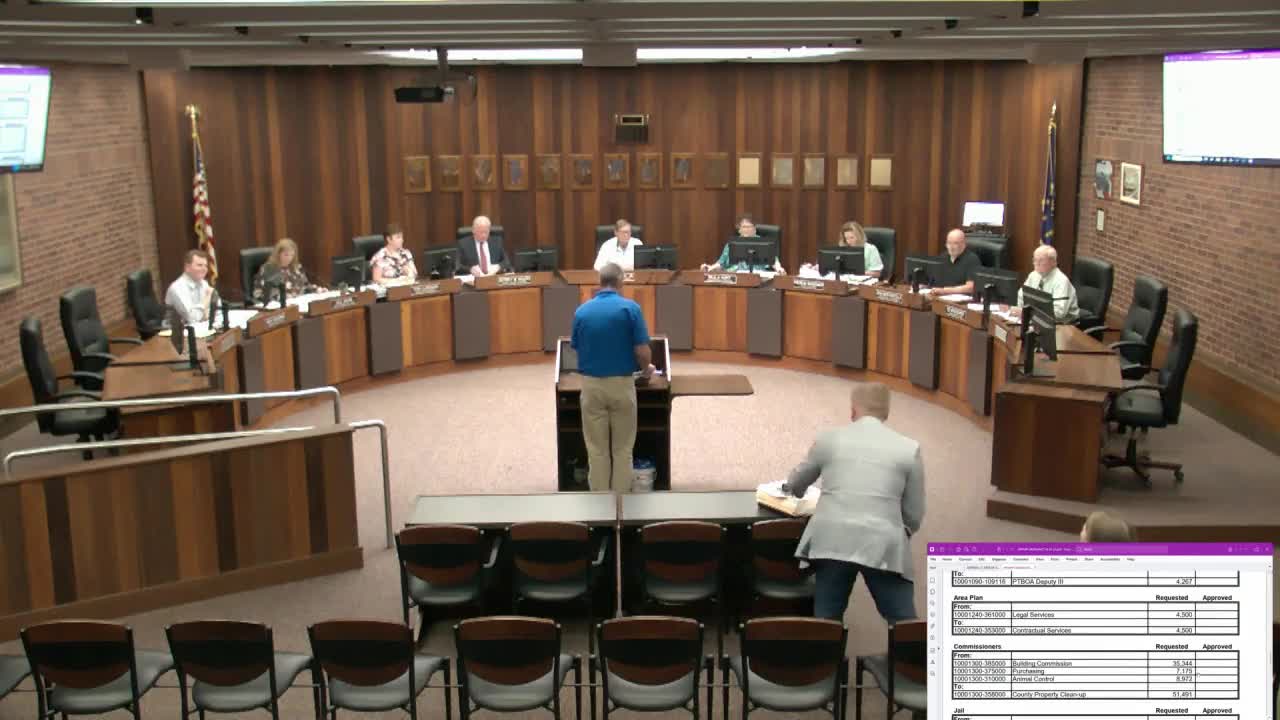
Commissioners ask council to fund inspector, mirror city code process to speed up cleanup of dilapidated properties
Summary
Vanderburgh County commissioners asked the county council to appropriate money to fund a dedicated code-enforcement inspector and to adopt an ordinance mirroring the city's administrative hearing process so dilapidated properties can be addressed more quickly.
Vanderburgh County commissioners asked the county council to appropriate money to fund a dedicated code-enforcement inspector and to adopt an ordinance mirroring the city's administrative hearing process so dilapidated properties can be addressed more quickly.
Commissioner Justin Elpers said the county has seen an influx of properties "that are not up to code," creating a burden on neighbors and county staff. "Over the last, I would say, year, the commissioners have seen a, an influx of what we call properties that are not up to code," Elpers said.
County Attorney Ryan Schultz, who has served as the city building commission's hearing officer, told the council the county's current process is slower and more costly because enforcement now requires demand letters and, when necessary, superior court lawsuits. "The goal of all of these is not to tear properties down. The goal is to have the homeowner repair their property so that it stays on the tax roll," Schultz said, describing the city's administrative inspections and monthly building-commission hearings as a model that produces faster results and lower legal fees.
Schultz said city legal costs tied to code enforcement have been high; he cited nearly $17,000 in legal spending in a recent month and estimated roughly 20 outstanding county cases that could be reduced to three to five per year once an administrative process is established.
The commissioners propose using an existing interlocal agreement with the city under which the city's building commission would handle enforcement for county properties. Under the current agreement, costs are allocated about 25% to the county and 75% to the city; commissioners told the council they expect to ask for an appropriation of about $44,000 for the next six months, then roughly $88,000 for 2026, with a plan to review the split at the end of 2026.
Council members asked about the source of savings and the timeline. Schultz said staff will track legal and contractor costs and report back; he said the county could present a savings report in about a year after the inspector is on board. Commissioners also warned that cleanup and demolition costs will be additional and vary by property; bids for demolition and debris removal could range from a few thousand dollars to $20,000 or more for larger properties.
No formal vote was recorded at the meeting. Commissioners said they will draft the ordinance to mirror the city process and bring an appropriation request to the council for a vote at the next meeting.
Votes at a glance: none (proposal/appropriation request to be presented at next council meeting).
Why it matters: County officials said an administrative enforcement process would shorten case timelines, reduce court and attorney costs, and address neighborhood health and property-value concerns more quickly than the current court-driven approach.
What's next: Staff will draft an ordinance that mirrors the city's building-commission administrative process, ask the council to appropriate initial funds (about $44,000) at the next meeting, and report back on savings after roughly one year of operation.