Get Full Government Meeting Transcripts, Videos, & Alerts Forever!
Get email alerts on the Historic Storefronts topic
No spam. Unsubscribe anytime.
LPC approves new corner display window at 809 Madison Avenue over one commissioner’s objection
Summary
The Landmarks Preservation Commission approved a Certificate of Appropriateness to add a new display window on East 60th Street at 809 Madison Avenue; commissioners and preservation groups debated whether to require restoration of an altered Madison Avenue storefront as part of the approval.
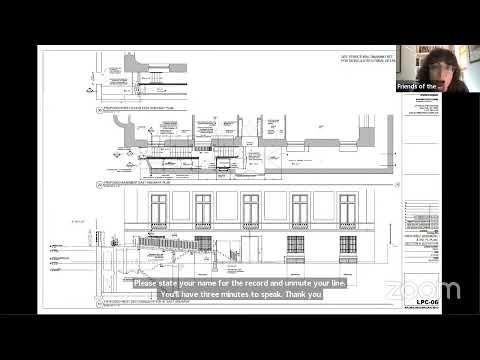
The Landmarks Preservation Commission voted 6–1 on Feb. 4 to approve a new corner display window and storefront infill at 809 Madison Avenue in the Upper East Side Historic District (LPC 25-06002). The approval adds a display window on the East 60th Street elevation for the corner retail condominium while leaving an altered Madison Avenue storefront in place for now.
Robert Bianco of PKSB Architects presented the application, describing the 12‑story Neo‑Renaissance building (designed by F.B. and A. Ware, built 1924–25) and noting a prior LPC approval for a similar proposal whose permits later expired. Bianco said the new display window would align horizontally with the historic storefront cornice on Madison Avenue and would match the previously approved side‑street storefront details, including a brass surround, profiled cornice, and grilled bulkhead.
The nut graf: commissioners and preservation groups supported the proposal as consistent with historic corner storefront patterns, but testimony and several commissioners urged the applicant to also restore a nearby altered Madison Avenue storefront. Zainab Turan of Friends of the Upper East Side said the proposed storefront “is visually disconnected” from the Madison Avenue storefront and urged an alternative design that “better complement[s] each other.” John Graham of the Victorian Society in New York urged that the previously approved restorative work on Madison Avenue be included now.
Commissioners generally found the new display window appropriate and well aligned with the masonry pattern. Commissioner Master called it “a very reasonable request” and said the proposed opening “is well aligned with the window above.” Commissioner Goldblum said the project would be improved if the missing Madison Avenue storefront were restored but described imposing that condition as legally and practically difficult. Commissioner Jefferson cast the lone dissenting vote, describing the corner composition as “unfinished” and saying he found the proposal incomplete without the Madison Avenue restoration.
The motion to approve was offered by Commissioner Jefferson and seconded by Commissioner Goldblum. The recorded vote was Vice Chair Bland: Aye; Commissioner Chapin: Aye; Commissioner Ginsburg: Aye; Commissioner Goldblum: Aye; Commissioner Jefferson: Nay; Commissioner Lutfi: Aye; Commissioner Master: Aye. The motion passed, 6 in favor, 1 opposed.
The approval is for the new opening and storefront infill as shown in the application: matching cornice alignments, brass-framed storefront, and a new granite base. The commission’s statement notes the work “will require the removal of only a limited amount of plain limestone and granite and will allow for greater transparency at the base, which is typical of the historic condition of most corner buildings on Madison Avenue.” The commission did not require restoration of the altered Madison Avenue storefront as a condition of this approval; commissioners urged the applicant to consider that restorative work in the future.