Get Full Government Meeting Transcripts, Videos, & Alerts Forever!
Get email alerts on the Carbon Sequestration Moratorium topic
No spam. Unsubscribe anytime.
Vermillion County adopts eight‑month moratorium on new carbon‑sequestration projects
Summary
After extensive public comment, the Vermillion County Board of Commissioners approved Ordinance 2025‑6 to halt new carbon‑sequestration projects for eight months while staff and legal counsel study zoning and statutory limits; the ordinance explicitly excludes the county's existing pilot project.
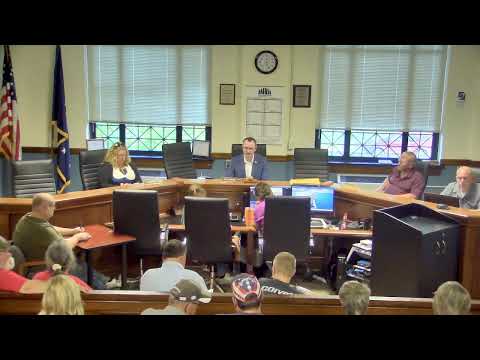
Vermillion County commissioners voted unanimously to adopt Ordinance 2025‑6 on a moratorium that pauses new carbon‑sequestration projects for eight months while county staff and outside counsel study zoning changes and legal limits.
The moratorium, approved by voice vote after a lengthy public comment period, does not apply to the pilot project already operating in the county, planning staff and the board said. The board also authorized the county attorney to work with planning staff and the county’s land‑use counsel in Fort Wayne to revise the ordinance language and prepare a memo on relevant state law.
The vote followed more than an hour of public comment at the commissioners’ meeting. “You need to pass a moratorium and get protections in place from this nonsense,” said Blake Sanquinetti, a Vermillion County resident, calling for immediate local limits on carbon capture, transport and storage operations. Multiple residents described concerns about truck traffic and potential effects to groundwater and property values; one speaker estimated “52,000 trucks a year” would be required if large volumes were moved through county roads.
Doug Martin, town board president of Universal, told the board: “I know that the moratorium does not affect the universal pilot program, but I do think there should be some type of moratorium passed so we don't have this all over the county.” Several speakers urged a temporary moratorium as a first step and some asked for a permanent ban; others urged legal challenges at the state level.
Planning staff briefed the board on the proposed ordinance’s scope and legal basis. Brad, a county planning staffer, said the moratorium request was based on model language from the area planning commission’s land‑use attorney, Bob Ehrman, and was intended to provide time to research local regulatory options and avoid conflict with state or federal rules. “Performance‑based zoning standards can apply to any subsequent carbon‑sequestration projects,” Brad said, citing examples such as separation distances from schools and truck‑route provisions.
Brad and Penny Carpenter, Vermillion County area‑planning staff, told commissioners the area planning commission previously removed three paragraphs addressing carbon sequestration from the county’s Unified Development Ordinance; that revised UDO was advertised under state statute and became effective April 30. Commissioners said they would ask Ehrman and the county attorney to prepare a short memo addressing two legal issues raised during debate: Indiana Code 36‑1‑3‑8 (limits on local regulation where state law preempts local action) and recent legislation (Senate Bill 457) that changes state permitting for sequestration projects and takes effect July 1.
During discussion of the moratorium text, commissioners and staff agreed the ordinance should explicitly exclude the existing pilot project so the moratorium cannot be read as regulating the pilot. Commissioners instructed the county attorney, John Spurr, to work with Brad and Ehrman on any necessary scrivener or legal amendments and to return revisions through the planning commission if required by ordinance process.
The board also voted to direct the county attorney to ask Wabash Valley Resources — the company involved in the county pilot project — whether it would relocate its pilot operations to its own property. “If they believe in the science, they should move it,” Brad told the board as he pressed the request.
Action summary: the board approved Ordinance 2025‑6 by voice vote (motion made by Trustee Hess and seconded by Mr. Peebles); the motion included authorization for the county attorney to coordinate revisions with planning staff and Fort Wayne land‑use counsel and to request that Wabash Valley Resources relocate the pilot if feasible.
The moratorium will be effective immediately under county procedures while staff and counsel complete their review. County officials said the moratorium is temporary and intended to provide time to identify local performance standards and any regulatory gaps that are not preempted by state or federal law.
What’s next: planning staff and counsel will prepare a memo on the statutory questions, work on any language edits, and present amendments to the area planning commission for public hearing if required. Officials said they expect that work to take several months and that the moratorium will give the county time to draft and adopt any zoning standards it finds legally permissible.