Get email alerts on the Council Code Amendment topic
No spam. Unsubscribe anytime.
Council approves first reading to repeal and replace Code Chapter 2.02 to correct titles and voting language
Summary
The Columbus City Common Council approved a first reading to repeal and replace Chapter 2.02 of the city code, cleaning up titles from the change from third-class to second-class status and standardizing language about roll-call votes and voice votes for certain items.
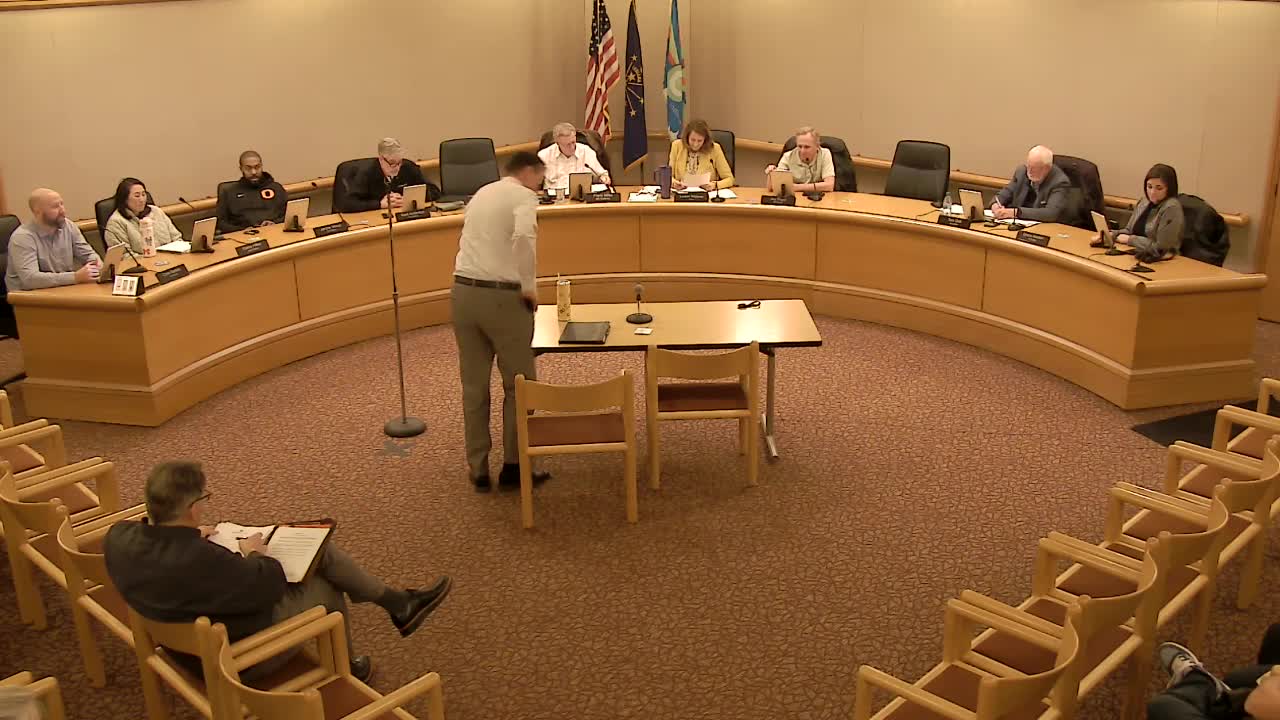
The Columbus City Common Council approved a first reading Feb. 4 to repeal and replace city code Chapter 2.02, a cleanup effort that corrects titles and clarifies meeting and voting language after previous changes tied to the city's reclassification.
Council member Frank Miller explained the project began after the city moved from third-class to second-class status, which required widespread title and wording changes; the Chapter 2.02 rewrite corrects lingering references (for example, outdated "clerk treasurer" mentions) and standardizes language about when roll-call votes are required. Miller and staff said the only substantive change added in the draft was language clarifying that resolutions and ordinances require roll-call votes while other items may be decided by voice vote.
City staff member Jeff (on line) said the rewrite is part of ongoing cleanup work and that additional code cleanups may follow. Council moved and seconded to approve the chapter on first reading and the motion carried (the meeting record does not show a roll-call tally). The council noted that similar edits may be needed elsewhere in the code and that staff will continue to coordinate further updates.
AI generated
The text on this page is AI generated. Summaries, highlights, analysis, and video transcripts are all produced from the original source material.
AI can make mistakes, so if you spot one, and we will fix it for everyone.
Note: the source content is unaltered by us. Any content source we link to, be it a video, an audio recording, or a document, is presented exactly as its publisher released it. That publisher is usually a government body, sometimes an individual official or another organisation.