Get Full Government Meeting Transcripts, Videos, & Alerts Forever!
Get email alerts on the Noise Ordinance topic
No spam. Unsubscribe anytime.
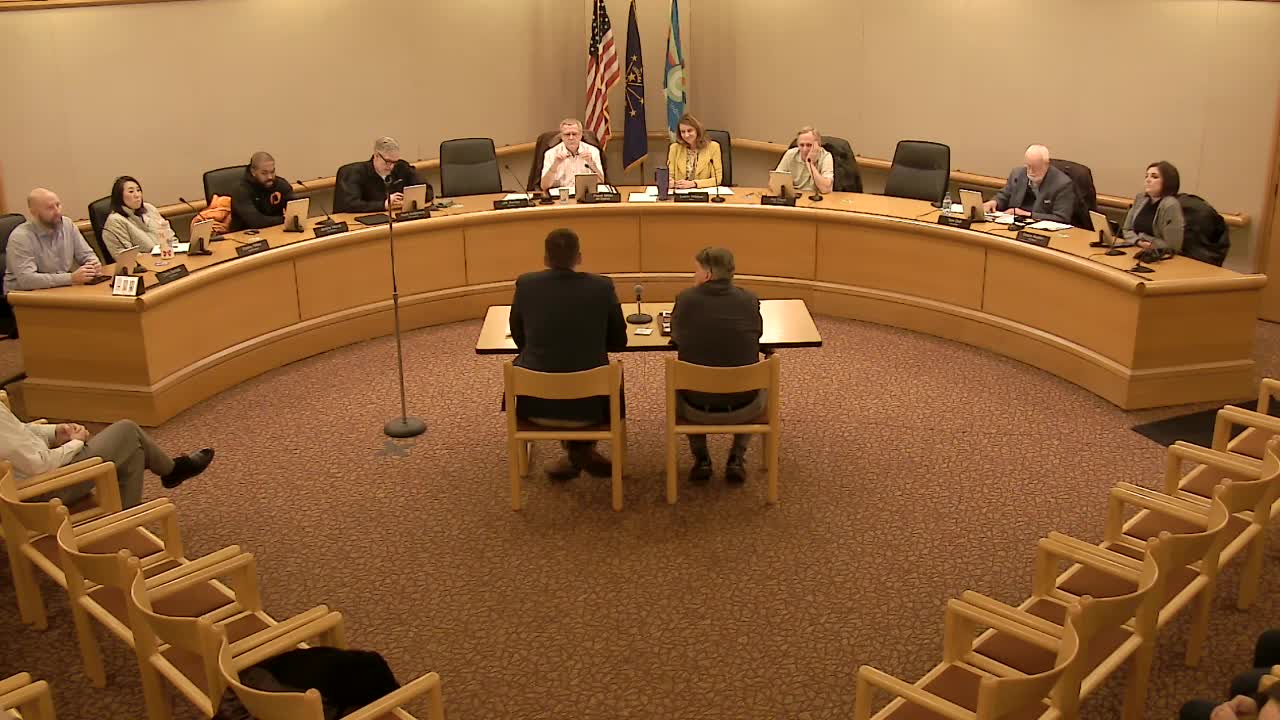
Columbus City Common Council approves updated noise ordinance on second reading
Summary
The Columbus City Common Council approved a rewritten city noise ordinance on its second reading Feb. 4 after discussion about commercial vendors, garbage collection and enforcement by police or code officers.
The Columbus City Common Council on Feb. 4 approved a replacement noise ordinance in its second reading, after council members and staff answered questions on how the rewrite treats mobile vendors, loudspeakers and waste-collection noise.
Council members said the ordinance is intended as an update and cleanup of the older code, aligning local terms with Indiana statutory language and increasing penalties to give enforcement "more teeth." The rewrite had been reviewed by the ordinance review group and by police before being presented to the council for second reading.
The ordinance contains carve-outs and permitting pathways for street vendors and city-authorized vehicles; the section addressing amplified sound (noted in the draft as 8.280.04) requires a city authorization or permit for the use of loudspeakers or other sound-amplifying devices in public rights-of-way. The ordinance also explicitly covers noise created by loading and unloading — including dumpsters and toter trucks — as a category of loud and excessive noise that can be regulated.
Residents raised concerns that downtown trash collection and toter trucks sometimes operate in the very early morning and that the existing language might not shield residents from that disturbance. A council member and city staff pointed to the loading/unloading language in the draft, saying it includes noise from dumpsters and similar activity. Staff advised residents that enforcement can be pursued through the Columbus Police Department or code enforcement, depending on whether the situation is an emergency; noncompliance can lead to fines under the ordinance.
The council moved and seconded approval of the ordinance on its second reading and then approved it (method of vote and roll-call tallies were not specified in the meeting record). The council noted that enforcement will likely require repeated citations in some cases to secure compliance.
Council staff said the rewrite is intended to modernize terminology, clarify which activities require permits, and make it easier for residents to report problems to police or code enforcement.