Get Full Government Meeting Transcripts, Videos, & Alerts Forever!
Get email alerts on the Housing Affordable topic
No spam. Unsubscribe anytime.
Council advances TWG pilot for affordable housing and creates an Affordable Housing Fund (first readings)
Summary
Council approved the first reading of a pilot agreement with TWG Development LLC and established an Affordable Housing Fund required by Indiana law; both measures passed on first reading 9-0. Council discussion centered on the fund—s structure, board makeup and tradeoffs with tax abatements and TIFs.
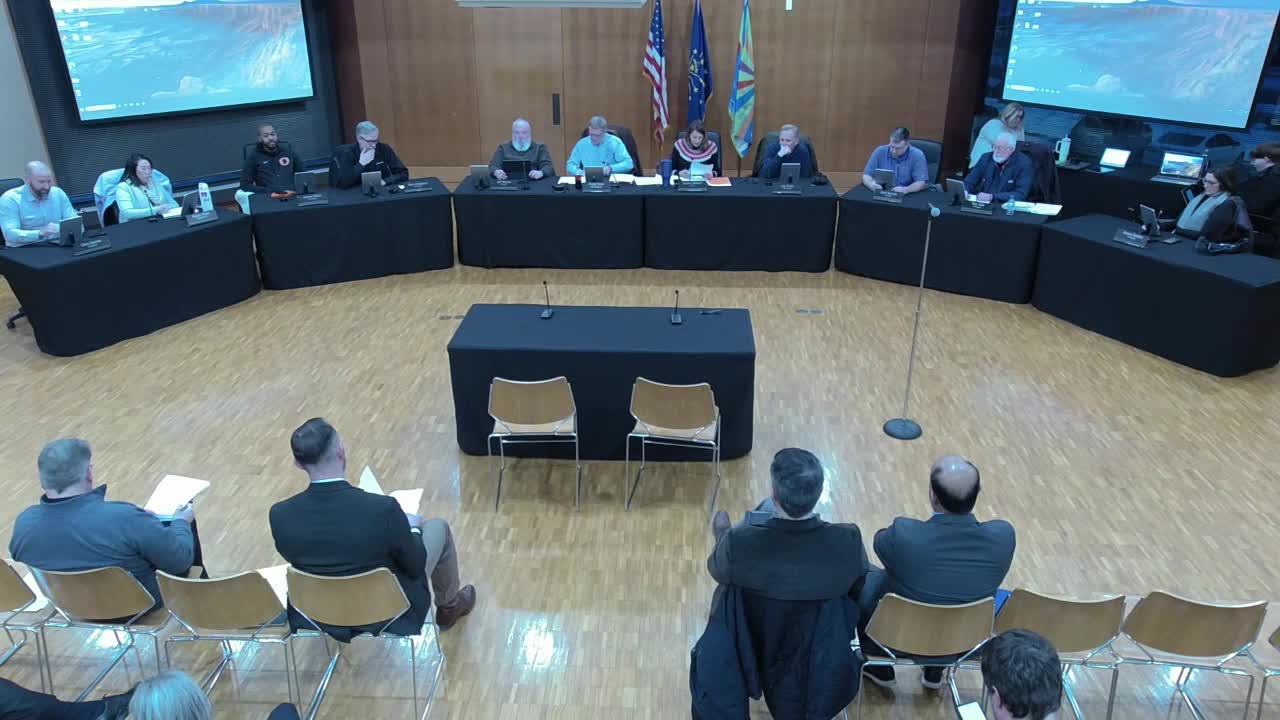
The Columbus City Council on Feb. 18 approved on first reading a pilot agreement with TWG Development LLC tied to Indiana—s affordable-housing pilot statute and established a city Affordable Housing Fund required by state law; both measures passed their first readings by roll call vote, 9-0.
City staff said the agreement will be the first local use of Indiana—s 2021 affordable-housing pilot statute in Columbus. Under the pilot TWG would make pilot payments to the city over a 15-year schedule; state statute requires a nonreverting local housing fund to receive those payments and sets certain spending and advisory requirements for that fund.
City economic-development and planning staff (Eric Fry and Paul [last name on transcript]) explained that TWG used the pilot to secure competitive Low-Income Housing Tax Credits: the pilot—s 15-year schedule provided the local contribution points the developer needed to score competitively, whereas a standard 10-year tax abatement would not have generated enough local-contribution value without additional cash.
Council discussion focused on two topics: (1) whether the city should use a pilot and a new dedicated fund versus other tools such as a tax abatement or a TIF district, and (2) the structure and size of the advisory committee required by Indiana Code for the Affordable Housing Fund. Council members questioned whether creating another restricted fund and an 11-member advisory committee adds bureaucratic layers, while others said a focused, housing-only fund and an expert advisory group would guard against funds being diverted to other priorities.
Staff and TWG representatives said the pilot structure let the developer count a predictable 15-year stream of payments as the local contribution required by the state tax-credit scoring process; staff estimated the pilot—s 15-year benefit at roughly $613,764 in net present terms for the project and said a 10-year abatement scenario would not have achieved the points needed without a larger local cash commitment. TWG said they have funding and intend to proceed with a 110-unit affordable rental project.
Under Indiana Code the Affordable Housing Fund must be overseen by a local advisory committee whose membership and some spending rules are specified in statute; staff said the fund can pay reasonable administrative costs and that, by statute, 50% of available funds must be used for very low-income households (at or below 50% of area median income) and 50% can be allocated to eligible entities such as nonprofits or housing authorities. Staff said that, although the fund and committee are statutory requirements for pilots, the city will return to council for confirmation of the advisory panel—s recommendations and for final appropriation decisions.
Both ordinances passed first reading, 9-0; staff said the council will still act on final-adoption readings in later sessions. Councilmembers asked staff to provide additional written details on the fund—s mechanics, timelines for initial payments, and how appropriations would be processed.