Get Full Government Meeting Transcripts, Videos, & Alerts Forever!
Get email alerts on the Controlled Substances Regulation topic
No spam. Unsubscribe anytime.
Senate tightens nitrous oxide sales and penalties; restaurants retained limited exception
Summary
Senate Bill 98, sponsored by Senator Brock Myers, tightens controls on nitrous oxide by raising a minimum purchase age (generally to 21), increasing penalties for misuse, and adding revocation authority for licensees; floor amendments carved out in‑restaurant handling and adjusted penalties.
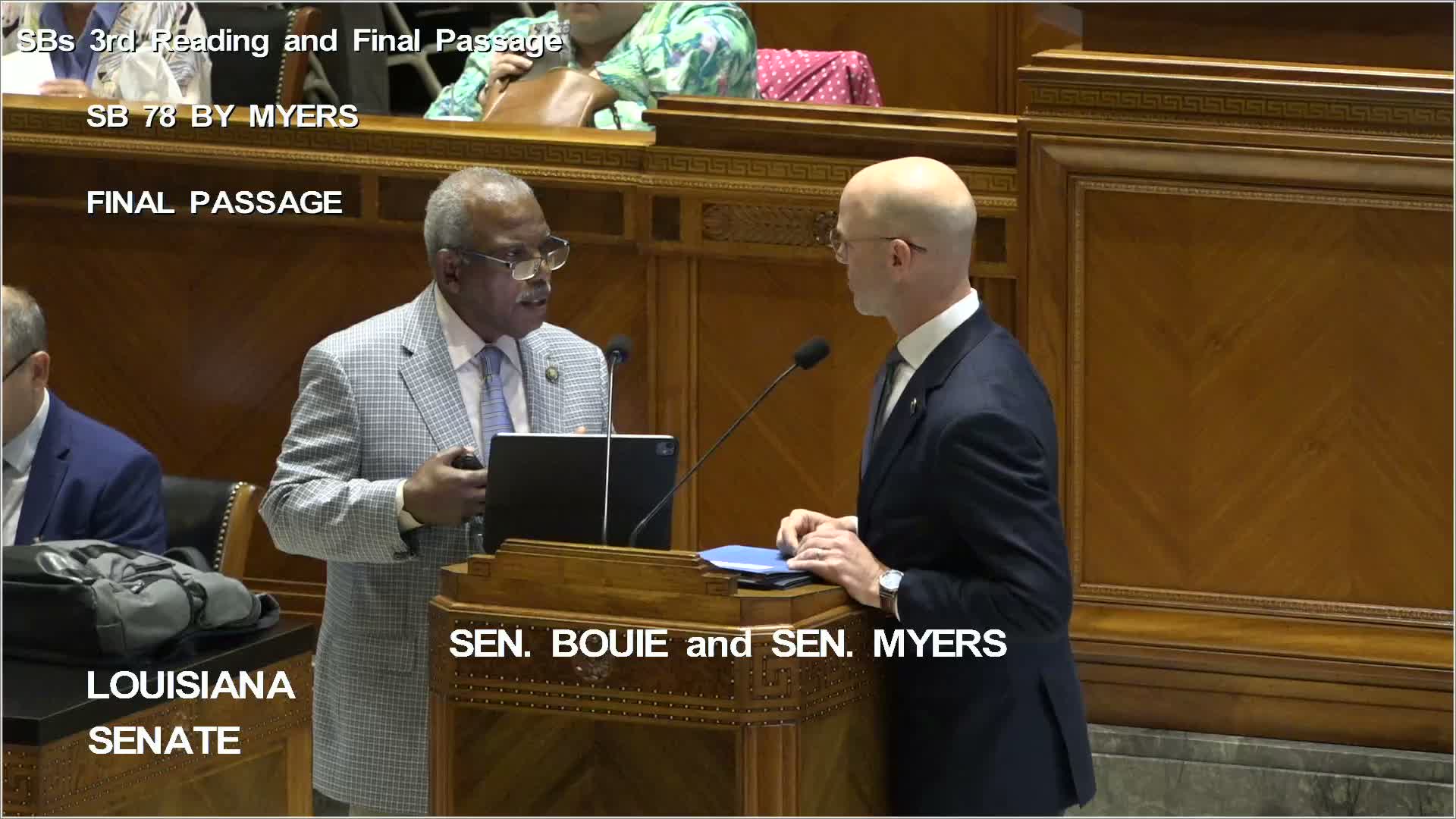
Senate Bill 98, introduced and carried by Senator Brock Myers, cleared the Senate on April 22, 2025, after floor amendments that narrowed the bill’s impact for restaurants and certain approved uses.
Myers told colleagues the bill builds on last year’s legislation and "takes the buying age from 18 to 21" for most purchases of nitrous oxide, limits legitimate uses to specified sectors (dental, automotive, restaurants in their approved contexts), and increases civil penalties and license sanctions for misuse. "This legislation goes a little bit further," Myers said, characterizing the measure as a response to recurring misuse and to protect public health.
Floor amendments adopted during debate exempted persons working inside restaurants from the raised age requirement so that food-service employees could still handle nitrous oxide used in food preparation. Myers said he worked with the restaurant association and withdrew part of the original language that would have barred restaurant employees under 21 from handling the gas. The Senate adopted the amendments and passed the bill 37–0.
Why it matters: The bill raises criminal and administrative thresholds tied to nitrous-oxide sales and use, increases penalties (fines were raised from $2,500 per violation to $25,000 for certain misuse), and gives licensing authorities the power to revoke licenses on repeat offenses. The measure targets nonmedical and recreational misuse, while preserving exemptions for legitimate professional and commercial uses after amendment.
What happens next: With the bill passed, enforcement provisions and licensing rules will be set out in the enrolled bill and through administrative rulemaking for affected industries.