Get Full Government Meeting Transcripts, Videos, & Alerts Forever!
Get email alerts on the Harm Reduction topic
No spam. Unsubscribe anytime.
Senator Myers’ bill narrows drug-paraphernalia definition to allow test strips; senators pressed for clarity
Summary
Senate Bill 78, sponsored by Senator Myers, removes certain drug- and chemical‑testing equipment from the statutory definition of drug paraphernalia so test strips can be carried and distributed; senators raised questions on scope, potential unintended consequences, and implementation.
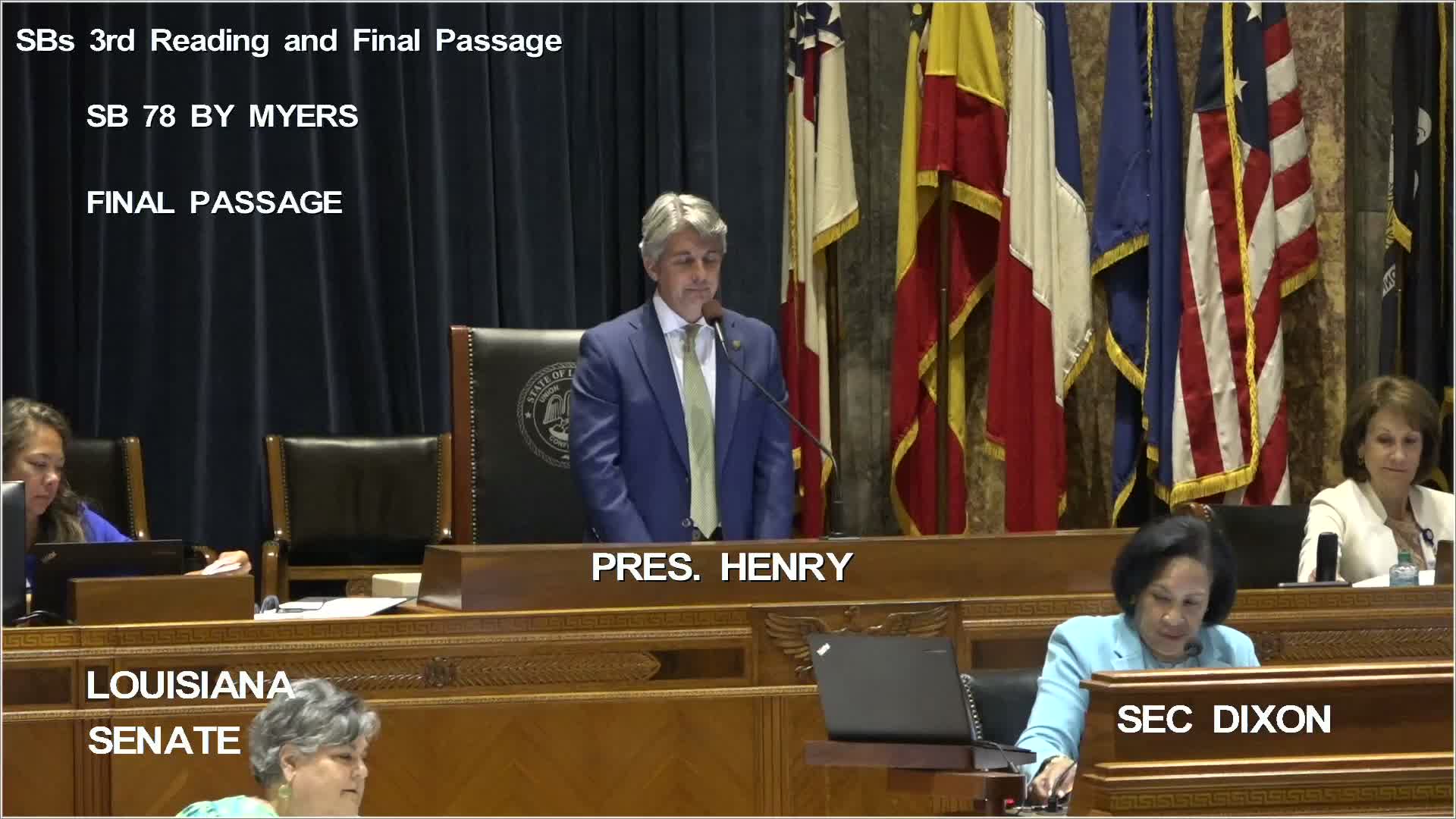
Senate Bill 78, carried by Senator Brock Myers, received final passage April 22, 2025, after floor amendments and extended questioning over whether the measure would make testing equipment lawful to possess and how broadly the exemption applies.
The bill amends Title 40 to exempt testing equipment "solely used, intended for use, [or] designed to determine whether a substance contains any controlled drug or chemical compound that can cause physical harm" from the definition of prohibited drug paraphernalia. Senator Myers said the measure implements a Department of Health request to expand access to test strips that can detect fentanyl and other life‑threatening compounds, and told colleagues the legislation aims to "help better protect lives that are in danger." He asked for favorable passage after adopting committee amendments on the floor. "It's been a learning experience," Myers said during questioning.
Senators pressed on how broad the exemption is and whether court or treatment‑program testing equipment could be affected. Senator Bowie asked whether commonly used judicial or clinical drug‑testing machines could be considered paraphernalia under the revised definition; Myers replied the change is intended to allow safety test strips to be lawfully carried and distributed and noted there are no FDA‑approved test strips currently available for some compounds. When asked whether the bill would make it illegal to possess testing equipment used by drug courts, Myers said the intent was to exempt the safety-testing equipment in question.
The floor exchange included practical concerns about late amendments and clarity. Senator Santa Luna said last‑minute language complicated assessment of the bill; Myers and others pointed to committee discussion and work with the Department of Health to craft the amendment. On the floor, senators adopted the sponsor’s amendment and then voted 37–0 to pass the measure.
Why it matters: Supporters framed the bill as a harm‑reduction tool that would permit distribution and possession of test strips capable of detecting fentanyl and newer, potent adulterants such as xylazine or nitazenes. Critics and questioners sought assurances the language would not unintentionally legalize broad categories of testing devices used in judicial or clinical settings without clear limits.
What happens next: The enacted exemption will allow distribution programs and individuals to possess test strips designed to detect controlled substances or life‑threatening adulterants, subject to the final enrolled language and any implementing guidance from state agencies.