Get Full Government Meeting Transcripts, Videos, & Alerts Forever!
Get email alerts on the Open Meetings topic
No spam. Unsubscribe anytime.
Resident says revised agenda posted late; council counsel cites notice rule
Summary
Resident Daniel Rapp told the council he could not find the revised agenda online earlier in the day and said that the city violated the Open Door requirements; council counsel replied that the 48-hour notice requirement applies to meeting notice and that agendas may be changed up until the meeting.
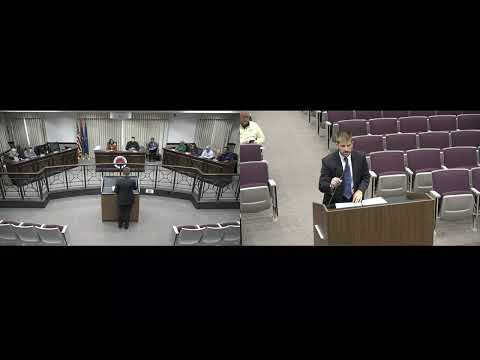
During the citizens comment period of the April 2 Lawrence City Common Council meeting, resident Daniel Rapp said he attempted to view and print the revised agenda at about 2:30 p.m. the same day and could not find the resolution that was later added to the agenda.
“I printed it off, the revised agenda was not out there,” Rapp said, identifying himself and giving his address. He told the council that many working residents would not have the opportunity to see materials posted late in the afternoon and said he considered the council to have “broke[n] procedure.”
Council counsel responded at the request of Council President Cramer, saying the applicable open meetings rule requires 48-hour notice for the meeting itself but allows the agenda to be changed up until the time of the meeting: “For purposes of the open door law, the 48 hour requirement applies to the actual notice of the meeting. The agenda itself can be changed, up until the time of the meeting,” counsel said.
No further public comments were recorded before the president closed the meeting.
Why it matters: The exchange highlights public concern about transparency and advance notice when materially substantive items are added to a meeting agenda. The council’s legal advisor pointed to a distinction between notice of the meeting and the contents of a meeting agenda under state open-meetings rules as the controlling interpretation expressed in the meeting record.