Get Full Government Meeting Transcripts, Videos, & Alerts Forever!
Get email alerts on the Genomic Security topic
No spam. Unsubscribe anytime.
House passes bill restricting use of certain foreign-made genomic equipment, citing national-security concerns
Summary
The House passed House Bill 125, the Louisiana Genomic Security Act of 2025, which prohibits certain future purchases of genomic sequencers and research software from companies domiciled in designated foreign-adversary countries, with floor debate focused on national‑security and implementation details.
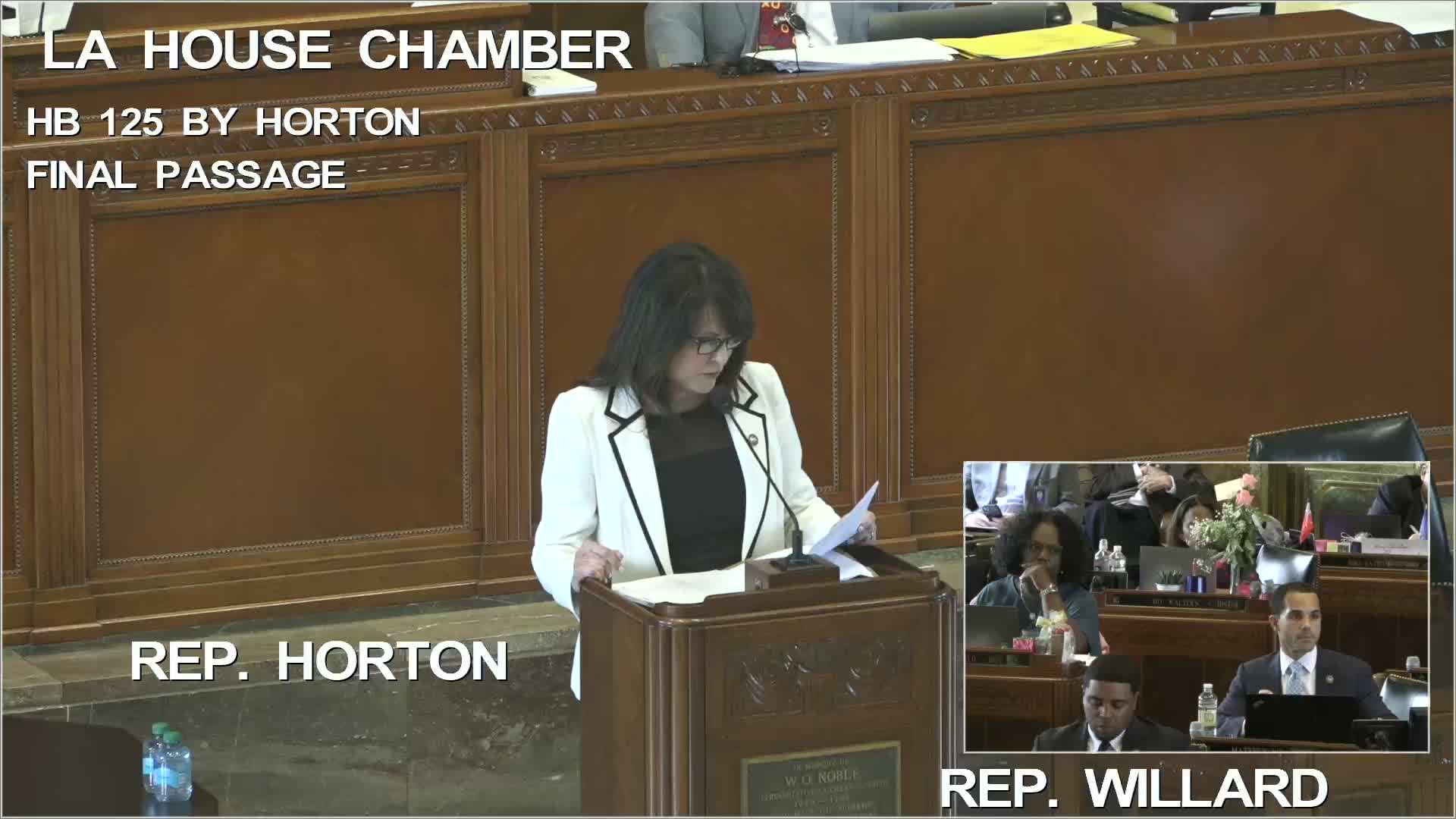
Representative Horton presented House Bill 125, titled in debate as the Louisiana Genomic Security Act of 2025, saying the bill "aims to safeguard individuals' genomic information from access by our foreign adversaries." The sponsor told members the measure would prohibit future purchases of certain DNA sequencing equipment and related research software from companies domiciled in designated foreign-adversary countries and would align state law with federal sanctions and guidance.
Horton briefed the chamber on federal intelligence and national-security concerns raised about foreign access to genomic databases. She cited the FBI, a 2020 National Academy of Sciences report, and the National Counterintelligence and Security Center as sources of warnings that foreign actors could exploit low-cost sequencing infrastructure to obtain population-level genomic data. On the floor Horton said, "The FBI raised concerns in 2017 about China's growing access through mergers and investments and research partnerships" and noted federal steps already taken.
Members questioned how the ban would apply to equipment and software already in use. Horton noted committee amendments adopted on the floor to make the measure prospective: the statute would not force facilities to replace existing sequencers immediately. Members also asked whether state enforcement would be practicable; Horton said enforcement would focus on Louisiana facilities and U.S.-based companies that contract with foreign entities, and the Attorney General had indicated support in committee.
Representative Newell and others pressed for clarity about the bill's operational effect on hospitals and research institutions. Horton said witnesses from the hospital association and higher-education institutions participated in committee and that the sponsor negotiated amendments to address procurement and transition concerns.
The House adopted amendments on the floor to narrow retrofit or replacement requirements, then voted on final passage. The clerk reported the final tally in the supplied transcript as 79 yeas and 14 nays; the bill "finally passes" in the recorded roll call. The transcript records proponents emphasizing national-security risk and opponents asking about implementation, supply chains and whether research capacity would be affected.