Get Full Government Meeting Transcripts, Videos, & Alerts Forever!
Get email alerts on the Natural Hair Braiding And Alternate Hair Design topic
No spam. Unsubscribe anytime.
House passes bills to license natural hair braiders, create alternate hair-design certification
Summary
The House approved two measures to regulate natural hair braiding and create an alternative hair-design license, allowing braiders to register and operate with a short sanitation training instead of the full cosmetology curriculum.
Representatives present on the House floor approved two companion measures aimed at legalizing and regulating natural hair braiding and creating an alternative hair-design credential for services distinct from full cosmetology. Representative Marti Moore described the approach as a way to bring existing braiders into the regulated economy while preserving public-health safeguards.
"If you look around the schools with the cosmetologists...most of them offers 500 hours, but there are about 6 of them that do 600 hours," Moore said while describing education options for the alternate hair-design credential. Moore and Representative Brad Baham jointly presented amendments that the Commerce Committee had negotiated with the Louisiana Board of Cosmetology.
Under the adopted changes, natural hair braiding can be conducted outside registered beauty shops and in home-based settings with a new registration/permit. Natural braiders will not be required to complete the full cosmetology program but will be required to complete a short training module (four to six hours of instruction) on sanitation and basic public-health practices and submit to an inspection requirement. The transcript shows sponsors describing an initial permit fee of $25, a $25 inspection fee and a $50 renewal fee under a separate bill raising Board fees; final fee amounts result from a combination of bills and amendments placed on the floor.
Separately, the alternative hair-design pathway will remain a licensed credential distinct from full cosmetology; the House record describes programs that will offer 500 hours as a standard curriculum and about six programs that offer 600 hours (primarily to secure federal student aid eligibility). That credential requires coursework and formal testing before full licensing; representatives stressed the oversight role of the state cosmetology board for both categories and the ability for the board to suspend or revoke authorization for noncompliant operators.
Supporters said the measures will create pathways for entrepreneurs who currently operate outside the formal economy to work legally, pay taxes and expand small businesses. Representative Baham said the bill allows "people an opportunity to utilize their talents, to improve their living conditions, and to become successful business people." Opponents worried about public-health enforcement capacity and whether shortened training would be adequate in some settings; sponsors pointed to the checking and inspection role of the Board of Cosmetology and set an implementation date (effective January 1, 2026) to allow the board time to put procedures in place.
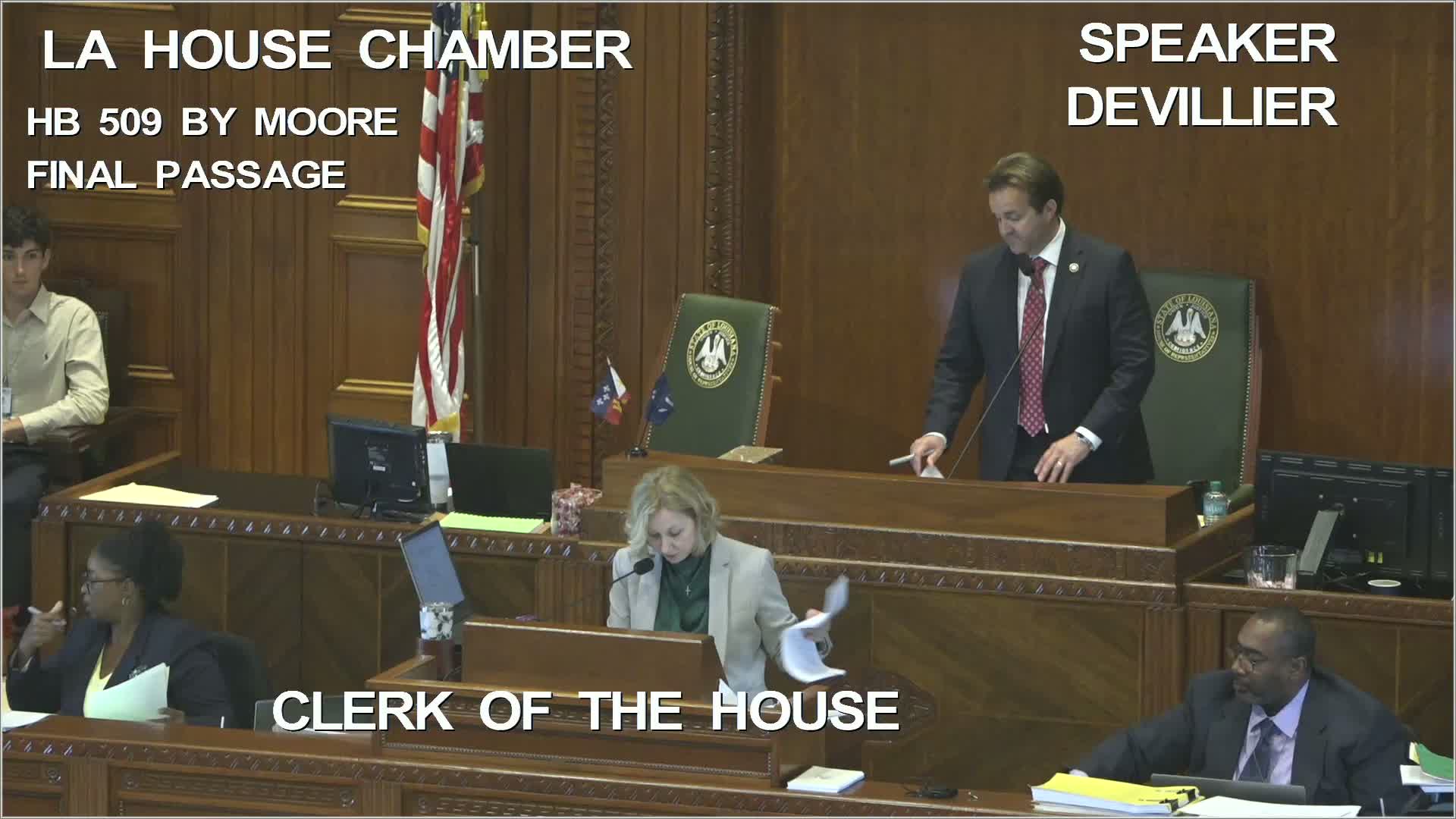
On votes recorded on the floor, House Bill 370 (the cosmetology act special permit model) and House Bill 509 (alternative hair design) were put to recorded votes and both passed with a majority of members voting in favor. Sponsors said the measures reflect bipartisan committee work and amendments negotiated with industry and the cosmetology board.
The passage leaves details such as exact fee schedules, inspection protocols and the board’s implementation timeline to administrative rulemaking and Board action; sponsors asked the House to allow the board until January 2026 to have operating procedures and enforcement in place.