Get Full Government Meeting Transcripts, Videos, & Alerts Forever!
Get email alerts on the Solar Siting And Large Scale Solar Ordinance topic
No spam. Unsubscribe anytime.
Louisiana House debates statewide solar siting standards; amended bill fails
Summary
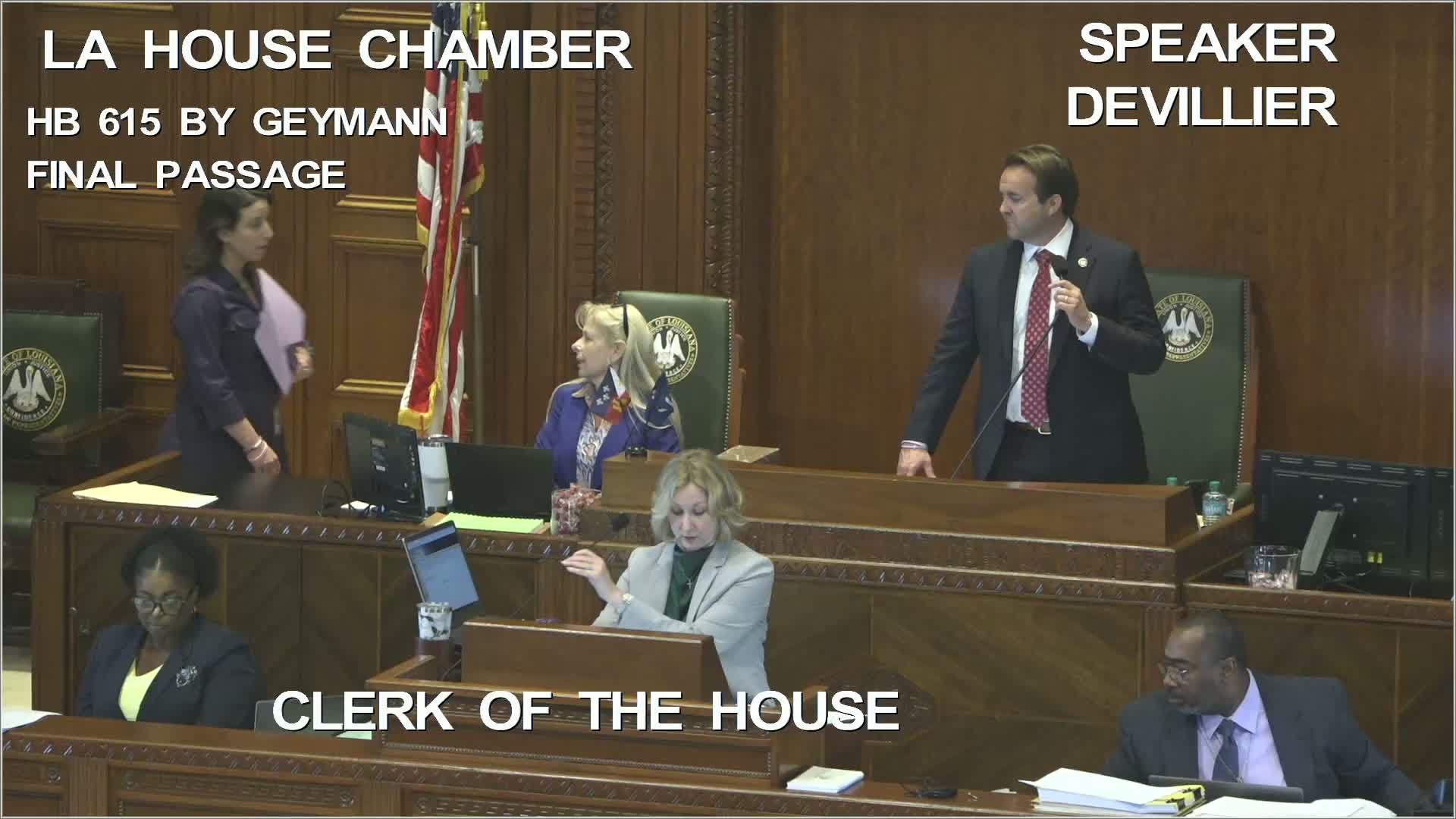
Lawmakers spent hours debating a bill to set statewide siting, setback and decommissioning standards for large solar projects and to give the Department of Energy and Natural Resources primary permitting authority. The House adopted amendments but rejected final passage of House Bill 6 15.
Representative Sam Guymon, chairman of the House Natural Resources Committee, told the House that House Bill 6 15 would create statewide standards for large-scale solar projects and give the Department of Energy and Natural Resources (DENR) the permitting role now handled unevenly by local parishes. "The permitting would be at the state level at D E and R, Department of Energy and Natural Resources," Guymon said during his floor presentation.
The bill’s authors and supporters framed the measure as an attempt to replace a patchwork of parish ordinances with a single, predictable standard. Guymon said the bill would require decommissioning financial assurance, set siting minimums and create a process for local governments to request waivers. He told members the measure grew from a year of stakeholder meetings with the University of Louisiana, LSU’s Center for Energy Studies, utilities and county officials.
The bill’s principal provisions, as amended on the floor, included a threshold that would apply only to projects of 75 acres or larger; a 50-foot perimeter setback or a 100-foot undisturbed vegetative buffer; and a 600-foot setback from an inhabited dwelling (alternatively 300 feet if the developer preserves a 100-foot timber buffer). The amended text moved the Department of Wildlife and Fisheries and the Department of Agriculture from decision-making authorities to commenting agencies, and created a local waiver process in which a parish or municipal governing body could send a resolution to DENR asking for an exception on siting requirements.
Opponents said the measure would impose new costs and uncertainty that could chill investment. Representative Travis Johnson said he opposed the bill. "I oppose this amendment and I oppose the bill," Johnson said on the floor, citing concerns that the measure would discourage large-scale economic projects in more rural parts of the state. Other members representing rural parishes warned the bill could shift local land-use control to the state and complicate projects that cross parish lines.
Supporters pointed to jurisdictions—Tangipahoa Parish was repeatedly cited as a model—that have had ordinances and projects run successfully. Guymon and other backers argued the bill would prevent developers from taking advantage of localities that lack standards and would require advance public notice to residents and their legislators when a project is proposed. Guymon also stressed the bill’s decommissioning requirement: an upfront bond intended to prevent abandoned or damaged projects from becoming an “orphan” cleanup problem.
On the House floor Guymon repeatedly said the intent was not to "be in the zoning business" but to offer consistency and guardrails so both developers and neighbors know what to expect. Members debated whether the state should allow parishes to opt out entirely, whether the waiver process would be meaningful, and whether the 75-acre threshold properly excluded smaller community solar projects.
The House adopted a package of floor amendments (including an amendment from Representative Lacombe that preserved local permitting authority in some circumstances), but rejected final passage of the bill on a recorded vote. The clerk recorded 47 yeas and 52 nays when the roll was closed, and the measure failed to advance from the floor. Because an amendment to make the bill prospective had been retained earlier in committee, existing local ordinances remain operative unless the Legislature takes further action in a later session.
The debate left several practical matters unresolved on the record: how DENR would set fee and bond levels, the exact timing and terms for local waiver review or automatic approval if DENR does not act, and whether further technical changes could win broader support. Supporters said they would continue stakeholder talks; opponents urged that courts working on related disputes should proceed before the Legislature changes statewide law.