Get Full Government Meeting Transcripts, Videos, & Alerts Forever!
Get email alerts on the Medicaid Fraud topic
No spam. Unsubscribe anytime.
House passes bill adjusting state’s Medicaid fraud recovery procedures; sponsors say it clarifies state position
Summary
The Louisiana House on May 6 approved a bill intended to alter how the state pursues and shares recoveries from Medicaid‑fraud cases; the sponsor said the change would increase the state’s share of recoveries and align procedures with federal practice.
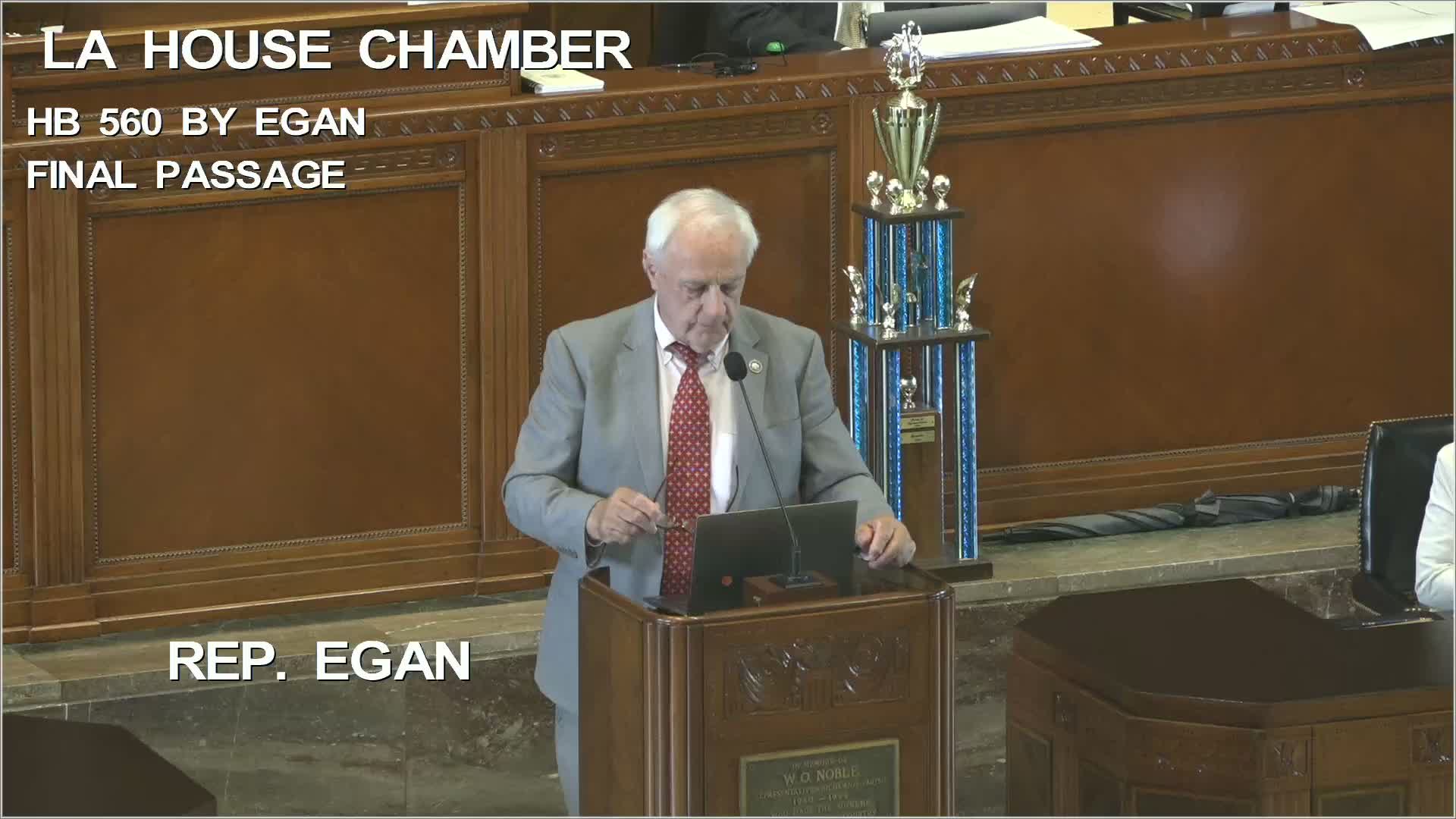
House Bill 560, presented May 6 by Representative Tanner Egan, passed the Louisiana House after extended floor questions about scope and impact. Egan said the bill, requested by the attorney general’s office, ‘‘is a cleanup bill or more correctly, a correcting bill’’ that changes procedures related to prosecution, investigation and recovery in cases identifying fraud against medical-assistance programs.
Egan told the House the change would put the state in a position to retain a larger share of recoveries from successful Medicaid-fraud actions, saying the state would “gain about 10% more of the proceeds from that Medicaid fraud suit” should the bill become law. He said the change stems from technical and procedural issues tied to the state’s participation in federal-style qui tam litigation.
Members raised several questions about the bill’s breadth. Representative Marcel asked whether the bill removes the requirement for proof of specific intent to defraud; Egan said he would need to consult with the attorney general’s office on particular legal-history questions but repeatedly emphasized that the bill aligns Louisiana’s posture and remedies with federal practice and the attorney general’s guidance. Representative Jackson and others pressed whether the bill might allow overbroad prosecution of individuals within companies rather than focusing on the primary bad actor; Egan said committee testimony included state attorneys and the attorney general’s staff and that the bill was intended to correct the state’s legal posture and permit more effective recoveries.
Representative Amade sought language clarifying protections described in the bill’s digest that related to whistleblower protections; Egan pointed to specific sections intended to address discovery stays and procedure when the state pursues an action after a qui tam filing. Representative Carlson asked whether the bill effectively returns Louisiana to a posture closer to the Federal False Claims Act; Egan said that was the bill’s purpose and that doing so would also help the state draw down federal dollars in some cases.
The House adopted a set of technical amendments at the clerk’s reading and later voted to pass HB560 on final passage. The roll call was 76 yeas and 20 nays, and the measure was reported as finally passed.