Get Full Government Meeting Transcripts, Videos, & Alerts Forever!
Get email alerts on the Criminal Justice topic
No spam. Unsubscribe anytime.
House clears two criminal justice cleanup bills on parole, probation and technical revocations
Summary
The Louisiana House on April 29 approved two bills that clarify parole eligibility rules, good-time credits, split sentences and revocations for technical violations.
The Louisiana House on April 29 approved two bills that clarify parole eligibility rules, good-time credits, split sentences and revocations for technical violations.
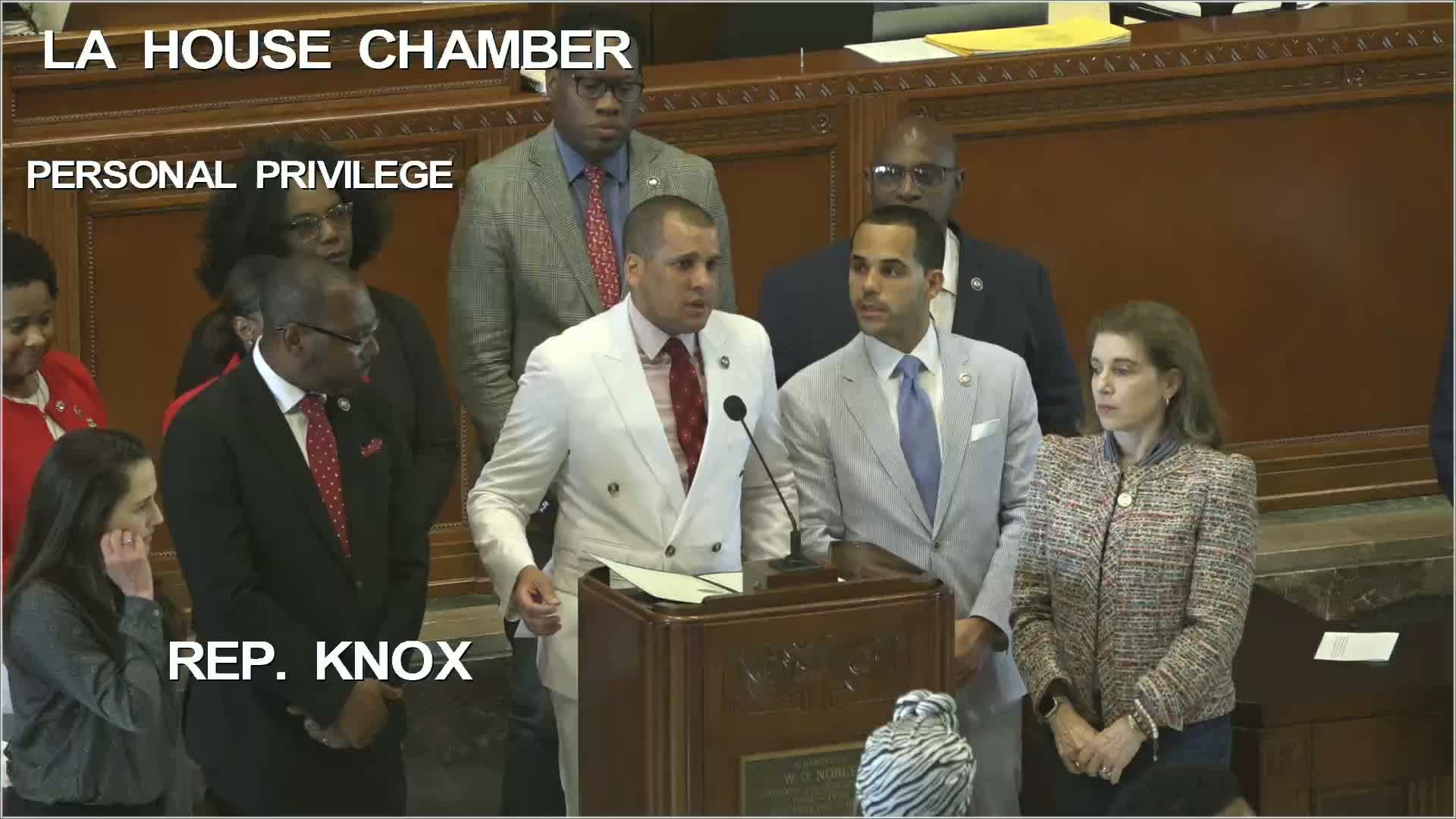
Representative Kirk Villio, sponsor of House Bill 208 (parole eligibility and good-time clarifications), described the measure as a cleanup of prior crime-session changes. Villio told the chamber the bill does three things: clarify that certain violent and habitual offenders are not entitled to good-time credit; require that offenders who receive split sentences serve their probationary period after release; and confirm that a person must be disciplinary-free for 36 months to be eligible for parole (clarifying the timeframe that was altered in last year's legislation). Villio described the bill as a technical cleanup and sought final passage.
When Villio brought an amendment to House Bill 214 (probation revocation and technical violations), he said: "I am deleting from the proposed legislation the repeal of street credit for probationers." That amendment preserved judicial and prosecutorial discretion on awarding street credit. During a follow-up exchange Representative Royce Jordan asked whether judges and district attorneys would still have discretion; Villio answered, "That's correct" and clarified the amended bill focuses on technical violations and narrow exceptions.
Villio later summarized the core policy change in HB 214: it "deals with technical violations" and "includes the drug paraphernalia in that exception relative to revocation" so a probationer is not automatically revoked for possession of paraphernalia alone; the bill also allows an exception if the court conditions probation on specialty court participation and the participant completes the program.
The two bills passed the House on roll calls after floor debate. The clerk announced final passage for House Bill 208 with 90 yeas and 7 nays; House Bill 214 passed with 98 yeas and 0 nays.
Why this matters: The measures do not create new sentencing ranges but clarify how good-time, split sentences and technical probation violations are handled in practice, affecting how detention-release calculations are applied and how courts treat certain minor violations. Supporters framed the changes as technical fixes to ensure policy enacted during the crime session operates as intended; supporters emphasized the preservation of judicial discretion.
What happens next: Both bills will proceed to the Senate for further consideration.