Get Full Government Meeting Transcripts, Videos, & Alerts Forever!
Get email alerts on the Controlled Substances topic
No spam. Unsubscribe anytime.
House approves ban on certain hallucinogenic chemicals in candies and gummies
Summary
The Louisiana House passed House Bill 176 to outlaw production, manufacture, distribution and possession of products containing several specified hallucinogenic chemicals — a package lawmakers said targets brightly packaged “gummies” and candies marketed to resemble legal psychedelics.
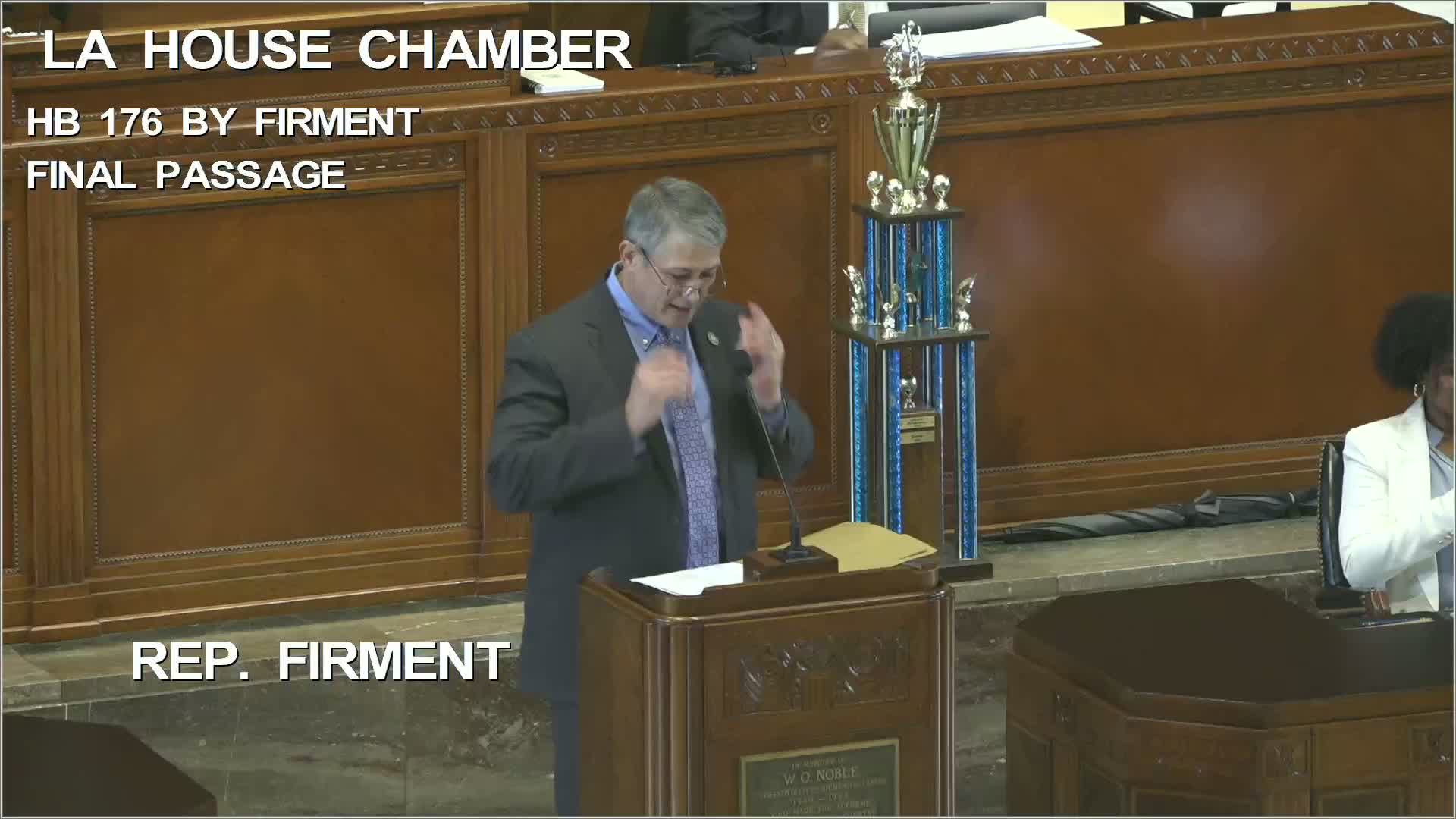
The Louisiana House of Representatives on May 6 approved House Bill 176, a measure that makes it unlawful to “produce, manufacture, distribute, or possess with intent to distribute products containing beta-phenyl-GABA, muscimol, ibotenic acid, or their analogs intended for human consumption.” Representative Sam Furman, the bill’s sponsor, told colleagues the substances are commonly found in brightly packaged candies and gummies and have caused health harms.
Furman said the products are often marketed toward consumers as “legal psychedelics” and described the public-safety rationale for the ban: “They’re often marketed as legal psychedelics, but these substances can cause serious health problems, addiction, and even death.” He said the items have been found in his hometown of Pollock and elsewhere in Grant Parish and asked members for “favorable passage.”
The bill’s language couples criminal penalties for possession and for production or distribution with sentences that align with penalties already in state law for similar hallucinogenic substances. Furman and members clarified the two-tier penalties during debate: possession carries up to five years’ imprisonment; producing, distributing or possessing with intent to distribute carries a higher range that “would be not less than 2 years nor more than 10 years.” Furman said those penalty ranges align with existing language in Louisiana law (cited in committee as the comparable statute for hallucinogenic plants).
Representative Willard and others asked procedural questions focused on how the penalties appear in different sections of the bill; Furman repeatedly pointed to existing statute language as the source of the penalty structure and said the harsher range applies to production and distribution while the lesser maximum applies to simple possession.
The House voted to pass the bill on a recorded vote. Representative Furman moved final passage; the clerk announced the result as 99 yeas and the bill “finally passes.”