Get Full Government Meeting Transcripts, Videos, & Alerts Forever!
Get email alerts on the Juvenile Records topic
No spam. Unsubscribe anytime.
House backs bill to centralize juvenile records access while adding privacy guardrails
Summary
Lawmakers passed a measure to create a consolidated juvenile records repository with amendments meant to limit access and protect confidentiality, while clarifying which justice actors can use the records across parish lines.
The Louisiana House voted to approve legislation that would centralize certain juvenile offender information in a way sponsors say will improve access for judges, prosecutors and defenders while keeping stronger privacy protections.
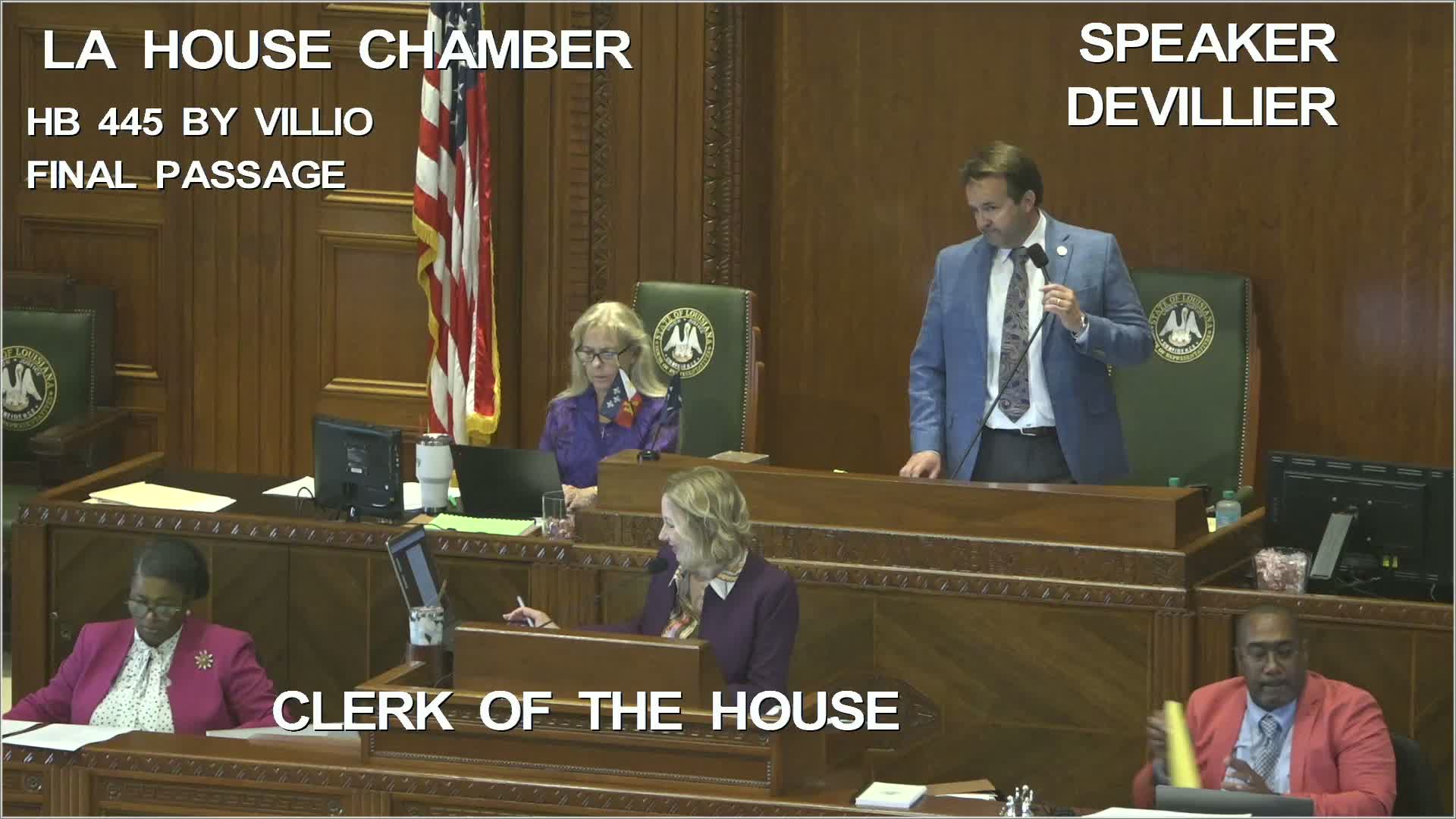
Representative Joseph Villio, sponsor of House Bill 4 45, said the bill "allows us to collect information on juvenile offenders in 1 place" while protecting those records from dissemination outside the criminal-justice system.
During floor debate Villio described the measure as intended to make information available to judges, public defenders and prosecutors across parish lines, and said he accepted multiple amendments offered by opponents to add "guardrails" limiting who may access specific juvenile information. He told the House he had "accepted every amendment offered" and worked with criminal defense attorneys, child-rights advocates and state police to refine the language.
Representatives questioned whether the bill would permit electronic access only and whether additional safeguards were adequate. Rep. Waller asked whether stakeholders including the Louisiana Center for Children's Rights and state police supported the amendment set; Villio replied that all had backed the changes and he accepted them to preserve intent and privacy protections.
The House adopted the sponsor’s amendment package without objection and moved to final passage. The roll call on final passage showed 96 yeas, 0 nays.
Supporters said electronic consolidation will make it easier for judges and attorneys to obtain relevant histories when cases span parishes, while opponents had urged tighter limits to avoid broader dissemination. Sponsor amendments aimed to require access restrictions and technical limits on dissemination; the bill as adopted leaves juvenile records protected from release outside the criminal justice system except under narrowly defined circumstances and applies role-based access to the centralized system.
The bill now moves to the Senate; sponsors said further technical work and rulemaking will follow should the measure become law.