Get Full Government Meeting Transcripts, Videos, & Alerts Forever!
Get email alerts on the Comparative Fault Reform topic
No spam. Unsubscribe anytime.
House approves shift to 51% modified comparative-fault standard in personal-injury cases
Summary
The House voted to replace Louisiana’s pure comparative-fault rule with a modified system that bars recovery when a plaintiff is found 51% or more at fault. Supporters said the change would align Louisiana with many states and help premiums; opponents said it would leave partially at‑fault victims without remedies.
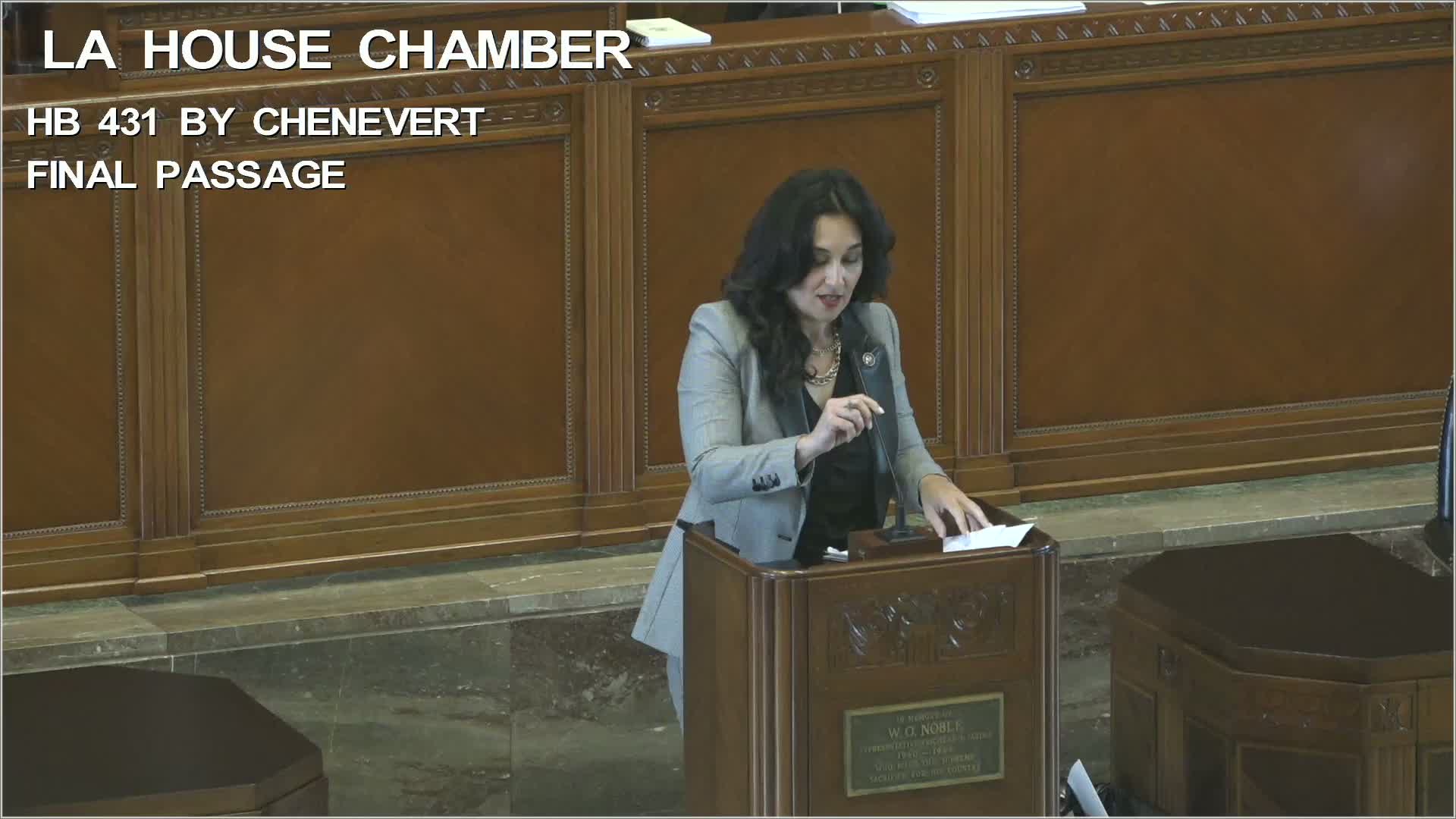
The Louisiana House on Thursday passed House Bill 431, carried by Rep. Genevieve Chennabare, which would change the state’s fault allocation rule in personal‑injury litigation from pure comparative fault to a modified comparative‑fault standard with a 51% bar.
Under the bill, a plaintiff would be barred from recovering damages if the finder of fact determines the plaintiff was 51% or more at fault for their injury. If the plaintiff is 50% or less at fault, recovery would be reduced by the plaintiff’s percentage of fault.
Sponsor’s case: Rep. Chennabare and backers argued the proposal brings Louisiana into alignment with most other states and would reduce frivolous litigation and exposure that contributes to high commercial insurance rates. “This is a common‑sense approach as it pertains to attributing fault and would put Louisiana in line with 34 states who use a form of modified comparative fault,” Chennabare said on the floor. She noted that states with modified systems are common among lower‑cost insurance states.
Opposition and concerns: Opponents said the change risks denying compensation to victims who, while partially at fault, still suffer real losses. Rep. Marcel and others asked whether capping recovery in close cases would simply drive more litigation to get to trial so juries can allocate fault; Rep. Jordan pointed out civil‑law traditions and asked about consequences for wrongful‑death and survival claims.
Practical points debated - Plaintiffs who are 49% at fault would receive 51% of an award; plaintiffs who are 51% at fault would recover nothing under the bill as drafted. - Supporters said the change is intended to discourage suits where the claimant bears majority responsibility; critics said that in some fatal‑injury cases the family’s inability to recover could be particularly harsh.
Vote and next steps After an extended floor debate and a request for additional time, the House adopted HB431 on final passage by a recorded vote: 66 yeas, 26 nays. The bill will proceed to enrollment and transmission to the other chamber and ultimately the governor’s desk for consideration.
Provenance: The item was introduced and debated at length on the House floor beginning when Rep. Chennabare opened discussion and concluding with the recorded final vote later in the session.