Get Full Government Meeting Transcripts, Videos, & Alerts Forever!
Get email alerts on the Transportation Project Delivery topic
No spam. Unsubscribe anytime.
House advances package to reorganize DOTD, create Office of Transformation and public mapping portal
Summary
Lawmakers approved a multi-bill package aimed at restructuring the Department of Transportation and Development, creating an Office of Louisiana Highway Construction and an Office of Transformation, and requiring an interactive public mapping system for project transparency.
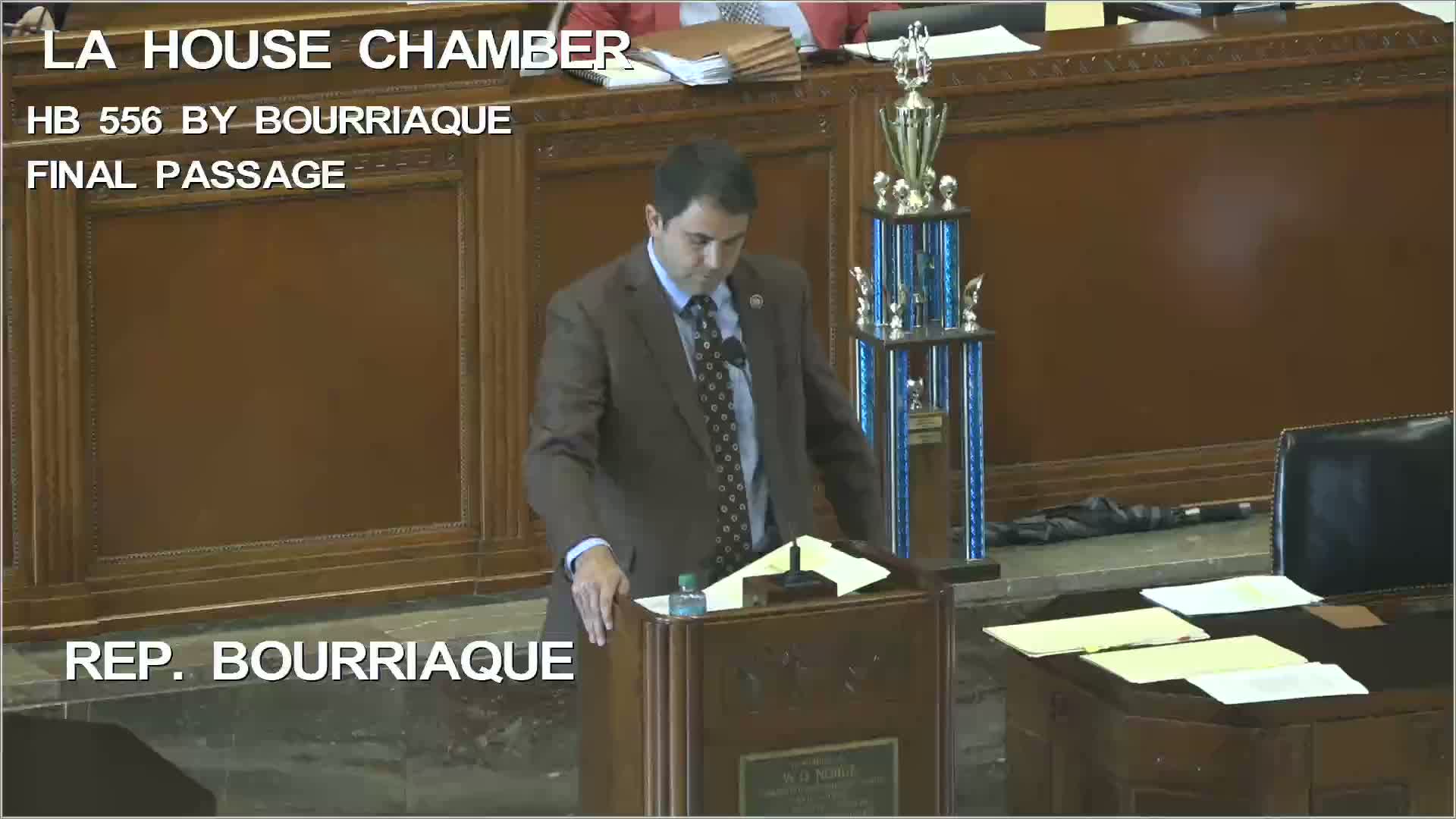
The Louisiana House voted to pass a set of bills on May 5 that reorganize parts of the Department of Transportation and Development and create new offices to speed project delivery and public accountability. Representative Greg Boriak, sponsor of multiple measures, led floor debate as members adopted technical and policy amendments and secured final passage.
Supporters said the package creates an executive-level office — described in the legislation as an "office of transformation" and a separate Office of Louisiana Highway Construction — to coordinate project planning, accelerate delivery and expand cooperative agreements with local governments and drainage districts. Representative Boriak told colleagues the effort was informed by the Boston Consulting Group review and aims to be a ‘‘change agent’’ inside DOTD.
“This is what we are calling for is an interactive an interactive mapping system,” Representative Boriak said, describing a publicly accessible portal that would let legislators and the public view where projects are in the queue.
Proponents framed the bills as practical steps to improve project oversight, tighten reporting on unexpected fund uses, and give members and constituents better, centralized access to project status. Representative Boriak said the chief engineer position remains intact and the assistant secretary/office would focus on project delivery functions such as planning, design and construction.
Opponents and questioning members pressed department sponsors on how changes would affect civil-service rules, staffing, and whether contracting or procurement responsibilities would be shifted to third-party contractors. In response, Boriak and collaborators said several proposed transfers of duties and references to unclassified positions were removed in amendment sets and that the bills revert certain elements back to current law where civil-service authority applies.
Representative Rob Desitel, who questioned the mapping and contract language, received assurances that proposals to expand contract authority and to eliminate certain positions were struck or reverted to current law in amendment sets. Boriak and other sponsors said the bills also narrow proposed changes about using state highway system language and clarify that use of prison labor references were removed after committee review.
The House adopted sponsor amendments clarifying procurement references, restoring the chief engineer’s authorities and limiting changes to civil service or contractual authorities. Final passage votes recorded 97 yeas, 0 nays on the principal measures that reached the floor.
Supporters said the measures do not mandate privatization but create options and permit cooperative agreements with local governments and other agencies to leverage limited state funds. Representative Boriak described examples where local drainage districts or parish equipment could be paired with state resources to solve chronic maintenance or drainage problems more quickly.
What remains: implementation details, including rulemaking and coordination between DOTD and the new office or offices, will be worked out after the bills become law; sponsors said further reporting and oversight will follow in committee work. The legislation now advances to the Senate, and sponsors said they will continue technical work and outreach with stakeholders.
The package drew wide attention from members who said they want faster project delivery and better visibility into highway priorities; several said they would watch the implementation closely and expect follow-up reporting to the House transportation committee.