Get Full Government Meeting Transcripts, Videos, & Alerts Forever!
Get email alerts on the Medical Billing Evidence Reform topic
No spam. Unsubscribe anytime.
House adopts bill letting judges and juries see more medical-billing evidence in injury trials
Summary
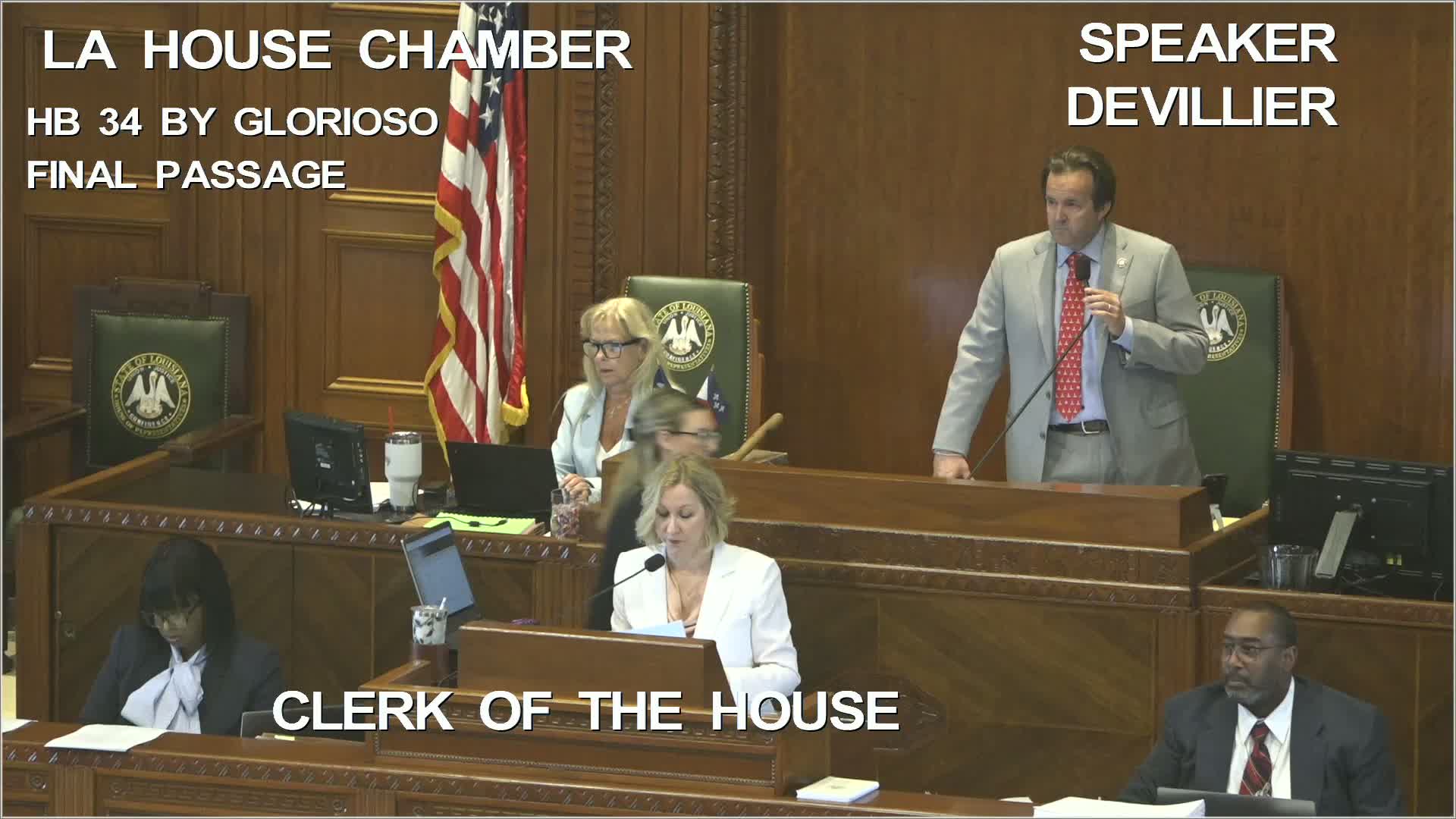
The Louisiana House on Thursday approved House Bill 34, a measure from Rep. Greg Glorioso that allows judges or juries to hear competing evidence about billed medical amounts and insurer‑paid amounts when deciding awards for medical expenses in personal‑injury trials.
The Louisiana House on Thursday approved a measure by Rep. Greg Glorioso that changes what evidence triers of fact may see when awarding medical expenses in personal-injury trials.
The bill, House Bill 34, allows a plaintiff to introduce evidence about billed medical amounts and allows defendants to present evidence — including what insurers paid — to contradict those figures. Glorioso said the change is prospective only and designed to give judges or juries “all the facts” to decide what is reasonable.
Glorioso, the bill’s sponsor, told colleagues the proposal would let “the plaintiff put on evidence of whatever they choose to relating to their medical bills — the billed amount, the charged amount — but the defendant also gets to put on their own evidence to contradict the evidence to determine whether or not the medicals are reasonable.” He added: “Let's let the jury have all the facts and let's let them make a decision based on all the evidence.”
Why it matters: The debate focused on whether limiting what juries see has produced inflated awards that raise insurance costs. Supporters argued HB34 will reduce “phantom damages” by putting billed and paid numbers in front of the trier of fact. Opponents said the change risks new disputes between health carriers and tort defendants and will increase litigation costs in the short term.
Key provisions and limits - The change is prospective only; it does not apply retroactively to past cases. Rep. Glorioso said the bill applies to future trials and settlements. - Medicare and Medicaid remain governed by existing law; Glorioso told the House the bill is not intended to alter recovery rules tied to federal programs. - Parties may present evidence about whether private providers accepted reduced payment arrangements or letters of protection; defendants may introduce insurer payment records to challenge reasonableness.
What supporters said Rep. Glorioso argued juries should be able to weigh billed amounts against the amounts actually paid by insurers or through negotiated discounts. “I believe it's an evidentially fair standard because both parties have the opportunity to present evidence to the jury,” he said, adding the change could, over time, help reduce award levels and therefore insurance premiums.
What opponents said Several members warned the measure could increase discovery disputes and bring more expert testimony into ordinary automobile and slip-and-fall cases. Rep. Robbie Carter asked whether insurers might try to set market rates and said increased defense challenges could lengthen trials. Rep. Jordan and others questioned whether placing evidence about insurer payments and negotiation arrangements into the record would require more experts and raise litigation costs.
Vote and next steps After roughly an hour of debate and more than a dozen questions from members on both sides, the House voted to pass HB34 on final adoption: 68 yeas, 26 nays. The bill moved forward for enrollment and further processing.
Provenance: The bill was introduced and debated on the House floor beginning when the House returned to Regular Order 5 and the first reading of House Bill 34 occurred (transcript block starting at the floor discussion of House Bill 34, Rep. Glorioso’s remarks). The final vote and co‑author sign-up occurred later in the afternoon on the same day.