Get Full Government Meeting Transcripts, Videos, & Alerts Forever!
Get email alerts on the Firearm Ordinance topic
No spam. Unsubscribe anytime.
Committee amends and advances consolidated city ordinance on discharging firearms, raises fine language to ‘shall’
Summary
Bill 26‑25 consolidates discharge‑of‑firearm rules into a single ordinance, aligns the local definition of firearm with Indiana law, adds a self‑defense exception and sets a $2,500 ordinance citation; the Health and Public Safety Committee amended language from “may” to “shall” for the fine and forwarded the bill with a favorable recommendation.
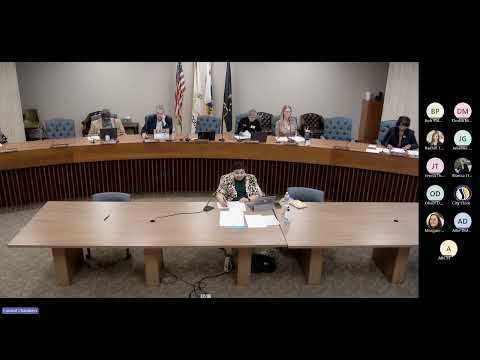
City Attorney Jenna Throw presented Bill 26‑25 to the Health and Public Safety Committee on April 28, saying the ordinance consolidates multiple scattered provisions about firearm discharges into one section, adds a self‑defense exception and aligns the city definition of “firearm” with Indiana Code.
“We’re proposing to collect them all within one ordinance so that the entire topic is more clear,” Throw said, describing consolidations, the updated definition drawn from state law and new enforcement language.
Committee members focused on two practical issues: whether the local definition includes air‑ or spring‑powered pellet or airsoft guns, and whether the draft language left discretion for citation amounts. Kylie Connell of the city legal team said the ordinance targets firearms as defined by state law and that air‑powered guns that do not rely on an explosion mechanism likely fall outside that definition; she committed to confirm the technical distinction. On penalties, members noted subsection D originally used “may” for the $2,500 ordinance citation while another section used “shall.” After debate about enforcement discretion and the interaction with criminal arrests, the committee voted 4–1 to amend the section to change “may” to “shall,” making the $2,500 citation mandatory under that subsection. Committee Chair Thomas Morgan and other members then moved to send the bill as amended to the Committee of the Whole; the motion carried on a roll call (5 ayes).
Staff and police representatives told the committee that officers will still exercise enforcement judgment in criminal cases: if an arrest and criminal charges are appropriate, police typically rely on criminal process rather than issuing an ordinance ticket in addition to criminal charges.
Votes at a glance: Amendment to change “may” to “shall” in section 13‑58(d) — passed (4 ayes, 1 nay). Bill 26‑25 as amended — sent to Committee of the Whole with a favorable recommendation (5 ayes).