Get Full Government Meeting Transcripts, Videos, & Alerts Forever!
Get email alerts on the District Policies topic
No spam. Unsubscribe anytime.
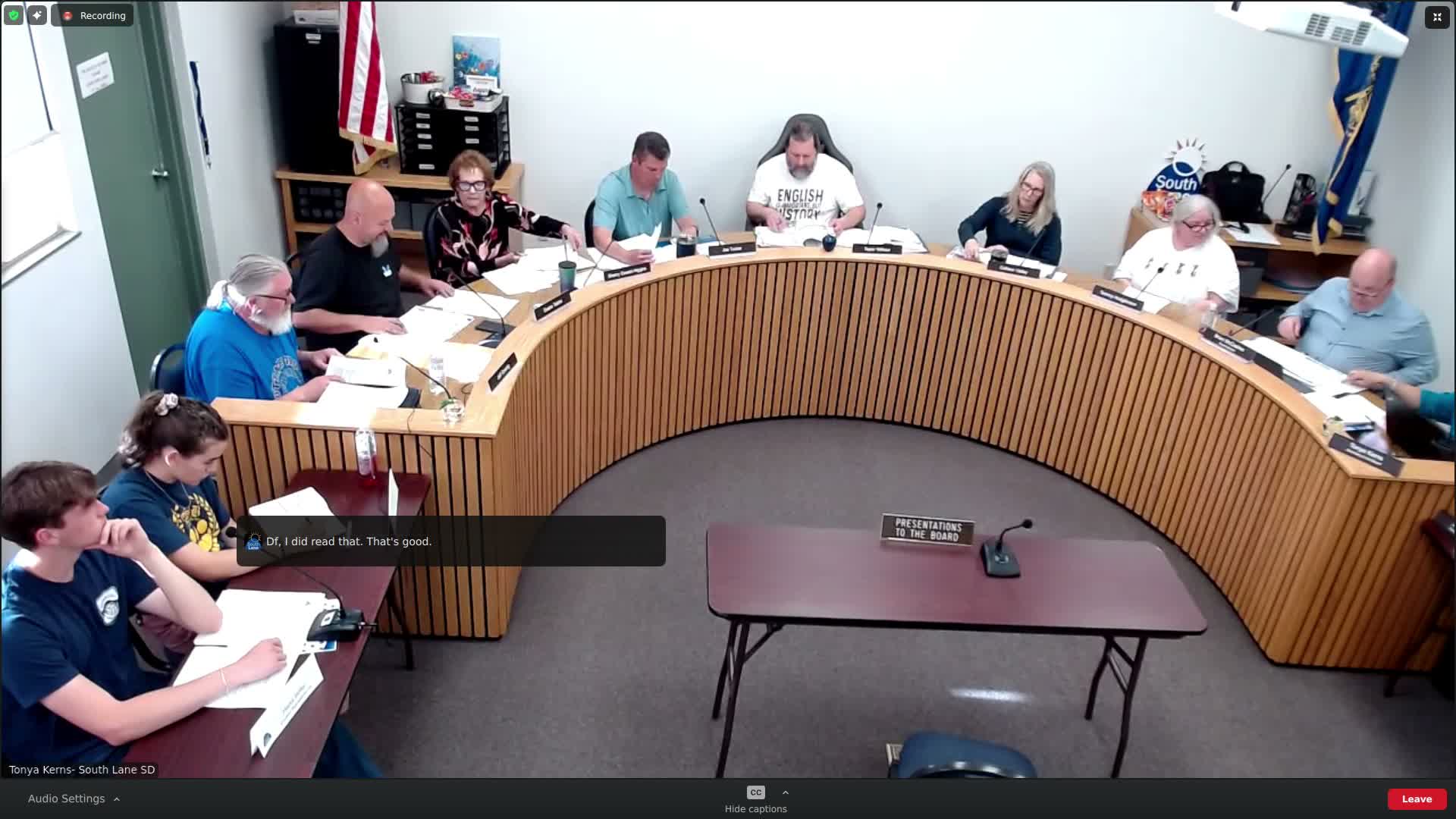
Board reviews first reads of graduation, class-rank and animal policies; animal policy draws extended debate
Summary
Board reviewed first readings of multiple policies including graduation requirements (IKF), class rankings (IKC) and an updated animal-in-school policy; the animal policy raised concerns about student allergies, curriculum exceptions and insurance liability.
At its May 5 meeting the South Lane School Board took first readings of several policies, including graduation requirements (IKF), class rankings (IKC) and a revised policy limiting animals in district facilities. Members raised questions about how changes would affect students taking college-credit courses, appeals processes and exceptions for curricular activities.
On graduation and class-rank rules, board members asked whether college-credit courses receive weighted grades and how that affects valedictorian and salutatorian determinations. A board member said students who take many college-credit courses can be disadvantaged under an unweighted system and suggested exploring weighted and unweighted co-valedictorian options.
The animal policy prompted the most discussion. Staff explained the policy is intended to enforce language already on the books and to reduce liability exposure highlighted by the district’s insurance carrier. The proposed language would prohibit unsupervised and routine personal pets in schools while allowing curricular or co-curricular animals (for example, a curriculum-linked petting zoo or approved classroom animal) and recognized service animals.
Board members asked for clarity on who approves exceptions; staff said prior language required principal approval but the revised draft places approval with human resources and follows OSBA guidance. Members discussed permissible scenarios: classroom curriculum ties (a science lesson with a lizard), approved co-curricular events (an approved petting zoo at a school fair) and service animals documented for disability accommodations were described as allowable with advance approval and accommodations for students with allergies or fears.
Why it matters: the animal policy change responds to liability and equity concerns and could change how schools handle classroom pets, curriculum-linked animals and family events involving animals. The graduation and class-rank discussion could affect diploma criteria and honors determinations.
Next steps: the policies will return for a second reading and possible adoption at a future meeting after staff supply clarifications on weighted grading for college-credit courses and refined language on curricular/co-curricular exceptions and the approval process.
Ending: board members requested staff follow up with specific language revisions and documentation of appeals processes before final votes.