Get Full Government Meeting Transcripts, Videos, & Alerts Forever!
Get email alerts on the Land Sale Solquist topic
No spam. Unsubscribe anytime.
Neighbors and advocates push board for transparency after disputed Solquist property sale
Summary
Neighbors and community advocates urged the Gresham‑Barlow School Board on May 7 to halt the planned sale of roughly 12.4 acres on Solquist Road and to rerun the process with fuller public notice, saying the district did not follow surplus and marketing steps they expected.
GRESHAM, Ore. — Neighbors and community advocates urged the Gresham‑Barlow School Board on May 7 to halt the planned sale of roughly 12.4 acres on Solquist Road and to run the process again with fuller public notice, saying the district did not follow the surplus and marketing steps they expected.
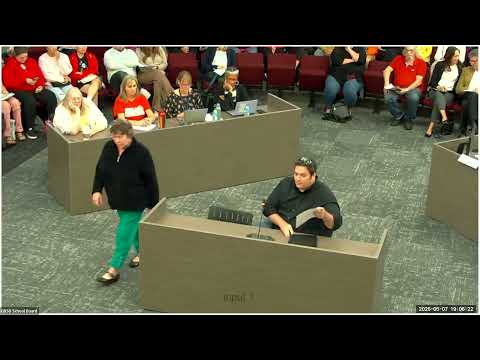
The complaints came during public comment and a later hour‑long presentation by resident Thomas Eubanks, who reviewed records obtained by public‑records request. Eubanks said the district entered a contract with a developer after a limited pre‑application process with the city and without an appraisal or an open solicitation of bids. "The board still has the control. The district still owns the property. The sale is not closed," Eubanks told the board in his presentation.
Why it matters: The Solquist parcel is one of the district’s few undeveloped sites and neighbors say future housing there would significantly affect local traffic, school enrollment and neighborhood character. Speakers and records cited a developer offer of $4.4 million, a developer pre‑application for 149 townhomes, and demand letters from outside counsel that included claims of up to $12 million in lost profits and roughly $2.9 million in commissions.
What speakers said: Jim Southwick, a longtime resident near the site, urged the board to "pause and get some facts" and to consider holding the property for future district needs. Austin Henry, another nearby homeowner, asked the board to consider the district’s long‑term space needs and local growth before moving ahead. Eubanks summarized documentary findings and ethical questions about how the district and its broker communicated with developers; he said the board had not formally declared the land surplus. "I want the sale to be canceled, and I want it to be done the right way," Eubanks said.
District counsel Elliott Field and colleague Kevin Shuba responded during the meeting. Field cited state law, saying, "Governing statute for disposition of property is 332.155. It says specifically that the board may sell all property . . . that is not in their judgment required for school purposes." He also noted the board’s public record includes prior staff reports spanning several years that the parcel likely had no educational use, and that those records supported the board’s March action to approve a counteroffer referenced by counsel.
Board action and next steps: No new surplus vote or sale closing occurred at the May 7 meeting. Members and counsel said additional review and community conversations would follow; the board took a recess and scheduled follow‑up meetings. The district said it would provide further information and legal counsel noted the unpredictability of any future litigation over the contract.
Details and disputed items: Public records and speakers identified these items: a developer offer of $4,400,000, a May pre‑application by the developer seeking 149 townhomes, a prior broker pre‑application proposing 80 single‑family lots, and demand letters from counsel for parties involved that included figures of about $12,000,000 and $2,900,000. Speakers also said the district did not obtain a formal appraisal or advertise the parcel broadly before entering the contract.
What the board said: Board members and counsel emphasized the legal standard in ORS 332.155 that the board must judge whether property is "required for school purposes." Counsel said earlier board minutes and staff reports — some dating back to 2021 — documented discussions about the property’s limited educational utility and supported the board’s prior actions. Board members asked staff and counsel to continue collecting documents and to meet with community members before taking any final vote.
Context and community response: Neighbors said they had not been adequately informed and voiced concern about infrastructure and traffic if middle‑density housing is built. Advocates who filed records and ethics inquiries said they may pursue legal avenues if the sale proceeds without further public review. District legal counsel said the law governing state land conveyance (Title 25 references cited by speakers) differs from the statute that governs school district property sales.
Ending: The board did not vote to surplus or close the sale at the May 7 meeting; staff and counsel will return with further information. Community members asked that the district provide clearer public notice and documentation before any sale is finalized.