Get Full Government Meeting Transcripts, Videos, & Alerts Forever!
Get email alerts on the Education Curriculum topic
No spam. Unsubscribe anytime.
Gresham-Barlow board votes to submit one-year waiver delaying Senate Bill 3 high school course implementation
Summary
The board approved sending a one-year waiver to delay the state’s Senate Bill 3 requirement so the district can phase in a new career‑pathways and personal finance sequence with available staff and schedules.
The Gresham-Barlow SD 10J Board of Education voted April 16 to submit a one‑year waiver that would delay full local implementation of Senate Bill 3’s new high‑school course requirements for the class of 2027.
District presenter Dr. Tim Heilman told the board the change would pause the district’s planned rollout for one year so staff can align staffing, course sequencing and student forecasting. “What I’m gonna be asking the board to make an action or motion on tonight is to request a waiver,” Heilman said during his presentation.
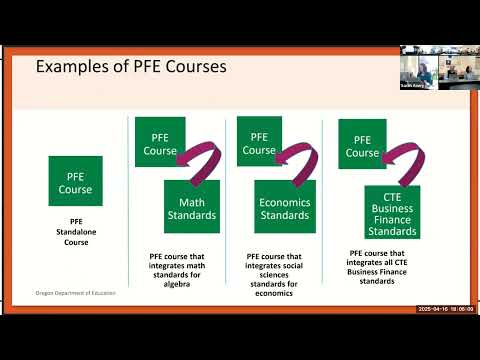
Nut graf: The state law added two elements to high‑school graduation requirements—career pathways (a one‑credit sequence) and a personal finance semester—effective for students graduating in 2027. Gresham‑Barlow staff said local budget cuts and FTE limits make immediate implementation difficult; the waiver would move the start so the district can place the career‑pathways course in 11th grade and personal finance in 12th grade, and give staff time to finalize course design and staffing.
Board discussion centered on staffing and scheduling. Heilman said the district would need about “1 FTE” per high school and roughly “4½ to 5” FTE across the district to run the expected sections (roughly a dozen sections each for personal finance and career pathways). He told the board the waiver application must be submitted no later than July 1, 2026. “The rationale for that is really around…we’re fighting at the high school level,” he said, describing how recent budget cuts reduced available positions for those courses.
Several board members pressed on alternatives if the waiver were not approved. Heilman said the district could attempt credit‑by‑proficiency or allow some students to meet standards through financial algebra, but most students would take a standalone personal finance course when it becomes available. He also said some personal finance content is already embedded in economics and other classes, but the state requires a transcripted course labeled “Personal Finance.”
Motion and vote: Board Chair Chris Howlett moved to approve submission of the one‑year waiver; Holly Regalman seconded. The board recorded three votes in favor (Howlett, Regalman, Dr. Mario Gomez) and one opposed (David Lickitich); the motion passed.
Implementation and next steps: If the state grants the waiver, the district plans to begin career pathways in 2026–27 and personal finance for the following senior class. Staff said they will finalize course outlines, complete staff assignments and continue outreach to counselors so student forecasting can be adjusted in time for scheduling. The board will receive follow‑up materials as the waiver is prepared for submission.
Ending: The district presentation acknowledged some students already receive personal‑finance concepts within economics and other courses and emphasized the waiver is intended to avoid cutting elective opportunities while the district reallocates FTE to meet the new state mandates.