Get Full Government Meeting Transcripts, Videos, & Alerts Forever!
Get email alerts on the Tax Increment Financing topic
No spam. Unsubscribe anytime.
Elkhart planning commission ratifies resolutions to create two new TIF allocation areas and amend downtown plan to support parking
Summary
The commission on April 7 approved three resolutions that begin creating two new tax increment financing allocation areas and amend the downtown urban renewal plan to help fund parking for upcoming mixed‑use projects that together are projected to total roughly $90 million in private investment.
The Elkhart City Planning Commission on April 7 voted to ratify three resolutions that together start the process of creating two new tax allocation areas (TIF) and amend aspects of the downtown urban renewal and economic development plans to support public parking for planned downtown projects.
Mike Hubert, Elkhart’s development services director, told the commission the redevelopment commission carved the two new allocation areas out of the existing downtown allocation area No. 1. Baker Tilly performed an analysis indicating that removing the identified parcels would not impair the city's ability to meet outstanding debt obligations in Allocation Area 1, Hubert said. He said the projects supported through the new allocation areas will yield about $90,000,000 of private investment, roughly 300 market‑rate housing units, 20,000 square feet of commercial space and a new 250‑space parking structure.
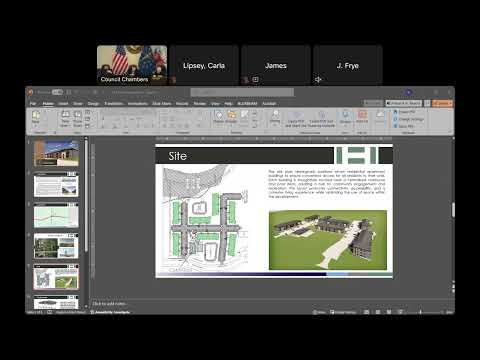
Resolution 25 R01 amends the downtown urban renewal plan and the Casopolis Street Corridor economic development plan to permit funding support for surface and structured public parking; Hubert said the city is nearing a redevelopment agreement with a developer identified as We Impact for a roughly $38,000,000 mixed‑use project on the south side of Jackson Boulevard that would include a parking structure wrapped with residential and commercial space. Hubert said the Beacon Aquatic Center and increased River District activity have increased parking demand; a 2024 economic impact study cited by staff attributed more than 39,000 hotel room nights to the aquatic center and the city expects additional parking to help hotels and hospitality businesses.
Hubert said the city anticipates presenting a development agreement for the River District project to the Redevelopment Commission at its May 13 meeting and aims to have approvals in place for the developer before September; he estimated construction would not likely begin until 2026 with an approximate two‑year construction schedule.
Resolution 25 R02 is a declaratory resolution that initiates the formal creation of Allocation Area 7; Resolution 25 R03 initiates Allocation Area 8 in the Benham neighborhood south of the railroad tracks. Hubert said Allocation Area 8 is intended to support about $50,000,000 of mixed‑use development proposed by Garrison Frasier. The city intends to support a $10,000,000 project financing gap for that project using funds generated by the allocation area in the form of a developer‑purchased EDC bond, Hubert said. He also said city and developer staff are working with the Indiana Economic Development Corporation on a state investment through the Lilly Blight removal grant program. Hubert said the final development agreement terms for Allocation Area 8 are expected to be considered by the Elkhart Redevelopment Commission at its meeting the following day.
Each resolution was put to a separate vote and carried on recorded roll calls after brief discussion; no members of the public spoke during the proceedings. Commissioners moved and seconded the resolutions as follows: R01 (moved by Lawson, second by Davis), R02 (moved by Davis, second by Newbill), R03 (moved by Mishler, second by Newbill). The planning commission’s approvals are a required step under the Indiana redevelopment statute and the city’s process before the redevelopment commission finalizes development agreements and bonding.
Hubert said the intent is to use a mix of funding sources, including TIF proceeds, developer financing structures and state grants, to close financing gaps and support parking infrastructure that city staff say will help downtown businesses and the aquatic center continue to host larger events.