Get Full Government Meeting Transcripts, Videos, & Alerts Forever!
Get email alerts on the Affordable Housing topic
No spam. Unsubscribe anytime.
Evansville council approves 30-year PILOT for 264-unit Eastfield Reserve affordable housing
Summary
The common council adopted Ordinance G2025-10 to approve a 30-year payment-in-lieu-of-taxes (PILOT) agreement for Eastfield Reserve, a 264‑unit low-income housing tax credit development at 3200 North Burkhart Road. The developer and city staff outlined the financing timeline, unit mix and regulatory requirements tied to section 42 tax credits.
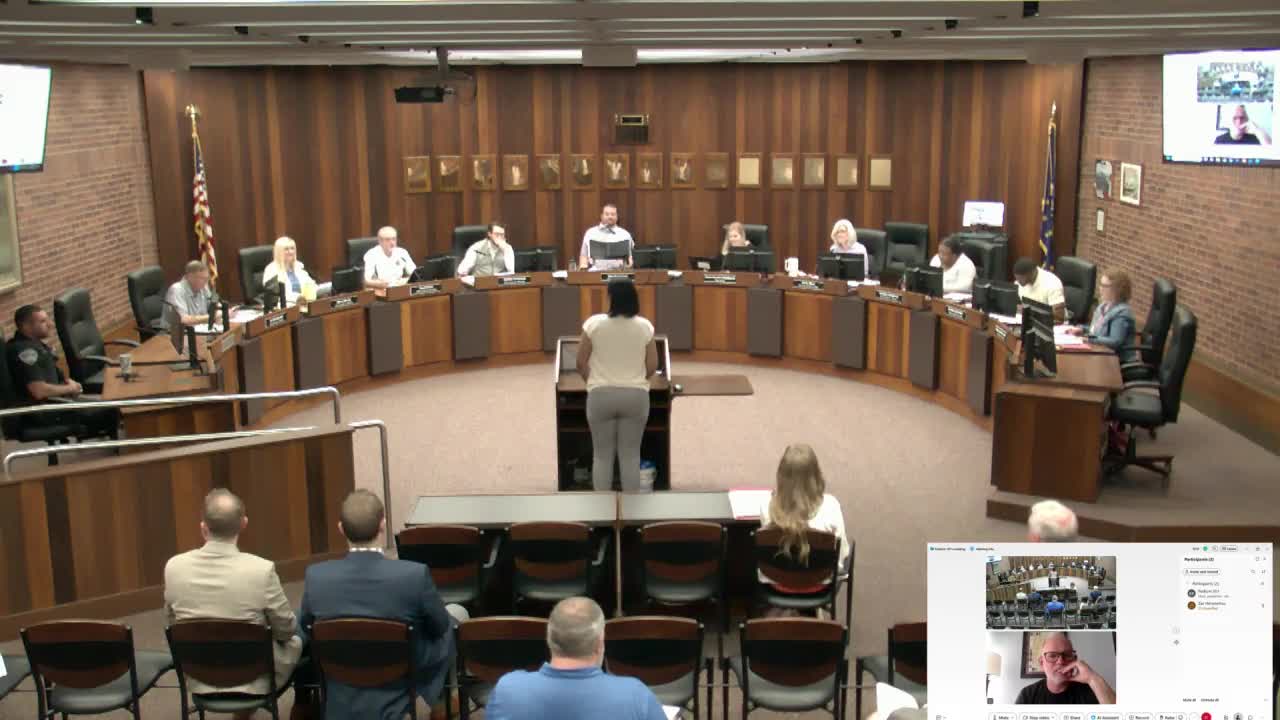
The Evansville common council on April 28 adopted Ordinance G2025-10, approving a 30-year payment-in-lieu-of-taxes (PILOT) agreement to support Eastfield Reserve, a new 264-unit affordable multifamily development proposed for 3200 North Burkhart Road.
City staff described the project as a low-income housing tax credit development that will reserve units for households at 60% area median income and below and explained the PILOT is a financing incentive that lets the city negotiate annual payments in place of standard property taxes.
Developer Jerry Burgess, representing the Marion Group, told the council the project would include 84 one-bedroom, 108 two-bedroom and 72 three-bedroom units and that the team plans to apply to the Indiana Housing and Community Development Authority for tax credits and bonds this quarter. “Our team remains extremely excited about this opportunity,” Burgess said, noting an anticipated financing closing in the third quarter and a readiness to begin site work thereafter.
Burgess cited the market study included with the application, saying at the 60% AMI level “there is a demand for almost 2,300 units right now,” and that the 264 units will meet a portion of that need. City staff explained the PILOT term is 30 years, with the annual payment beginning at $2,000 and increasing 3% each year (per Exhibit B of the agreement). Because the project uses federal Low-Income Housing Tax Credits under Section 42, units must remain rent‑restricted to maintain tax-credit compliance; failure to comply would subject the property to regular taxation.
The ordinance was moved and seconded (movers not named on the record), and a roll call showed nine ayes and no nays. The council declared Ordinance G2025-10 adopted.
The council recorded no additional conditions beyond the agreement text and the Section 42 compliance requirement; the developer and city legal counsel reported they had negotiated the PILOT language in advance.
The council vote completes the local approval step required for the developer to proceed with the financing application timeline outlined by the team.