
Lafayette holds public hearing on draft ordinance to allow backyard hens, limit set at five
Get AI-powered insights, summaries, and transcripts
Subscribe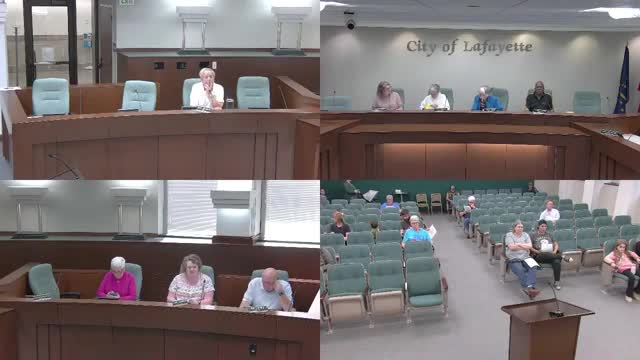
Summary
The Lafayette Common Council held a second public hearing on a draft ordinance that would allow up to five hens in city limits, prohibit roosters and set coop, pen and nuisance rules; animal-control staff and dozens of residents spoke in favor and city attorneys said the measure needs a council sponsor and two readings before adoption.
Lafayette — The Lafayette Common Council held a second public hearing on a draft ordinance that would allow residents to keep up to five hens inside city limits, prohibit roosters and require coops, pens and setback and nuisance controls.
The city attorney outlined the draft ordinance’s main provisions, saying it “does provide that a person can have no more than 5 hens. Roosters are prohibited.” The ordinance as drafted requires a coop providing at least 1 square foot of space per chicken, a pen of at least 2 square feet per chicken with wire or solid roofing for containment, and setback requirements from neighboring properties. It also says flocks that create a public nuisance would be addressed by Lafayette animal control.
Why it matters: Supporters said backyard hens would provide affordable fresh eggs, hands-on education for children, yard fertilizer and opportunities to reuse food waste. Opponents and some questioners raised concerns about predation, disease reporting, disposal of dead birds and manure, and enforcement for irresponsible owners.
Residents and stakeholders who spoke at the hearing generally supported the ordinance. Christine Poquette, a Lafayette resident, told the council that hens are “intelligent, quiet, docile, and useful” and that they “provide us with nature's multivitamin with 13 essential vitamins and minerals.” Sarah Goins, the city’s chief animal control officer, said of staff: “While I'm not a resident of Lafayette, I am myself and my department are in support of this. We think that it it it's good on many different levels, but I don't see it causing any added workload or stress to myself or my officers.”
Parents and gardeners described practical benefits. Audie Porter, a Lafayette resident, said the family’s birds cut grocery bills and teach children chores: “it's already within less than a year, like recouped the cost of building the coop and running stuff.” Several speakers, including school-aged children, said hens would get kids outdoors and help them learn about food systems.
Speakers raised operational questions the draft does not fully answer. The city attorney noted the ordinance would not override private homeowner association rules that prohibit livestock. Questions about avian influenza reporting and regulatory authority drew technical answers: the Indiana Department of Natural Resources handles wildlife-scale disease events and the Board of Animal Health handles domestic-animal matters, according to comments at the hearing. The humane society was reported to accept chickens in some cases, and one speaker who said they serve on that board confirmed the organization had a chicken in its care.
Residents also asked about disposal and composting of manure, and what to do with older birds no longer laying eggs. A council member suggested that routine household trash collection is commonly used for animal waste, but the sanitation department’s specific requirements for chicken manure were described as “to be checked” by staff. Several residents pointed to local resources — Purdue Extension, 4-H and existing networks of chicken owners — as sources of rehoming and training.
Next steps: The city attorney said the council has conducted the required hearings; adoption would require a council member to formally sponsor the ordinance and two council meetings (two readings) for approval. The earliest possible approval date, given the council’s schedule and additional drafting tweaks, was described as August, pending sponsorship and formal filings.
The hearing included robust public participation, with speakers offering both operational suggestions (composting manure, wing clipping to limit flight, enclosed runs to reduce predation) and policy cautions (enforcement challenges, nuisance complaints). The council said staff will consider public input as it finalizes the draft before any council member files the ordinance for formal consideration.