Get Full Government Meeting Transcripts, Videos, & Alerts Forever!
Get email alerts on the Backyard Hens Ordinance topic
No spam. Unsubscribe anytime.
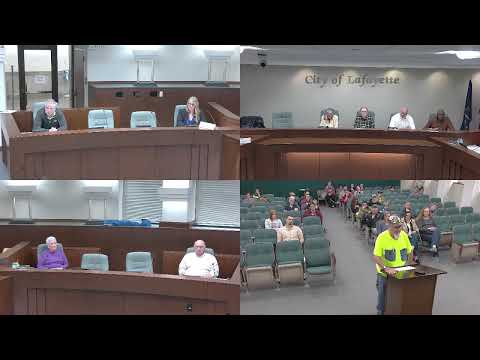
Lafayette public hearing considers draft ordinance to allow backyard hens
Summary
Residents and the city attorney discussed a proposed ordinance to legalize backyard hens in Lafayette, covering limits, coop and pen requirements, setbacks, enforcement and equity questions; no vote was taken and a second public hearing was scheduled for May 8.
A public hearing before the Lafayette City Council drew residents to support a proposed ordinance to legalize backyard hens, with speakers describing educational, sustainability and food-security benefits and city staff outlining draft rules on flock size, enclosures and setbacks.
The proposal under discussion would allow residents to keep chickens only (no waterfowl), limit a flock to five hens with no roosters, require a coop and enclosed pen, and set minimum setbacks: 20 feet from any dwelling and 10 feet from property lines, according to the city attorney’s summary of the draft.
Councilperson Eileen Hesh Luis opened the hearing, saying an ordinance had been submitted after neighborhood meetings. Resident Christine Poche, who organized neighbors, told the council, “We come before you today because we love hens, and we want them to be a part of our daily lives.” She described health, educational and environmental benefits and cited other Indiana cities that allow backyard hens, including Valparaiso, Goshen, Mishawaka, South Bend, Bloomington, Carmel and Indianapolis.
City Attorney Cara summarized key points of the draft ordinance: “We are only including chickens and not other waterfowl. ... The chicken flock definition is limited to 5 hens, no roosters,” and “each coop and pen must be at least 20 feet from any home that is capable of human habitation” and at least 10 feet from property lines. She said coops and pens must be enclosed, located behind the residential structure, and would be subject to nuisance and public-health enforcement by animal-control staff.
Speakers who support the change emphasized hands-on benefits for children and families. Justin Connor said raising chickens in youth organizations taught him responsibility and provided food; Mary Lutz, who has academic experience in small-scale agriculture, said backyard hens create educational opportunities and reduce food waste. Several speakers asked the council to make the ordinance accessible to renters and occupants of two- and four-family dwellings, including written-consent waivers for neighboring property owners in narrow urban lots.
Commenters also raised questions about practical details in the draft. John Fry, who owns chickens, asked whether minimum coop-space standards in the draft would be restrictive, and Nathan McBurnett and others asked whether the city would allow supervised free-ranging during the day and how the city would treat multiunit properties. Supporters suggested allowing the “deep litter” method for winter coop management to reduce odor and provide compostable material.
Several speakers recounted contacts with officials in other municipalities to argue enforcement is manageable. Poche said she contacted Carmel Animal Control Officer Samuel Brown and West Lafayette Code Enforcement’s Jeffrey Ray, who reported few complaints in their jurisdictions; she also cited Bloomington Animal Care and Control and South Bend police communications staff as reporting little enforcement activity after legalization.
No formal vote or ordinance adoption occurred at the hearing. City staff announced a follow-up public hearing at the same location on May 8 from 5:00 to 6:00 p.m. After public comment concluded, a motion to adjourn was moved and seconded.