Get Full Government Meeting Transcripts, Videos, & Alerts Forever!
Get email alerts on the Governors Parkway topic
No spam. Unsubscribe anytime.
Hammond council endorses Governor’s Parkway railroad overpass after heated public comment
Summary
The Hammond City Council voted to approve a resolution formally endorsing the Governor’s Parkway railroad overpass project, prompting months-long debate and extensive public comment over safety, environmental impact and community process.
The Hammond City Council voted to adopt a resolution endorsing the Governor’s Parkway railroad overpass project on Feb. 10, with the motion carrying 8 in favor and one member absent.
Council members and the mayor framed the resolution as a step to accept state and federal awards that would build a grade-separated road overpass — called Governor’s Parkway — and remove two at-grade crossings on Norfolk Southern’s line. Mayor McDermott told the chamber the project is funded by the Federal Railroad Administration’s Railroad Crossing Elimination (RCE) award ($7,029,392) and the Indiana Local Tracks rail overpass program ($5,460,070) and that no Hammond general-fund dollars are required for the work. “We have a bridge being paid for by federal and state money. We have no Hammond money in this project at all,” McDermott said.
The nut graf: supporters argue the overpass will reduce long train blockages that interrupt traffic and emergency response times; opponents said the chosen alignment would damage an ecologically and culturally valued dune and woods area and that less-destructive alternatives were insufficiently explored.
Council debate and the mayor’s remarks focused on safety and funding. McDermott urged unity, saying the resolution signals the city is ready to proceed once awarded funds are secured and that opponents were actively contacting state officials to try to halt the project. Council members who supported the resolution cited years of train delays in Hessville and the potential for improved emergency response and traffic flow.
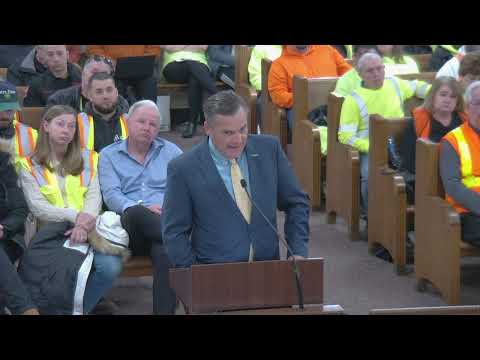
Residents and environmental advocates filled the public-comment period with opposition. Speakers described the site — repeatedly referred to in the meeting transcript as Bridal East Woods (dunes and woods adjacent to Hessville) — as an ancient dune remnant and habitat for birds, pollinators and other wildlife. “This isn’t infrastructure. It’s a wrecking ball aimed at Bridal East Woods,” resident Joseph Hines said. Other commenters urged preservation of old-growth oaks and warned of longer-term losses to local biodiversity, recreation and stormwater absorption.
Council members acknowledged the environmental concerns during discussion; several urged working with opponents on mitigation and tree replanting plans. The resolution text read into the record references prior local action, including Ordinance 95-16 (an earlier ARPA appropriation for the project) and later adjustments by Ordinance 96-23. The resolution also cites the federal rule referenced during the public hearing process (Code of Federal Regulations, title 23, section 771) and the FRA’s RCE program. The resolution states the city intends to commence construction once awarded funds from the state and federal programs are procured.
The vote: after debate and several attempts to seek a short recess, the council called the question. Clerk roll call recorded the passage as 8 in favor, 0 no, 0 abstain, 1 absent. Mayor McDermott and supporting council members described the measure as the final local step before submission to INDOT and the FRA; opponents said the vote disregarded the community’s conservation concerns.
The council did not adopt any amendments to change the project scope during the meeting. McDermott said work to secure property and finalize designs will move forward once fund procurement is complete; no construction start date was given in the meeting.