Planning commission approves Chick-fil-A development plan after hours of traffic and easement debate
Loading...
Summary
The Kokomo City Planning Commission approved a development plan for a Chick-fil-A at 1014 South Reed Road after extended testimony on traffic, parking, drainage and a private easement dispute between Sandor Development and a neighboring property owner.
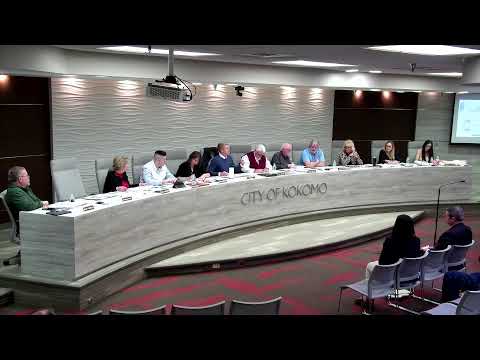
The Kokomo City Planning Commission on a voice vote approved a development plan for Chick‑fil‑A at 1014 South Reed Road after more than three hours of presentations and public comment about traffic, parking and a private easement dispute.
Commissioners heard detailed presentations from the petitioner team — attorney Misha Rabinowitz, Chick‑fil‑A development lead Sean Walker and real‑estate broker Patrick Boyle — and from Sandor Development representative Carrie Library. The petitioner team said the site is already zoned C‑2 (medium to large commercial), that the development plan meets the city’s development‑plan criteria and that prior variances were granted in January 2024 to increase on‑site green space and improve drainage. The commission approved the plan; the planning director will prepare written findings required by the ordinance.
The decision matters because the proposed restaurant sits inside a busy commercial plaza serving Markland and State Road 931, a location opponents said could shift traffic into nearby residential streets and strain existing drainage and local access points.
Petitioners and staff said the project meets the three development‑plan tests in the city code: consistency with the comprehensive plan, consistency with the intent of the subject C‑2 zoning district and satisfaction of zoning standards. Misha Rabinowitz told the commission the site is already zoned C‑2 and that the development plan was prepared with input from city planning and engineering. Planning materials submitted with the application show the centerwide parking calculation requires 338 spaces while the plan provides 398 spaces — an excess of 60 spaces, Rabinowitz said. The application also includes a drainage report and engineering exhibits that petitioners said demonstrate no adverse drainage impact to adjacent properties.
Chick‑fil‑A representatives described their site selection process and operations. Patrick Boyle, the broker, said the operator generally needs about 1.25 to 1.5 acres, traffic visibility and proximity to retail anchors when choosing a location. Sean Walker, Chick‑fil‑A principal development lead, told the commission the company uses dual drive‑thru lanes, on‑site order tablets and traffic engineering to limit on‑site congestion. Walker also described community investments Chick‑fil‑A typically makes, including a one‑time local donation that petitioners said is $25,000 to local food organizations and scholarships for team members; she attributed specific scholarship totals to the company’s broader Indiana giving history.
Neighbors raised multiple concerns at the hearing. Residents of the nearby Cedar Crest and Imperial Drive neighborhoods warned that opening Imperial Drive as a connector and increased commercial traffic would make it difficult to exit driveways, interfere with emergency vehicle access and change neighborhood character. Several residents also described historic flooding and raised concerns about an inadequate storm line behind the property. A nearby resident referenced a prior gas station and asked whether soil or tank remediation had been completed.
A separate legal objection was presented by Christopher Goff, an attorney for South Reed LLC, which holds a long‑term lease at 1010 South Reed Road and operates a WellNow urgent care. Goff and South Reed’s managing member, Charlie Reed, said the proposed development relies in part on use of an existing access point onto State Road 931 where the north half of the pavement lies on South Reed’s leased parcel. Goff said Sandor had told South Reed the plan “doesn’t work without an easement,” and asked that any approval be conditioned on an easement negotiated between Sandor and South Reed (the attorney said his client had requested $50,000 as an early estimate to fund required improvements and signage). Sandor’s representative, Carrie Library, replied that Sandor disagrees about whether a prescriptive easement exists, that Sandor and Chick‑fil‑A believe the project can proceed without that easement, and that Sandor prefers to resolve access and compensation issues privately rather than through the planning commission.
Commissioners and staff repeatedly characterized the access and easement matter as a private, civil dispute that the planning commission should not mediate. Several commissioners said the board lacks jurisdiction to resolve property‑owner compensation or to impose private easement terms as a condition of development‑plan approval. The city engineer and planning staff also noted other access points to the site (from Markland and Reed Road) remain available and that engineering review addressed circulation and drainage; staff recommended approval.
After extended public comment and back‑and‑forth between the parties, the commission took a voice vote. The president called for those in favor to say “aye”; the motion carried by voice vote and the director will prepare the written findings the ordinance requires.
The petitioners and Sandor said they will continue private discussions with South Reed LLC about the access arrangement; the commission declined to make a private easement a condition of its approval. The commission also noted that the state Department of Transportation and the city are reviewing broader traffic and safety improvements along the 931/Markland corridor.