Get Full Government Meeting Transcripts, Videos, & Alerts Forever!
Get email alerts on the Local Water Quality topic
No spam. Unsubscribe anytime.
Residents tell council tap water smells and is unsafe to drink; mayor says municipal supply is served by private utility
Summary
Residents told the Terre Haute City Council during public comment that tap water in parts of the city smells and is unsafe to drink; Mayor Sackman said the water is supplied by Indiana American Water, a private utility, which limits the city's authority to order extensions.
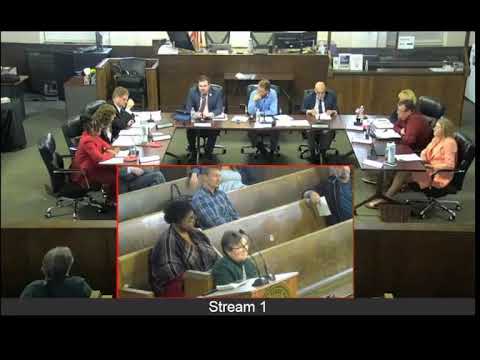
Several residents told the Terre Haute City Council during public comment that tap water in parts of the city has an off odor and is not safe to drink, and they asked the council to take action.
Gary Fowler, a resident who identified issues with water on Hynel Avenue and Pew Avenue and with a nearby landfill-like pit he said receives demolition material, told the council, “Our water ain't good.” He said the local pond near Canal and Davis is now shallow and that residents are worried about running out of useable water. Fowler urged the council to “step up and give us some help here” and said Councilperson Candace Hinton had been assisting residents in that area.
Carrie Draper, who said she lives in Phoenix Hills and receives water supplied from Brazil, told the council: “It smells bad a lot of the time. I don't feel like it's safe to drink. So we buy water to use for drinking.” Council members and staff acknowledged the two comments during the public-comment period.
Mayor Sackman responded during the meeting and said the city does not own the local water system in those areas. He told the council the supply is “owned by a company called Indiana American Water, which is a private utility.” He explained that a prior city effort in Tarrytown required residents to opt in to connect to the private system and that officials needed a large percentage of residents to agree; “We needed about 85% of the residents to choose to opt in… We got about 50% because there's concerns about fluoride,” he said. The mayor said that because the utility is privately owned the city cannot unilaterally require it to extend service and that negotiations with private utilities can be “a very long, drawn out process.”
Council members said they had discussed the water issues previously while considering use of ARPA funds and promised continued engagement. Multiple council members and the mayor encouraged residents to continue reporting concerns to their district councilperson and to city staff so the city can pursue options, such as targeted negotiations with utilities, grant funding or infrastructure investments.
Also during the public-comment portion of the meeting, Dr. Mary Howard, president of the Terre Haute Wabash Valley Alumnae Chapter of Delta Sigma Theta Sorority, Inc., described a newly launched “Delta Day at the City Council” and urged political awareness and engagement. Howard commended Councilperson Hinton—who she noted is a sorority member—for assisting community events and public-service initiatives. Howard also asked the council to track ARPA outcomes and to invest in more bus shelters and improved sidewalks near Lockport and Greenwood Manor; she said parents and children stand in the rain waiting for buses.
Why this matters: Residents' statements put water quality and service reliability onto the council’s public record. Mayor Sackman’s remarks clarified a limit of municipal authority when distribution is provided by a private utility and explained the opt-in process used in earlier projects. Delta Sigma Theta’s presentation and requests signal organized civic engagement on education, transportation infrastructure and ARPA accountability.
Ending: Council members said they will continue to coordinate with affected district representatives, the mayor’s office and state partners to pursue funding and options for service extension; staff asked residents to submit formal reports to the city’s service departments so officials can document and prioritize follow-up work.