Get Full Government Meeting Transcripts, Videos, & Alerts Forever!
Get email alerts on the Energy Battery Storage topic
No spam. Unsubscribe anytime.
Planning commission recommends zone change, land‑use plan for Tava Mountain battery storage after 6–1 vote
Summary
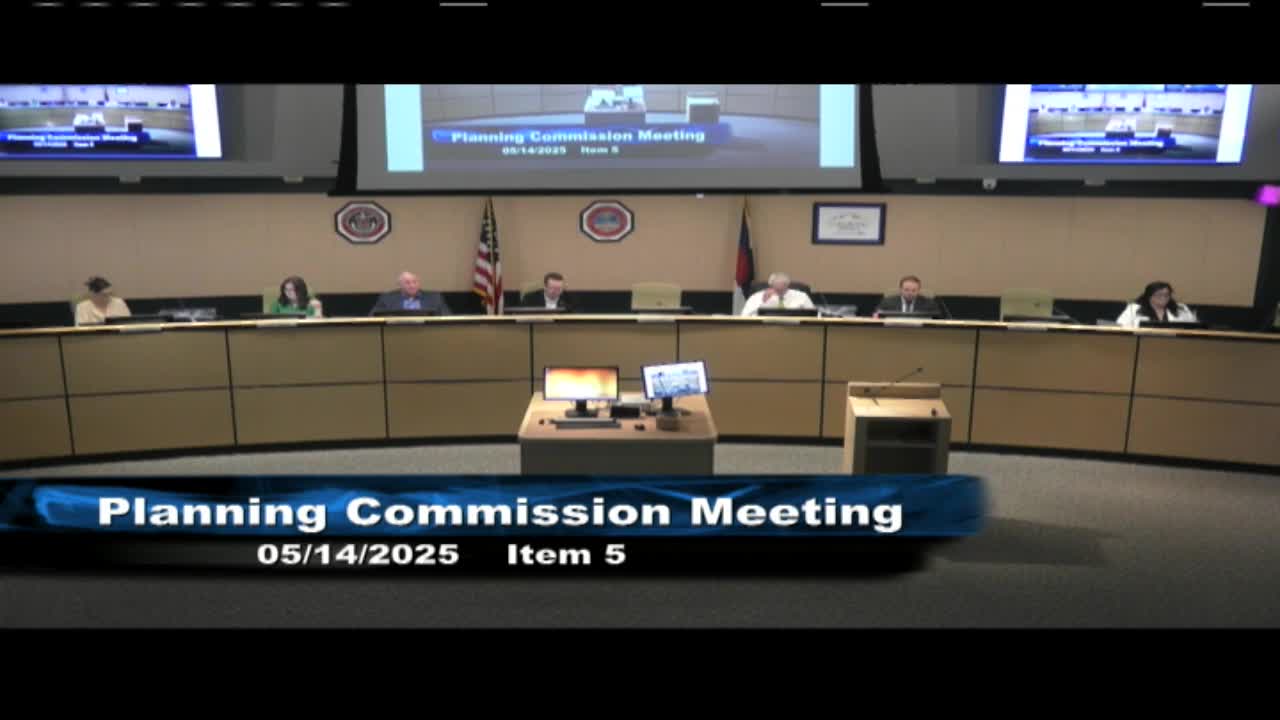
The Colorado Springs City Planning Commission voted 6–1 on May 14 to recommend that City Council approve a zoning map amendment and land‑use plan for the proposed 100 MW Tava Mountain battery energy storage facility at 1133 South Royer Street, after staff presentations, developer testimony and public comment raising safety concerns.
The Colorado Springs City Planning Commission on May 14 recommended that City Council approve a zoning map amendment and a land‑use plan for the proposed Tava Mountain Battery Energy Storage facility at 1133 South Royer Street. The commission voted 6–1 to recommend the zone change from GI (general industrial) to PDZ (planned development zone) and to recommend approval of the related land‑use plan; Commissioner Cecil cast the lone no vote.
The commission’s recommendation sends the proposal to City Council for final action. The project developer, ES Volta, described the proposal as a 100‑megawatt, four‑hour utility‑scale battery energy storage system sited on 4.49 acres and intended to serve Colorado Springs Utilities; the developer said the facility is designed to “meet or exceed the latest NFPA 855 requirements.”
Planning staff presented the applications as Item 5A (PDZZ‑25‑0001) and Item 5B (PDZLD‑25‑0002). Planning Supervisor Tamara Baxter told commissioners the property is currently zoned GI and the request is to rezone to PDZ nonresidential with a 180,000 maximum square‑foot allotment and an 80‑foot maximum building height. Baxter said staff determined the applications met the city’s rezoning and land‑use review criteria and that notifications were mailed to about 111 nearby property owners; staff noted two public comments were included in the meeting packet.
Chris Beasley, the ES Volta project developer, told the commission the facility would charge during lower‑cost periods and discharge during peak hours and that federal tax incentives and existing transmission infrastructure made the site economically viable. “Tava Mountain Energy Storage is a 100 megawatt 4 hour battery system,” Beasley said. He added the company expects routine operations to be largely remote with limited daily traffic and said the project is forecast to contribute about $4,600,000 in taxes over a 20‑year life cycle.
During public comment, landowner Patrick Mead said he supports the proposal and described ES Volta’s project management as professional. Resident Joseph Branske testified in opposition, citing national incidents at other battery facilities and warning about fire and explosion risk. Branske said he intends to continue protesting the proposal at future meetings.
In rebuttal, Beasley and ES Volta representatives described technological and code changes since earlier incidents, said the project would use lithium‑iron phosphate cell chemistry with cell‑level monitoring, automated shutdowns and 24/7 remote diagnostics, and noted the company will provide an emergency response plan and annual responder training. Beasley said the applicant has met with the fire department and expects further coordination on fire protection and water supply for firefighting.
Commissioners asked about the project’s contract status with Colorado Springs Utilities, interconnection and permitting timelines, site setbacks and fencing, and disposal/recycling of batteries at end of life. Beasley said Colorado Springs Utilities is updating its integrated resource plan and may issue an RFP later this year; he said the developer expects construction in 2028–2029 if the project proceeds. He said the site design includes about a 10‑foot setback between containers and a 6‑foot chain‑link fence with one foot of barbed wire, and that batteries are typically returned to manufacturers for reuse or recycling when decommissioned.
Formal motions before the commission recommended approval to City Council of the rezoning and the land‑use plan (agenda items PDZZ‑25‑0001 and PDZLD‑25‑0002). Both motions passed on a 6–1 vote with Commissioner Cecil voting no. The commission’s recommendations are advisory; City Council will take the final decision.
The commission’s discussion and the two votes conclude the Planning Commission phase; the items will move forward to City Council for final action and any appeal rights and deadlines will be set by the council process.