Get Full Government Meeting Transcripts, Videos, & Alerts Forever!
Get email alerts on the Government Process topic
No spam. Unsubscribe anytime.
Council debate over consent calendar process centers on quasi‑judicial land‑use items
Summary
Council members disputed whether quasi‑judicial rezones and map amendments should appear on the consent calendar’s first reading or be pulled for fuller initial presentation; staff said the process follows the Unified Development Code.
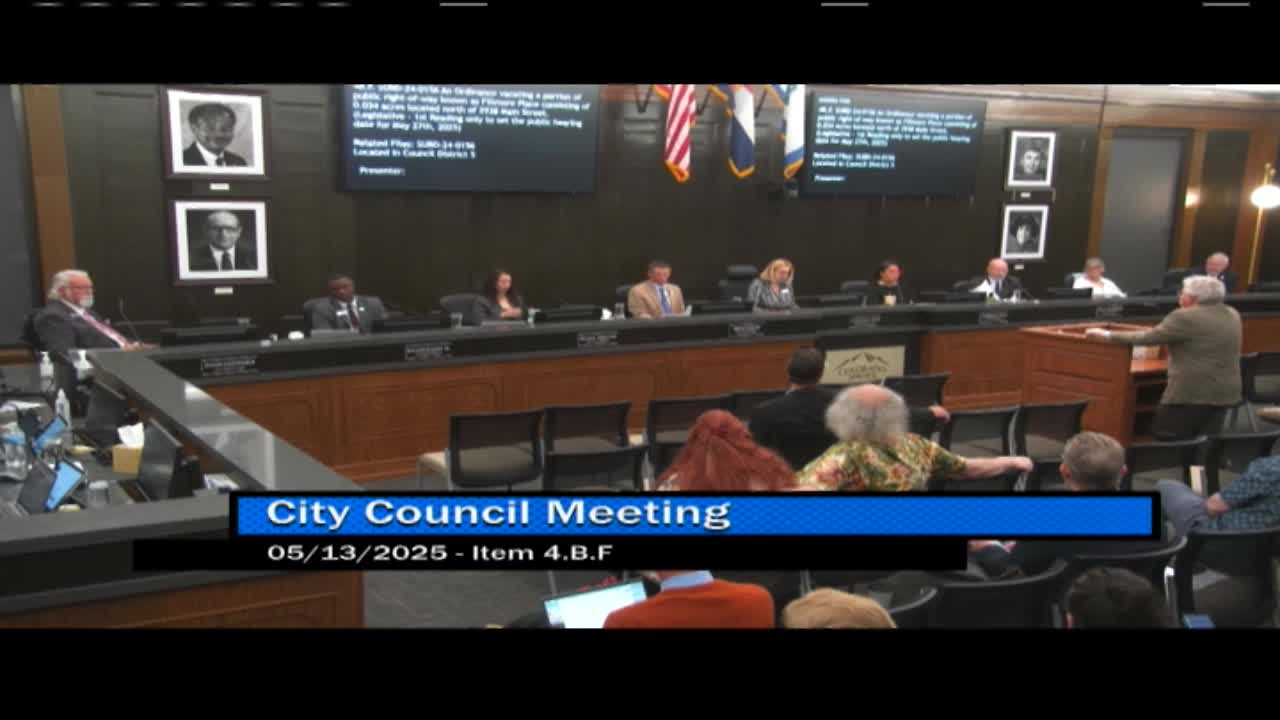
Several council members debated whether quasi‑judicial land‑use items should be placed on the consent calendar or pulled for fuller initial hearings at the May 13 meeting.
Councilman John Donaldson said he pulled multiple quasi‑judicial items from the consent calendar because he was concerned residents lost a meaningful two‑week window to react between a first and final vote. “We used to get a full explanation of what it was, a full presentation, so that when you voted each time, you knew what you were voting on,” Donaldson said. He cited a past rezoning where public input between hearings changed the final outcome.
Kevin Walker, city planning director, responded that the current practice follows the Unified Development Code and that the planning commission already held hearings and noticed neighbors. “This is following the code. So this is this was adopted in the unified development code. So I don't like the characterization that we're sliding this through is is not accurate. We are following the code,” Walker said.
Other council members offered differing views. Councilwoman Nancy Hinchum said the change aligned procedures with common city practice and improved efficiency; Councilwoman Brandy Williams described the code change as a corrective response to prior quasi‑judicial practice that created ex‑parte communication risks. After discussion, council set public hearing dates and proceeded with votes on the individual map ordinances; several of the quasi‑judicial items passed on first‑reading votes (typically 8‑1 or 9‑0) with Councilman Donaldson often recording the lone dissent.
The exchange clarified that: planning commission hearings, public notice and published materials continue to be part of the record; the city will follow UDC timelines for state and IRS reporting where bond cap or other technical deadlines are implicated; and council members may continue to pull items from consent when they believe additional public presentation is warranted.