Get Full Government Meeting Transcripts, Videos, & Alerts Forever!
Get email alerts on the Tiny Homes Housing topic
No spam. Unsubscribe anytime.
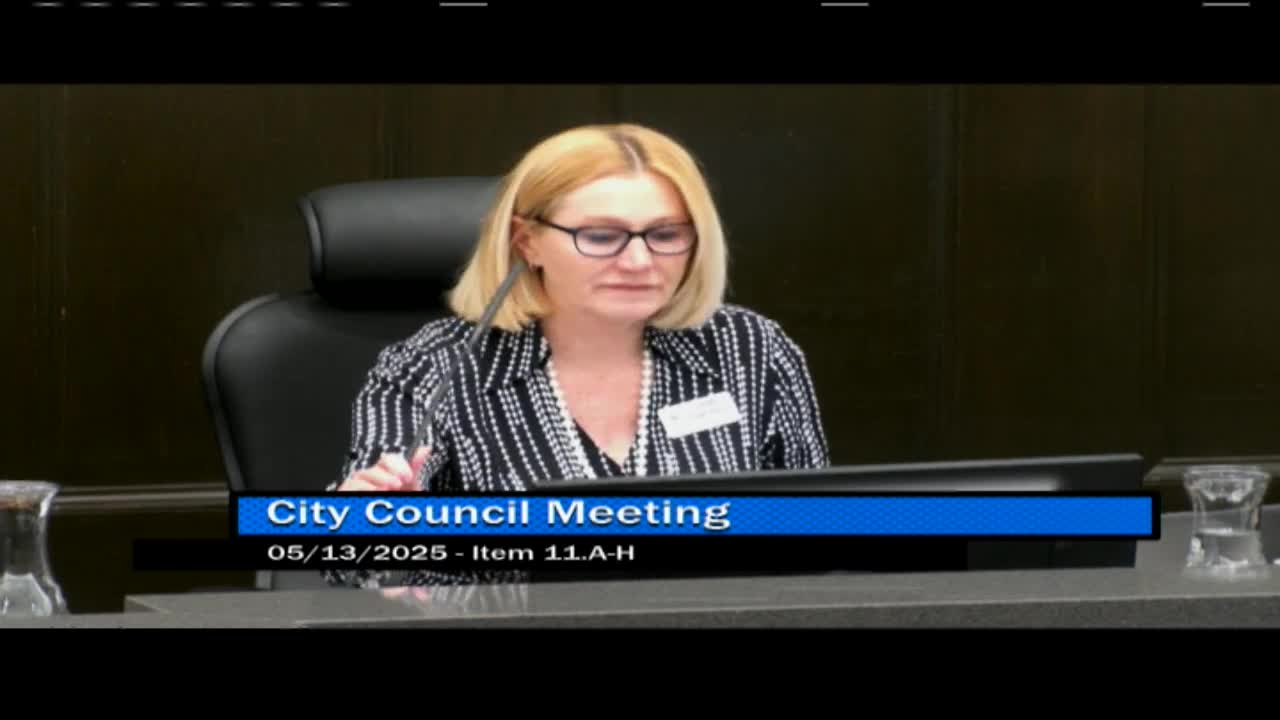
Council approves Prospect Village tiny‑home community for young adults after mixed neighborhood testimony
Summary
After a public hearing with both neighbors and supporters, City Council approved rezoning, conditional use and associated adjustments to authorize an 18‑unit tiny‑home community for young adults; all related motions passed 9‑0.
The City Council approved a multi‑part application to create Prospect Village, an 18‑unit tiny‑home community at 3103 North Prospect Street intended to house young adults transitioning out of foster care or homelessness.
Bill Gray, a city planner, reviewed the application and staff findings, noting the request included a rezoning from R‑5 to R‑flex High, a conditional‑use permit for a tiny‑home community, a development plan and five development‑standards adjustments under the Unified Development Code. Gray said the plan proposes roughly 18 homes of about 300–320 square feet each, a central common area, off‑street parking along Arcadia and landscaping; staff found the application met the applicable criteria and planning commission forwarded the project to council with a favorable recommendation.
John Olsen, the applicant and a board member for the nonprofit We Fortify, and Shelly Johnson, We Fortify CEO, described the village as a supportive community model patterned on an existing We Fortify site called Working Fusion. Johnson told council, “We will not build a home or a community that we would not put our friends or family in.” She said the organization furnishes units, provides on‑site trauma‑informed services, life‑skills education and job placement assistance. Rent for the village model has been described in prior projects at around $600 for qualified residents.
Neighbors offered both support and opposition during public comment. Melissa Hardy, who lives two houses south of the property, said the group had been responsive to neighborhood concerns and welcomed the project. Several residents raised traffic, safety and wildfire egress concerns related to the site’s single‑lane roundabout access and argued the 232‑unit developments proposed elsewhere nearby suggest alternative locations may better serve higher‑density housing.
After questions about setbacks, utility clearances and parking, council moved through the eight discrete approvals required by the UDC — zone map amendment, conditional use, development plan and five development standards adjustments — and approved each motion by unanimous 9‑0 votes.
City staff said Colorado Springs Utilities and other agencies cleared key technical issues and that the applicant agreed to minor plan modifications to address utility line locations. Council members praised the nonprofit’s track record with its existing village and directed staff to continue coordinating on building permits and infrastructure steps.
The approvals allow the developer to proceed to building permits and required inspections; the project must still comply with construction and utility conditions contained in the development plan and final engineering reviews.